If you have ever sat at a stoplight on Battlefield Boulevard and watched a fully wrapped charter bus roll past, you already know the appeal: it is a moving billboard that nobody can scroll past. Bus wraps, at their core, are large-format vinyl graphics applied to the exterior of a bus to either advertise a brand or rebrand the vehicle itself. Whether you are a Chesapeake business owner thinking about turning a shuttle into rolling marketing, a media buyer comparing transit advertising against billboards, or a charter operator branding your own fleet, this is the guide we built to answer every question you might have.
Related local planning: if the wrap is part of an event or shuttle, compare our Chesapeake group transportation services, review 40-56 passenger charter bus options, and check charter bus dimensions before finalizing creative specs.
Here is the catch most articles miss: the cost of producing a bus wrap (the one-time vinyl, design, and install) is a completely different number than the cost of renting ad space on a transit authority’s already-wrapped bus. For a Hampton Roads Transit campaign, the difference is obvious: HRT’s November 2025 rate card puts a full bus wrap at $2,915/month for a one-month media buy, with a separate $7,791 production fee. Smaller HRT formats are much cheaper to produce, with the same rate card listing a $175 production fee for a King panel, $137 for a Queen panel, and $110 for a Taillight panel.
Confusing production cost with media cost is how budgets blow up. We separate them clearly below, walk through a worked CPM example using actual campaign math, and show you how bus wraps stack against billboards, digital screens, and transit shelters — so you can decide if a wrap is right for your campaign here in Chesapeake or beyond.
What Is a Bus Wrap?
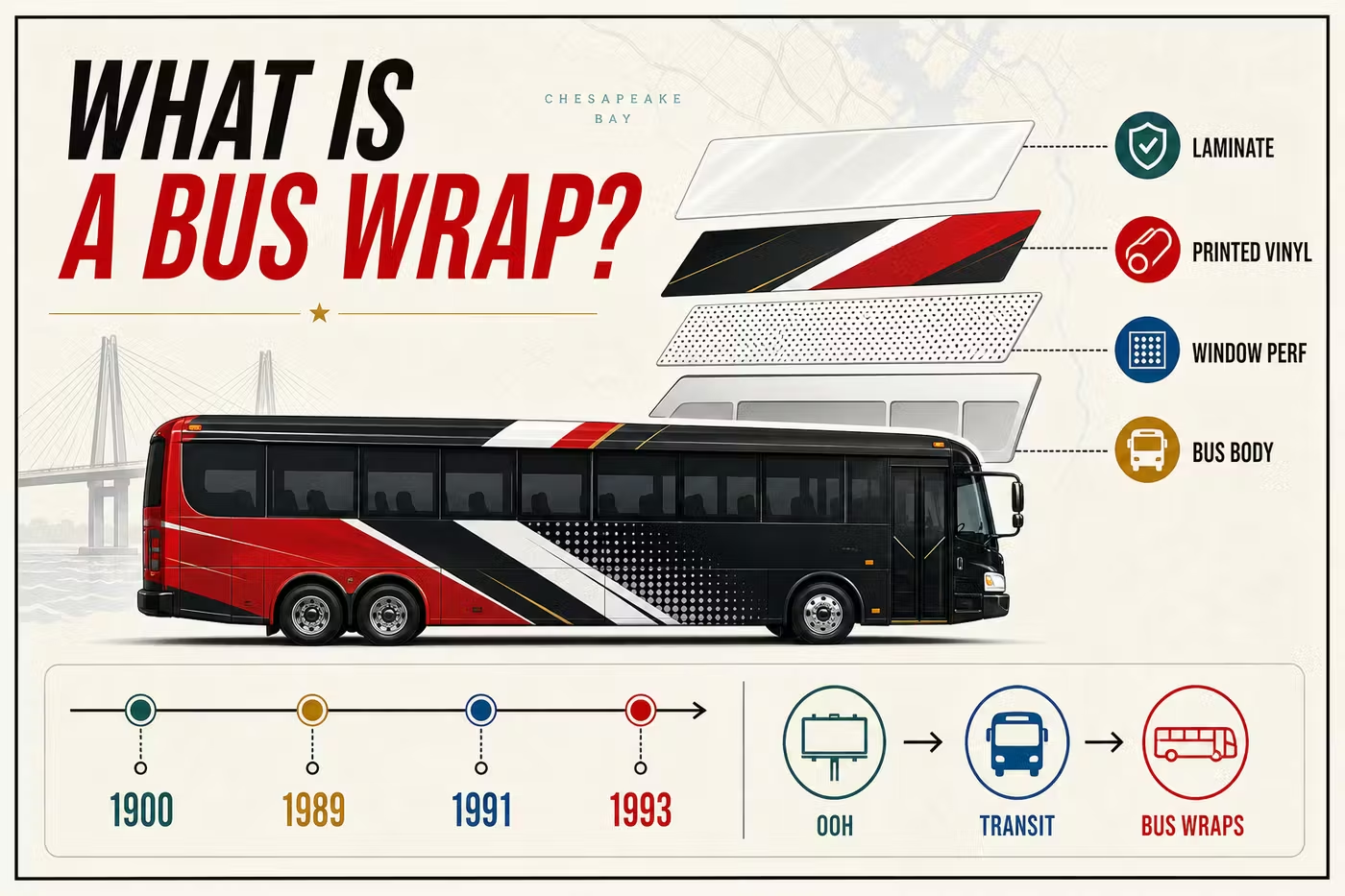
A bus wrap is a large-format adhesive vinyl graphic, custom-printed and applied to the exterior of a bus to either advertise a brand or change the bus’s overall appearance. Wraps can cover the entire bus body (a “full wrap”) or just specific panels (a “partial wrap”), and modern perforated window film lets the design extend across approved glass areas while preserving outward visibility for passengers inside. In the out-of-home (OOH) advertising world, bus wraps sit inside the broader category of transit advertising — a subset of mobile OOH that also includes bus shelters, subway interiors, taxi toppers, and rail wraps.
Vehicle advertising is not a new idea. Milton Hershey was already using a vehicle as advertising in February 1900, when he brought the first automobile to Lancaster and used it to advertise his product. The technology that made true full-bus wraps possible came much later.
Contra Vision places the first one-way, see-through transit advertising on bus-window posters in Manchester in 1989, then identifies the world’s first total bus wrap as a 1991 New Zealand project for the Pan Pacific Hotel. The first digitally printed bus wraps followed in 1993 for Crystal Pepsi using Contra Vision and 3M Scotchprint technology. Those developments helped move the industry from hand-painted signage toward digitally printed full-color vehicle graphics.
The vinyl itself is not a generic product. For commercial fleet and bus-wrap work, the stronger product examples are digitally printable wrap films such as 3M Print Wrap Film IJ180mC, which 3M describes as cast vinyl for fleet graphics, full vehicle wraps, corrugations, and rivets; Avery Dennison MPI 1105, a premium high-gloss cast film for complex surfaces with curves and recesses; and ORAFOL ORAJET 3951RA+ ProSlide, which ORAFOL lists for complex vehicle graphics, commercial fleet wraps, and bus/subway transit wrap applications. Avery Dennison Supreme Wrapping Film is better understood as a color-change wrap line, because Avery positions it as a car-wrap color and finish portfolio, not the standard digitally printed fleet-wrap film.
ORAJET 3551RA is also not the best example for complex full-bus wrap work, because ORAFOL positions it for medium- to long-term signage, spot vehicle applications, boat graphics, and wraps requiring limited conformability. A laminate layer goes over the printed vinyl to protect against UV, abrasion, and the salt air you get along the Elizabeth River and the Chesapeake Bay. Calendered vinyls exist and are cheaper, but they are better reserved for simpler, shorter-term, or lower-conformability work — the kind of false savings you regret if the wrap starts shrinking or lifting early.
Types of Bus Wraps (Coverage Options)
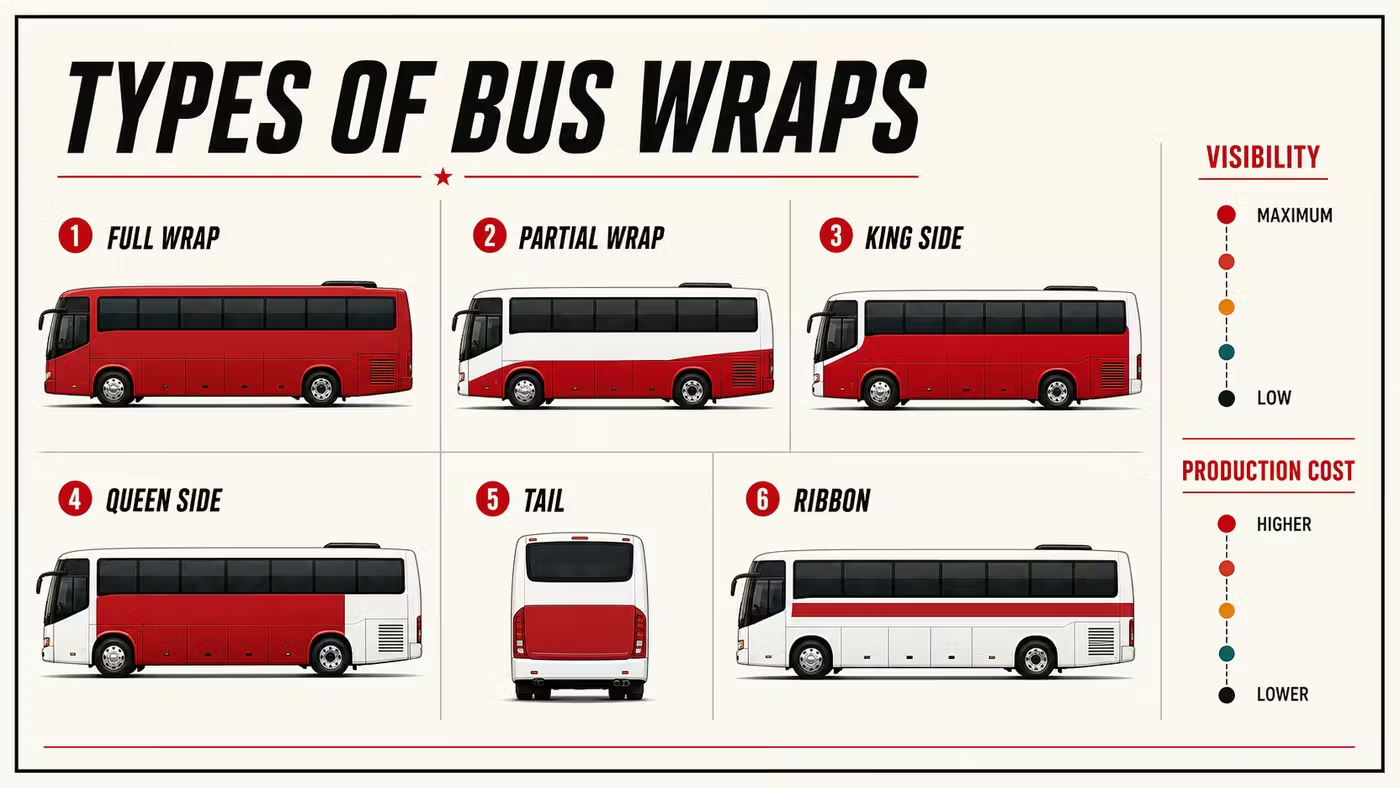
Not every wrap covers the entire bus, and not every campaign needs one to. Coverage is the single biggest production-cost driver, and matching coverage to your visibility goal is how smart buyers protect their budget. Here are the six standard configurations the industry uses:
- Full Wrap: Covers the entire bus body — sides, rear, sometimes the front — with vinyl, plus perforated film over approved window areas. Maximum visual impact and the highest production cost.
- Partial Wrap: Covers a defined section, usually the lower half of the bus body or a single side panel. The most budget-friendly entry point.
- King Side: A large horizontal side-panel format. The exact dimensions vary by transit authority. In Hampton Roads, HRT lists King as 144” wide x 30” high. King and King Kong are not the same thing; HRT lists King Kong as a much larger 19’ wide x 8’3” high format.
- Queen Side: The smaller side-panel counterpart. Dimensions vary by transit authority; for HRT, Queen is 108” wide x 30” high.
- Tail (or Taillight): The rear panel of the bus, capturing every driver stuck behind it in traffic — which, anyone commuting on I-64 through the High Rise Bridge corridor can tell you, is a lot of impressions. HRT’s Taillight format is 72” wide x 21” high.
- Ribbon / Super King-style Strip: A horizontal strip along the side of the bus. HRT’s closest published format is Super King, which is 18’2” wide x 3’5.5” high.
Here is how the coverage types compare on production cost, visibility, and best use case. These are not universal national prices; the hard numbers below use HRT’s published Hampton Roads production fees where HRT has a defined format, and custom privately owned bus wraps still need a printer/installer quote because vehicle size, prep, film, laminate, and labor can change the job substantially.
Coverage Type Description Visibility Production Cost Range Best For Full Wrap Entire body + approved perforated windows Maximum HRT publishes a $7,791 production fee for a full bus wrap; private custom wraps are quote-based Major brand launches, fleet branding Partial Wrap Defined section of the bus Moderate Quote-based SMBs testing the channel King Side Large side-panel format High HRT publishes a $175 production fee for King Retail, storefront-adjacent campaigns Queen Side Smaller side-panel format High HRT publishes a $137 production fee for Queen Traffic and pedestrian reach Tail / Taillight Rear panel High in traffic HRT publishes a $110 production fee for Taillight Highway-route campaigns, dwell exposure Super King / Ribbon-style strip Large horizontal side strip Moderate HRT publishes a $375 production fee for Super King Repeated brand exposure, lower budgets
One thing worth flagging: only coverage types that use perforated window film actually extend graphics over the glass. The film is one-way — printed and opaque from the outside, see-through from the inside — so passenger visibility is preserved. Driver sightlines, mirrors, required lights, doors, emergency exits, and required markings still have to remain compliant with vehicle-safety rules and the transit authority’s specifications.
How Much Does a Bus Wrap Cost? (Production vs. Media Buy — Separated)
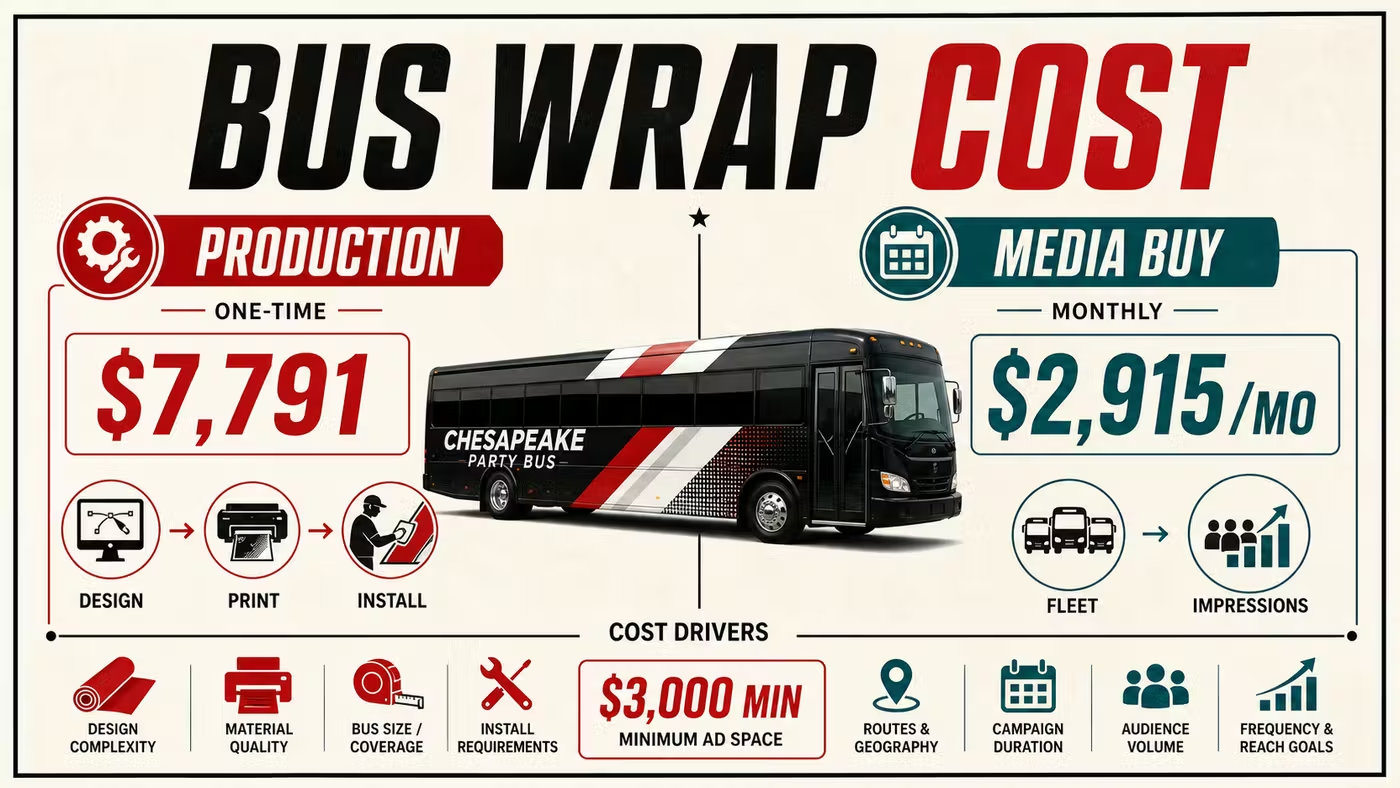
This is the section every other article botches. There are two completely separate cost models in the bus wrap world, and conflating them is the single biggest reason marketing decision-makers walk away from quotes confused or, worse, overpay.
Production cost is what you pay to design, print, and install the vinyl wrap on a bus you own, or the production fee attached to a standard transit-ad placement. It is a one-time expense for that creative/install cycle. Once the wrap is on the bus, it stays there until you remove it or replace the campaign creative.
Media buy cost is what you pay a transit authority or a private fleet operator to rent ad space on a bus they own and operate. It is a recurring monthly expense, billed for as long as your campaign runs. The bus belongs to them, the route or fleet rotation belongs to them, and the impressions belong to them — you are essentially leasing the surface area.
If you own a charter bus, a hotel shuttle, or a corporate fleet, you are looking at production cost. If you are a brand running a campaign on Hampton Roads Transit (HRT) buses around Chesapeake, Norfolk, Portsmouth, Virginia Beach, Hampton, or Newport News, you are looking at media buy cost plus HRT’s production fees. Some buyers do both — wrap their own fleet and also buy media on a transit fleet for additional reach.
Production Cost (One-Time, You Own the Bus or Produce the Transit Ad)
Coverage Type One-Time Production Cost Full HRT bus wrap HRT publishes a $7,791 production fee for a full bus wrap King Kong HRT publishes a $2,665 production fee for King Kong Super King HRT publishes a $375 production fee for Super King King HRT publishes a $175 production fee for King Queen HRT publishes a $137 production fee for Queen Taillight HRT publishes a $110 production fee for Taillight Interior Card HRT publishes a $32 production fee for Interior Card Private bus, motorcoach, minibus, or shuttle wrap Quote-based; ask for a separate production quote that breaks out design, print, laminate, prep, install, and removal
Those HRT numbers are useful for a Chesapeake-area transit campaign, but they do not automatically tell you what a private, fully custom wrap on a motorcoach, shuttle, Sprinter, or school bus will cost. A privately owned 56-passenger charter bus can involve substantially more design, prep, panel alignment, installation labor, and post-heating than a standard transit-panel production job. The quote should identify the exact film, laminate, printer process, installer, warranty, expected removal method, and whether window perf is included.
Media Buy Cost (Monthly, Per Bus)
For Hampton Roads, use the local rate card instead of generic national averages. HRT’s November 2025 rate card lists $2,915/month for a one-month full bus wrap, $2,739/month for three months, $2,618/month for six months, and $2,310/month for twelve months, with production billed separately. The same rate card lists $644/month for King Kong, $457/month for Super King, $352/month for King, $292/month for Queen, $226/month for Taillight, and $39/month for Interior Card on a one-month buy.
It also states that rates are not inclusive of production fees and there is a $3,000 minimum requirement to purchase advertising space.
One local-market detail matters a lot: HRT does not sell route-specific certainty. Its rate card says HRT is not able to commit an advertisement to any specific bus route; buses rotate daily within the Southside region or the Peninsula/Northside region. So a campaign can choose regional exposure, but it should not promise that one wrapped bus will stay on Route 20, Route 13, or any other single corridor.
What Drives the Cost
Whether you are buying production or buying media, the same handful of variables move the number:
- Bus size and shape: Larger buses require more material and more labor. A 56-passenger motorcoach is a more complicated surface than a smaller shuttle because of its length, panel count, luggage-bay doors, wheel wells, roofline, and curved bodywork.
- Coverage type: Full wrap vs. partial vs. king/queen, per the table above.
- Vinyl grade: Premium cast films are the better fit for long-term, complex fleet and vehicle wraps; 3M IJ180mC is built for fleet graphics, full vehicle wraps, corrugations, and rivets, while ORAJET 3551RA is positioned for more limited-conformability work.
- Design complexity: Solid colors with vector logos print more simply. Full-bleed photography with gradients, specialty finishes, or complex panel alignment costs more.
- Market and placement rules: Some markets price premium corridors differently, but for HRT, bus ads rotate within regional fleets rather than being committed to specific routes.
- Campaign length: Longer media buys often reduce the monthly rate. HRT’s full-wrap media price steps down from $2,915/month for one month to $2,310/month on a twelve-month term.
- Season and availability: Install calendars, vehicle availability, tourism season, and major events can all affect scheduling. In coastal Virginia, summer campaigns can be tighter operationally than Q1 campaigns.
Is Bus Wrap Advertising Worth It? (ROI and CPM)
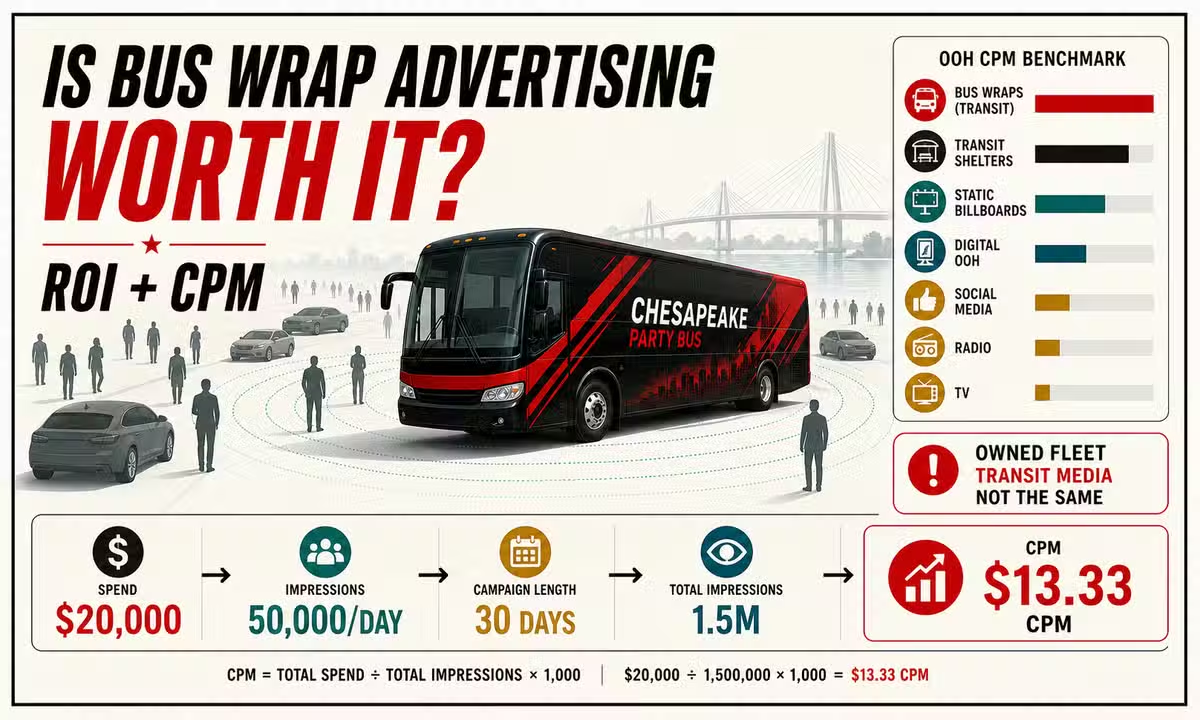
The honest answer is: it depends entirely on your campaign goals, your audience, and how disciplined you are about the cost-per-impression (CPM) math. Here is the data:
- Vehicle wrap CPM: Fleet graphics can be extremely cost-efficient when production cost is amortized over the useful life of a vehicle you own. 3M says fleet graphics can cost as little as $0.15 per thousand impressions. That is an owned-fleet economics claim, not a blanket CPM for a short-term paid transit media buy.
- Daily impressions per wrapped vehicle: 3M also cites research showing 30,000–70,000 daily vehicular impressions for vehicle advertising. For a paid bus media buy, ask the transit vendor or media owner for the actual impression methodology for the campaign, not just a generic wrapped-vehicle number.
- Vehicle-wrap noticeability: OAAA and Morning Consult found that 49% of U.S. adults noticed wrapped vehicles or other signs on vehicles in the past 30 days, while 47% noticed ads on the side of a public bus. That puts vehicle wraps among the more noticed OOH formats, but not second overall after static billboards.
- Transit ad attention: OAAA and Morning Consult also found that 75% of adults noticed at least one form of transit ad in the past 30 days, 57% noticed one in the past 7 days, and 77% look at at least one form of transit ad all, most, or some of the time.
- Industry growth: The broader OOH category is still growing. OAAA reported that U.S. out-of-home advertising revenue reached a record $9.46 billion in 2025, and that transit was the fastest-growing segment for the second consecutive year, rising 9.2% annually.
Now compare CPM across channels. These are benchmark estimates, not universal guarantees. Solomon’s 2025 Major Media CPM Comparison puts transit shelters at $2–$8 CPM, posters at $3–$13 CPM, bulletins at $3–$10 CPM, and digital place-based media at $7–$16 CPM.
The same comparison puts social media at $2–$8 CPM, terrestrial radio at $4–$8 CPM, broadcast TV excluding primetime at $24–$27 CPM, and broadcast TV primetime at $45–$49 CPM. Solomon’s chart does not break out bus wraps as their own CPM line, so a bus-wrap CPM should be calculated from the specific media cost, production cost, campaign length, and measured impressions.
Worked CPM Example: Say you spend $20,000 for one month on a full wrap in a major metro. If that bus generates 50,000 impressions per day × 30 days, that is 1.5 million impressions, and your CPM is $13.33. That is a campaign-specific transit media-buy CPM.
It is not the same thing as the sub-$1 owned-fleet CPM often cited for vehicle graphics amortized over years of use. If a vendor presents a sub-$1 CPM for a short-term transit media buy, ask them to show the verified impression methodology and whether production cost, media cost, campaign length, and vehicle rotation are all included.
When Bus Wraps Don’t Make Sense
We are not going to pretend wraps are universally right. Three situations where the channel underdelivers:
- Hyper-specific geographic targeting: If your customer base is one zip code or one neighborhood, a bus rotating through a broad regional fleet may waste impressions on the wrong audience. A geofenced digital campaign or a static billboard at the right intersection may beat a wrap.
- High-consideration products: A wrap delivers a short viewing window per impression. That is enough for brand recall, not enough to communicate the complete value prop of a $50,000 enterprise software platform.
- Brands needing rapid creative rotation: A wrap is committed for the length of the install. If your campaign needs weekly creative refresh — flash sales, dated promotions, product drops — digital OOH or programmatic transit advertising rotates in seconds. Vinyl does not.
Bus Wraps vs. Other OOH (Billboards, Digital Screens, Transit Shelters)
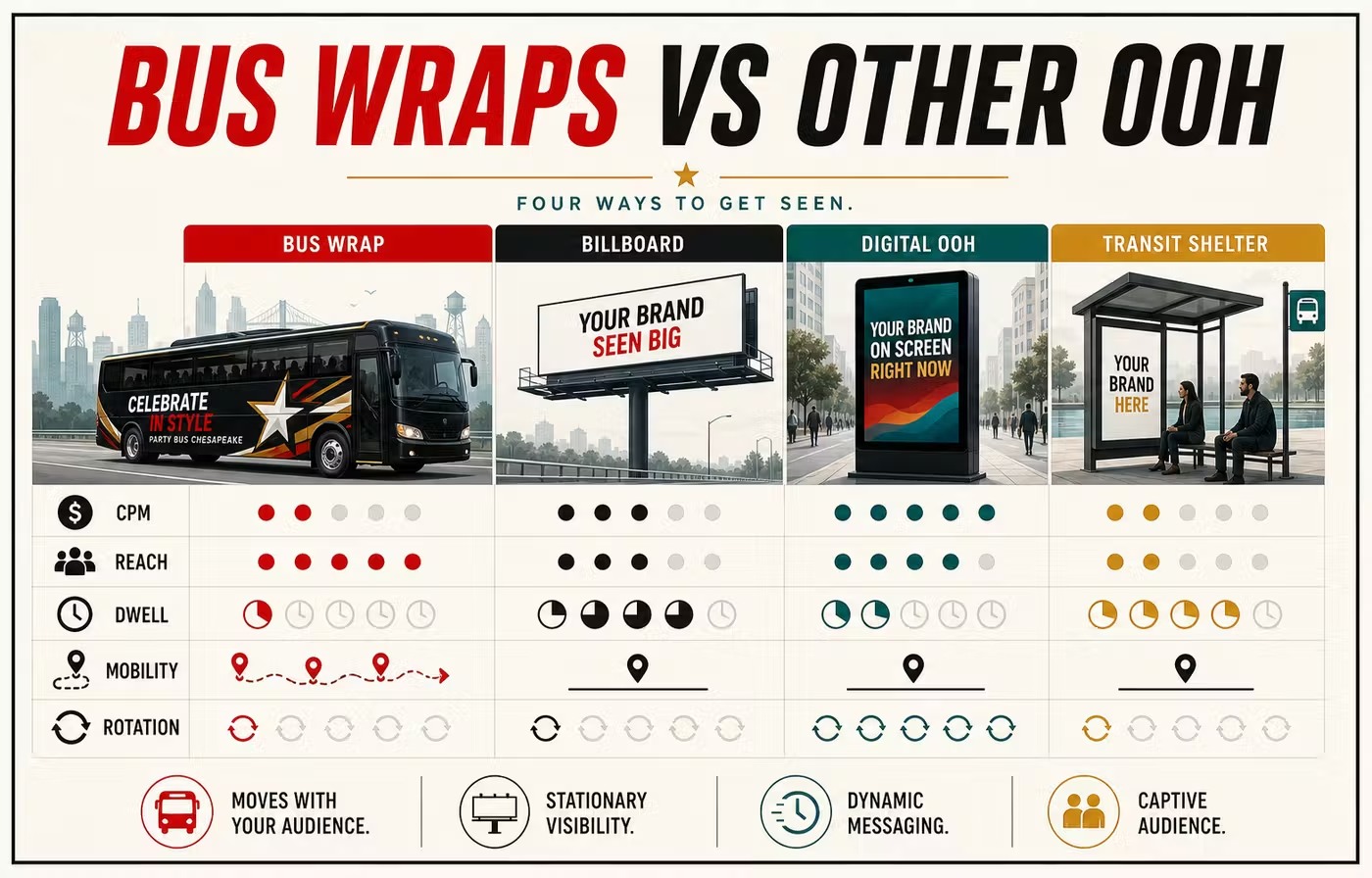
Out-of-home is a category, not a tactic, and choosing the right format within it matters more than people realize. Here is how bus wraps compare to the other big three:
Criteria Bus Wrap Static Billboard Digital OOH Transit Shelter CPM Owned-fleet graphics can be extremely low when amortized over years; paid transit wraps require campaign-specific CPM math Solomon benchmarks bulletins at $3–$10 CPM Solomon benchmarks digital place-based media at $7–$16 CPM Solomon benchmarks transit shelters at $2–$8 CPM Reach High — mobile, multi-route, or fleet-rotation exposure Fixed location Fixed location Fixed location Dwell time Short viewing window per impression Longer if traffic is stopped or slow 5–30 seconds depending on location and creative 30–90 seconds for waiting riders Mobility Yes — but route control depends on who owns or operates the bus None None None Creative canvas Large, contoured Large, flat Bright, motion-capable Small, vertical Creative rotation Days to weeks for vinyl reprint Weeks to months Seconds Weeks Campaign minimum Often one month or more for transit media 4–12 weeks Programmatic can be hourly 4 weeks is common Measurement standard Geopath or vendor methodology Geopath Geopath + programmatic vendor data Geopath
The honest read: billboards beat bus wraps on consistent visibility at a known location and on dwell time. A driver stuck in traffic on I-664 stares at the same billboard for minutes. They may only glimpse the bus wrap in front of them for seconds.
Bus wraps beat billboards on mobility and fleet-wide reach — one wrapped bus can travel through many neighborhoods instead of sitting at a single point. Digital OOH beats both on rotation speed and dayparting, which matters for time-sensitive campaigns. Transit shelters split the difference — longer dwell because riders are waiting, fixed location, mid-range CPM, decent creative canvas.
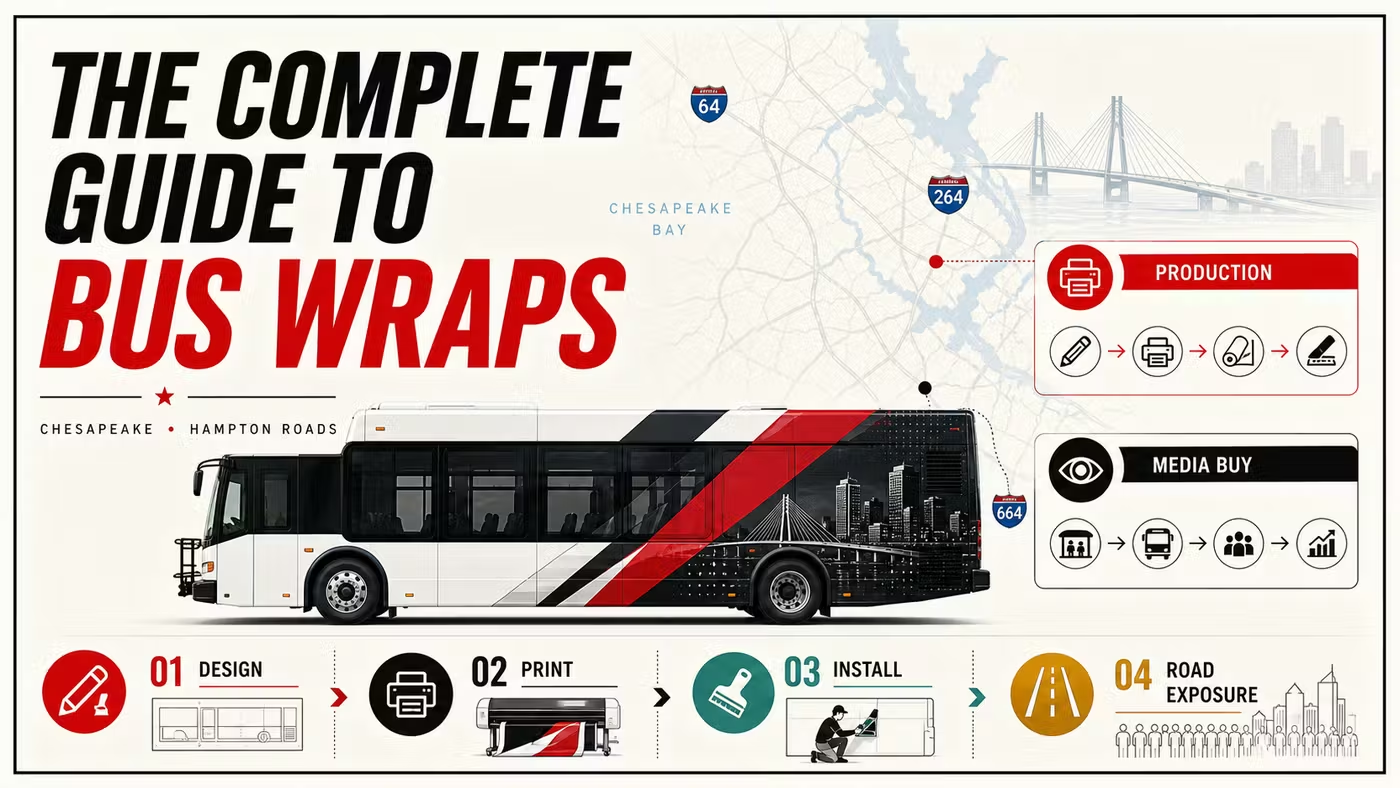
How Bus Wraps Are Made and Installed (The Production Process)
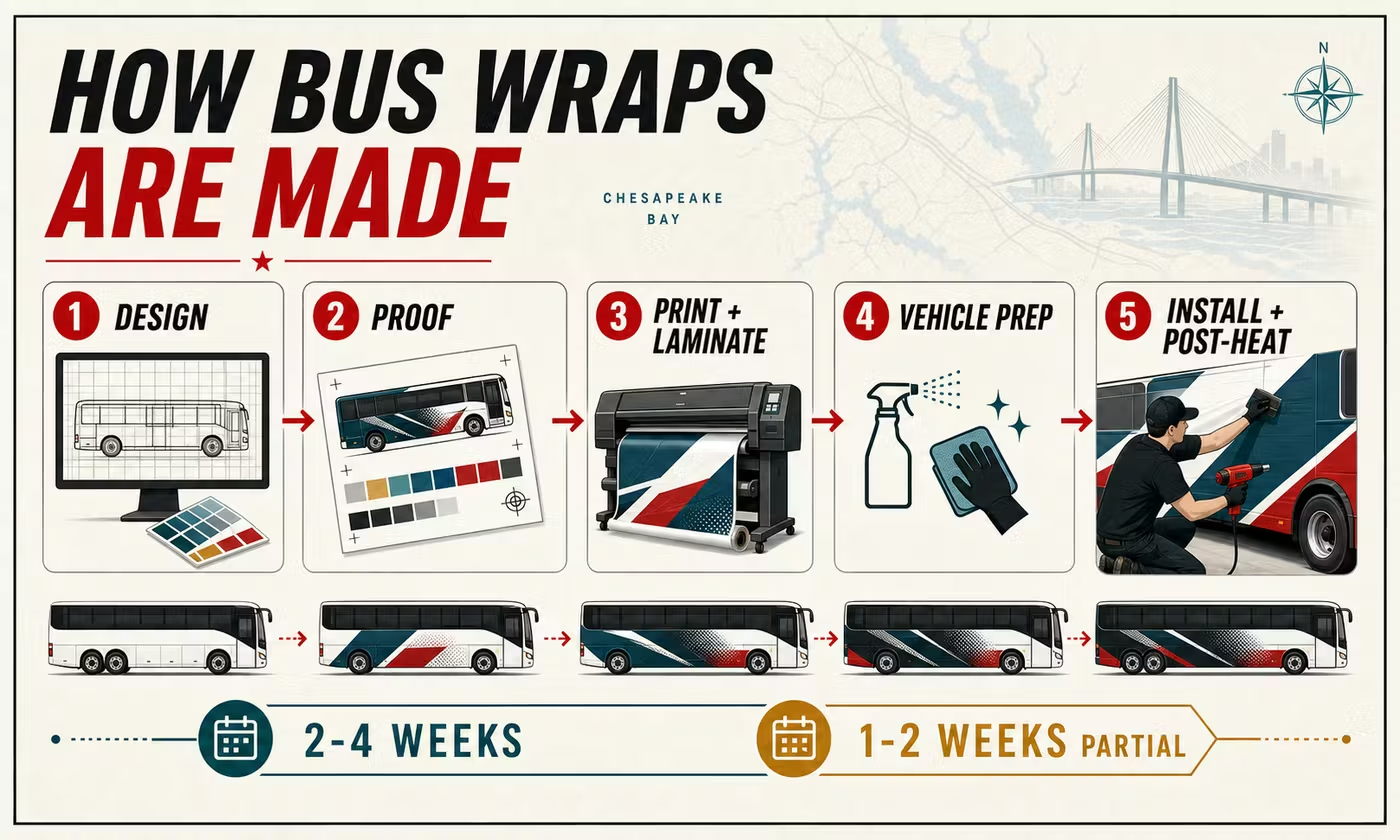
The production process matters because shortcuts in any of these stages are what cause bubbling, lifting, and premature failure. The five stages of a quality wrap install:
- Design: Your designer works from a vehicle template that matches the exact make, model, and body length of the bus — rivets, fuel doors, mirror locations, wheel wells, panel seams, doors, and emergency-exit panels all matter. Mock-ups should go through revision before proof approval.
- Proof and approval: A proof gives you a chance to verify color, logo placement, font size, and resolution at viewing distance. A common rookie error is approving a proof at laptop scale when the actual letters will be read from across traffic.
- Print and laminate: A large-format printer lays down the design on the specified film. A film such as 3M IJ180mC is designed for long-term removable inkjet-printed signs, fleet graphics, full vehicle wraps, and watercraft. A protective laminate goes over the print to handle UV, salt air, washing, and daily road abuse.
- Vehicle prep: The bus is washed, decontaminated, and cleaned so wax, silicone, oil, salt, and residue do not interfere with adhesion. Skipping this is how you get bubbles and lifting in month four.
- Installation and post-heat: Vinyl is laid by hand, panel by panel, by trained installers using heat, squeegees, and alignment marks. Edges are tucked into seams and channels, then heat-set so the film holds its shape around curves, rivets, and recesses.
Realistic total timeline: 2–4 weeks from order to bus on the road for a full wrap; 1–2 weeks for a partial, depending on design approvals, production queue, material availability, vehicle prep, install complexity, and transit-authority review if you are buying media on someone else’s bus.
Durability depends on material, exposure, maintenance, washing method, climate, and whether the wrap is vertical or horizontal. ORAFOL’s ORAJET 3951RA+ ProSlide spec, for example, lists printed-and-laminated durability of 7 years in Climate Zone 1, 5 years in Climate Zone 2, and 3 years in Climate Zone 3, based on vertical outdoor exposure with professional installation, care, and maintenance. Coastal markets like Chesapeake can wear wraps faster than inland markets because of UV, humidity, heat, road grime, and salt air.
Removal is cleanest if the install was professional and the wrap is removed within the material’s intended service life. If the install was sloppy or the vinyl was mismatched to the job, removal can turn into a multi-day adhesive-residue nightmare.
Bus Wrap Advertising by Use Case
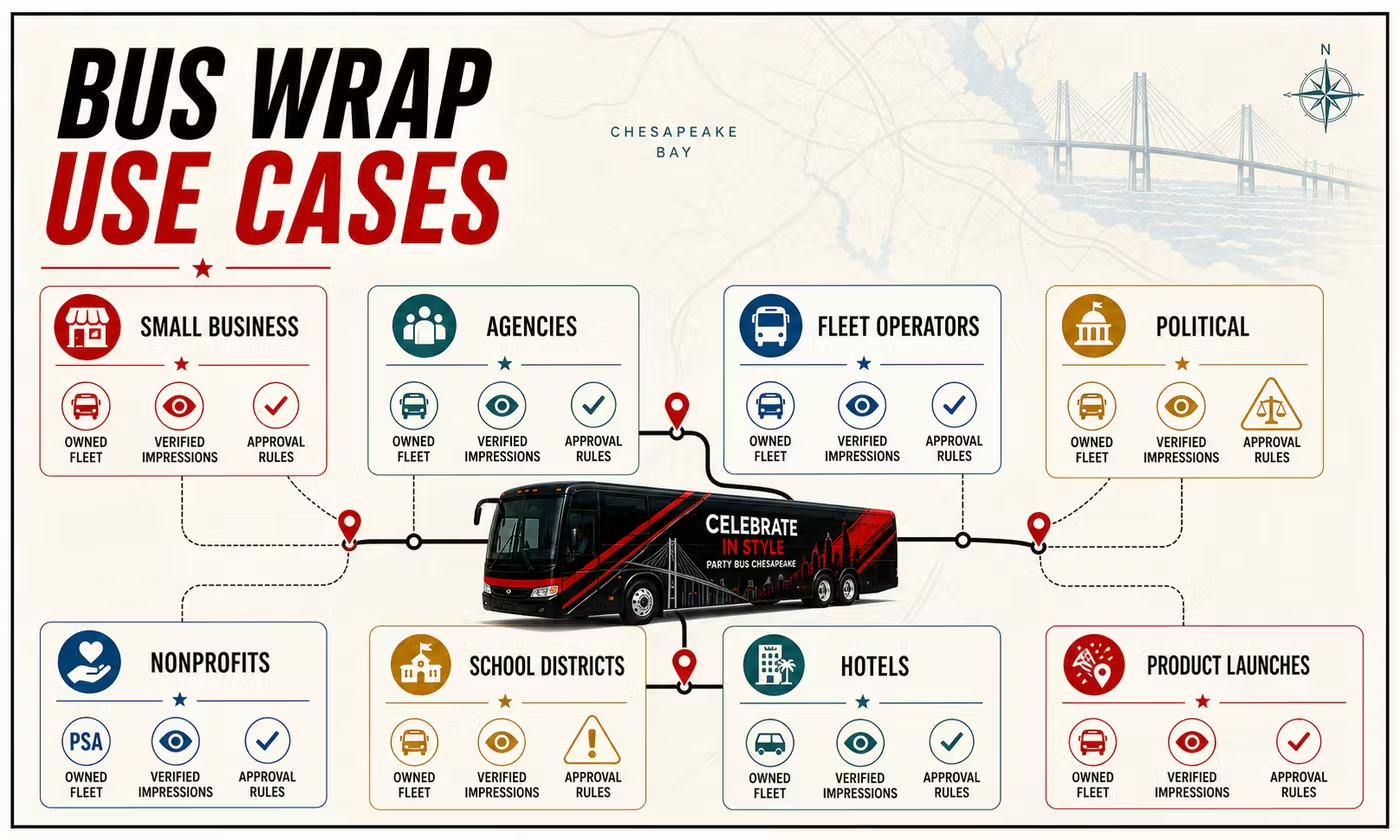
Coverage and budget recommendations vary a lot by who is buying. Here is the situation-specific read:
For Small Businesses
If you are a Chesapeake-based SMB — a roofer in Greenbrier, a restaurant in Western Branch, a contractor working sites across Hampton Roads — start with a partial wrap or a large side graphic on a vehicle you already own, such as a Sprinter van, box truck, shuttle bus, or service vehicle. Owned-fleet wraps are where the CPM can get especially efficient because you are amortizing production over years of use. A $7,000 wrap on a vehicle generating 30,000 impressions/day for 3 years delivers around 32.9 million impressions, for an effective CPM of about $0.21 before maintenance and removal.
That is the logic behind owned-fleet wrap economics, and it is different from a short-term transit media buy.
For Agencies and Media Buyers
You are working with media buy, not just production. Ask the transit authority or vendor for verified impression numbers, not only estimated reach. GRP, reach, and frequency should all be quoted against a defined audience demo when available.
Geopath explains that OOH measurement moves from opportunity-to-see toward impressions through visibility research, with the Visibility Adjustment Index applied to arrive at daily impressions. Transit can fit cleanly into a multi-channel mix as a high-reach brand-building layer underneath your performance digital and retail OOH.
For Charter and Shuttle Bus Network Operators
You have two strategic options. Option one: brand your own fleet with consistent livery, turning every charter run into a rolling brand impression. Option two: sell wrap space as a revenue stream, but price it based on your real routes, real vehicle availability, real proof-of-play, and real impression model.
The economics work best when your fleet runs high-visibility routes such as airport transfers, sporting event shuttles, convention transfers, or hotel shuttles. Wrap durability matters more in this scenario because you are amortizing the cost over multiple media-buy contracts.
For Political Campaigns
Tight timeline-to-Election-Day is the constraint. A full wrap can take 2–4 weeks production-to-road, so plan backward from your peak visibility window. For public-transit media, first confirm whether the media owner accepts political advertising at all.
HRT does not: its advertising policy defines political advertising as ads supporting or opposing candidates, ballot issues, referendums, political agendas, and related matters, then lists political advertising among prohibited advertising on HRT vehicles and facilities. For privately owned campaign buses or non-HRT media buys, federal campaign communications may require FEC disclaimers. The FEC says public communications include outdoor advertising facilities and that required disclaimers must be clear and conspicuous.
For printed communications, the FEC requires the disclaimer to be set apart in a printed box with sufficient size and contrast; its 12-point safe harbor applies only to printed material no larger than 24” x 36”, while larger communications are judged case by case. State and local campaign-disclosure rules may also apply.
For Nonprofits and Awareness Campaigns
Some transit authorities offer nonprofit or PSA options. HRT’s policy says qualified nonprofits may be allowed to display PSA materials at discounted rates and locations at HRT’s discretion, and it also says PSAs must be non-commercial, non-partisan, non-political, and may be displayed for up to 90 days. The play is awareness, not direct response.
Pair the wrap with a memorable URL or SMS shortcode rather than a phone number that nobody will read off a moving vehicle.
For School Districts
School bus exterior messaging is controlled by state law. In Virginia, the rule is narrow: Code of Virginia § 22.1-177 allows local school boards to display U.S. flag decals, school-bus-safety decals, and decals, posters, or stickers advertising the hiring of school bus drivers in the local school division.
General commercial sponsorship advertising should not be described as permitted on Virginia public school buses without a separate, current legal basis.
For Hotels and Hospitality
If you run an airport shuttle out of a Chesapeake or Norfolk-area hotel, your shuttle is the first and last impression a guest forms of your property. A full or partial wrap on a Sprinter, shuttle bus, or minibus turns a utility vehicle into a brand asset. Pair it with consistent interior branding for compounding effect.
For Product Launches and Events
Short-burst campaigns — a movie premiere, a product drop, a trade show activation — live in the 30-to-90-day window. Specify removable materials from the start if the campaign is temporary. Route customization matters when you control the vehicle or are using a private shuttle or charter.
A launch wrap circling the Virginia Beach Convention Center during a trade show can deliver focused impressions that a general-route bus cannot match; however, for HRT media, the published bus-ad program does not commit advertisements to specific routes.
Common Mistakes to Avoid
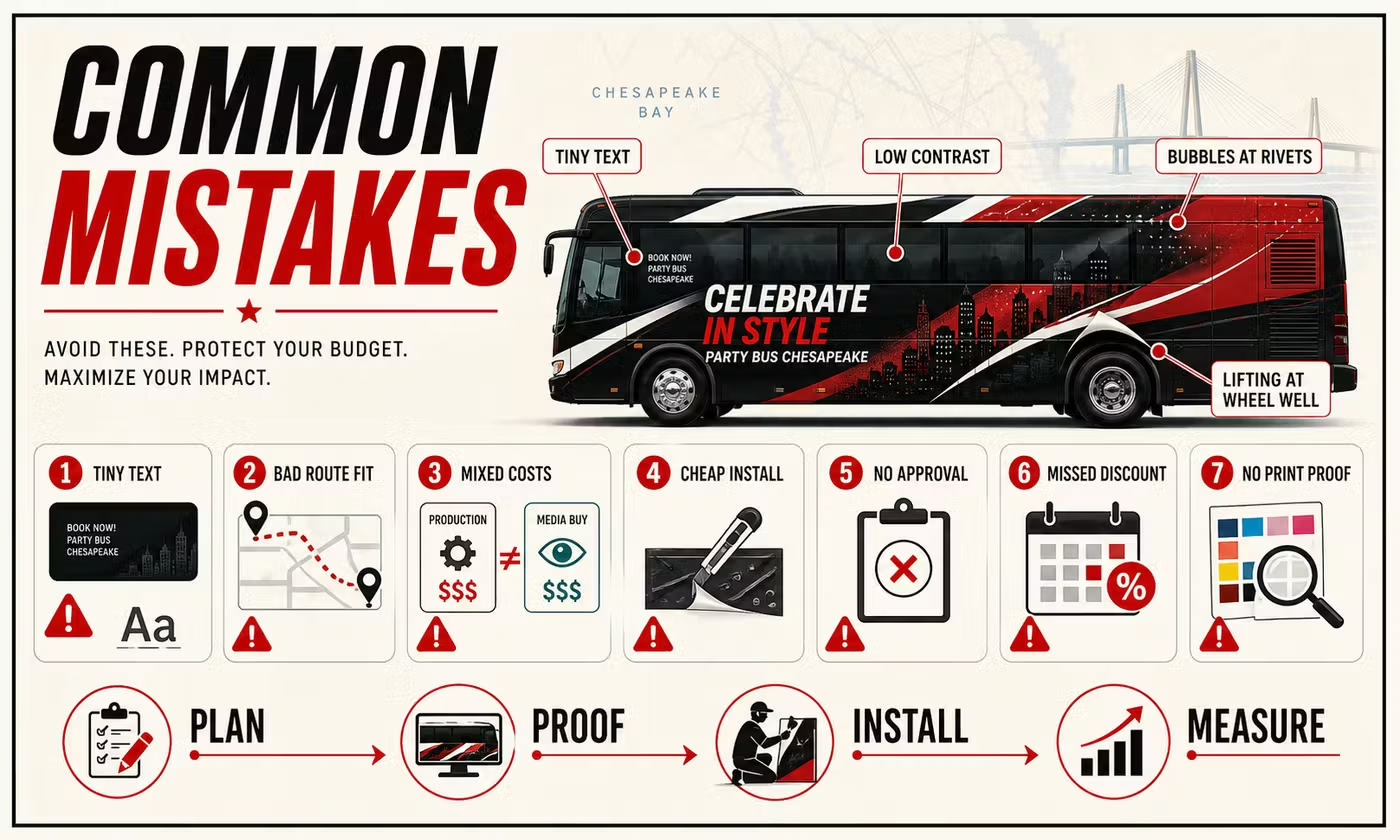
After watching hundreds of wraps come together over the years, these are the mistakes that consistently waste budget:
- Designing for stationary view instead of in-motion view. A wrap is seen quickly and from distance, not on a laptop screen. Body copy under 4” tall is usually wasted. Hairline fonts disappear. Low-contrast color combinations vanish in afternoon light. Correction: Test your design at scale by printing the bus side at 1:10 ratio and viewing it from 25 feet away. If you can’t read it, neither can the driver behind you.
- Ignoring route demographics and placement rules. Buying a wrap on a route or fleet rotation that does not match your customer geography means paying for impressions that may never convert. Correction: Ask for the available audience breakdown for the market, route, region, or fleet rotation you are buying. For HRT, ads cannot be committed to specific bus routes and buses rotate daily within the chosen region.
- Confusing production cost with media-buy cost when budgeting. Approving a production budget and then being shocked by a monthly media-buy invoice is the most common budget blow-up in the channel. Correction: Decide upfront whether you are buying production on a vehicle you own or leasing media space on someone else’s bus. Do not mix the line items.
- Choosing non-certified installers to save a little upfront. The unbranded shop in an industrial park might look cheaper. Six months later, the cheap wrap is bubbling along every rivet line and lifting at the wheel wells. Correction: Require a warranty-backed installer, documented materials, and a credible installation standard. 3M describes its Certified Graphics Installation Company program as its highest level of graphics-installation accreditation, and 3M also backs qualifying graphics systems through its MCS Warranty program.
- Skipping the transit-authority approval process for political or controversial content. Every transit authority has a content review process. Submitting politically charged creative without pre-approval can get your campaign rejected or pulled. Correction: Submit creative for approval before you commit to the media buy, and for HRT specifically, remember that political advertising is prohibited.
- Not checking campaign-length discounts. Monthly rate cards are starting points, not endings. Correction: Longer commitments often step down in monthly price. HRT’s full-wrap media rate, for example, drops from $2,915/month for a one-month buy to $2,310/month for a twelve-month buy.
- Approving proofs without seeing print samples. Color on a screen is not color on vinyl. A red that reads vibrant on your monitor can print pink on a sun-faded wrap two summers in. Correction: Insist on a printed proof, viewed in daylight, before you approve full production.
How to Choose a Bus Wrap Vendor
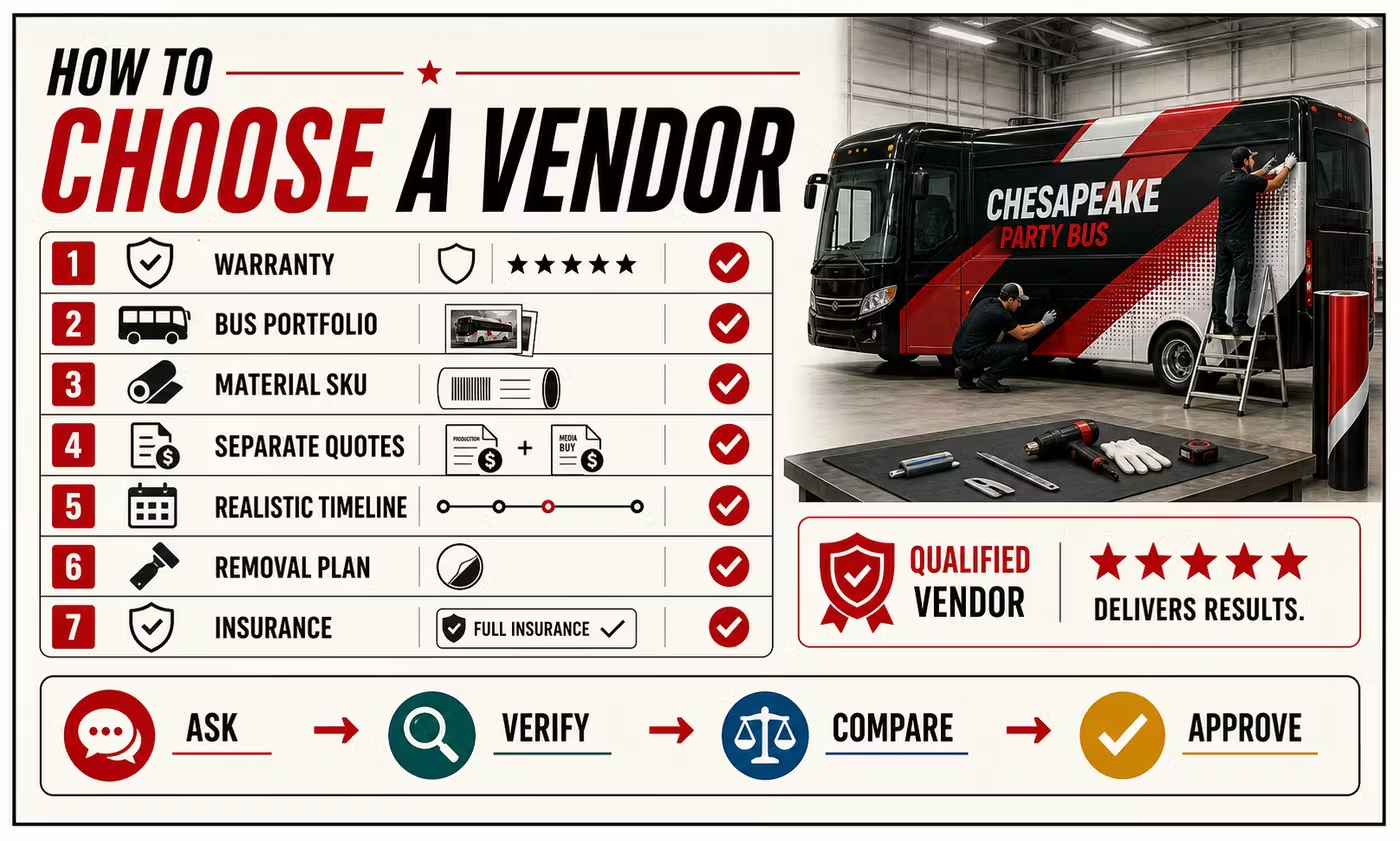
One screen, no padding. The checklist of qualifiers a credible vendor should meet:
- Warranty-backed materials and certified installation. For long-term fleet work, ask whether the project qualifies for a manufacturer-backed warranty such as 3M MCS Warranty coverage and whether the installer has relevant graphics-installation accreditation.
- Named portfolio of bus-specific installs. Not just car wraps, not just food trucks. Buses have unique contours, panel counts, door seams, emergency-exit considerations, and window-perf rules.
- Transparency on materials. They should tell you, without hesitation, exactly which 3M / Avery Dennison / ORAFOL SKU they will use and which laminate goes over it.
- Clear separation of production vs. media buy quotes. If the vendor lumps both into a single number, walk.
- Realistic timeline. A vendor promising a full-size bus wrap in a few business days may be cutting corners on proofing, production, vehicle prep, or installation care.
- Documented removal process and warranty. What does removal cost? What happens if the vinyl damages the underlying paint? Who owns that risk?
- Insurance and liability documentation. If your bus is in their shop for several days, they should carry coverage that protects the vehicle.
Frequently Asked Questions
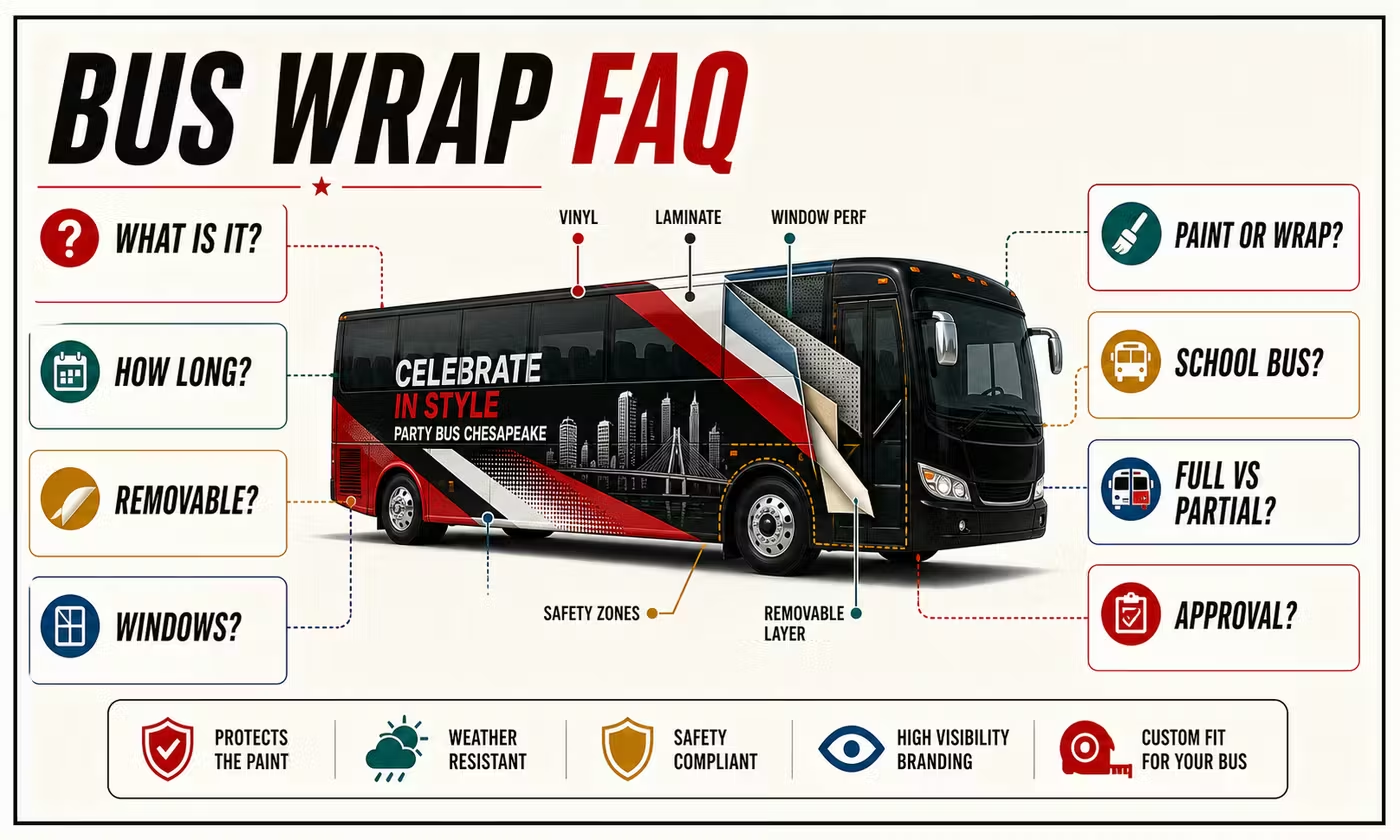
What is a bus wrap?
A bus wrap is a large-format adhesive vinyl graphic, custom-printed and applied to the exterior of a bus to advertise a brand or change the vehicle’s appearance. Wraps can cover the entire body (full wrap) or specific panels (partial, king side, queen side, tail, or ribbon), and perforated window film can let graphics extend over approved glass areas while keeping interior visibility intact.
How long does a bus wrap last?
A professionally installed bus wrap commonly lasts several years, but the exact service life depends on the film, laminate, climate, vehicle use, washing method, and whether the wrap is on vertical or horizontal surfaces. ORAFOL’s ORAJET 3951RA+ ProSlide spec gives printed-and-laminated durability of 7 years in Climate Zone 1, 5 years in Climate Zone 2, and 3 years in Climate Zone 3 for vertical outdoor exposure with professional installation and proper care. Coastal markets like Chesapeake can see faster wear from UV, humidity, and salt air.
Are bus wraps removable?
Yes, professionally installed wraps are removable in most cases, provided removal happens within the vinyl’s intended service life and the paint underneath is in good condition. After prolonged sun exposure, adhesive can bond more aggressively and removal takes longer. A properly installed wrap can also help protect the underlying paint from UV exposure while it is on the vehicle.
Can you wrap windows on a bus?
Yes, using perforated window film on approved glass areas. The film is printed and opaque from the outside but see-through from the inside, so passenger visibility is preserved. Driver windshields, driver sightlines, mirrors, emergency exits, lights, doors, and required markings must remain compliant with applicable safety rules and transit-authority specifications.
Is it cheaper to paint or wrap a bus?
Wrapping is usually cheaper and faster than a full custom paint job when the design is promotional, temporary, or likely to change. Wraps are also removable, while paint is not. For exact pricing, compare a paint quote against a wrap quote that breaks out design, print, laminate, prep, install, removal, and warranty.
How much does it cost to wrap a school bus?
A school bus wrap can range widely depending on the bus size, coverage, material grade, design, and whether the vehicle is privately owned or still operating as a public school bus. If the vehicle is a public school bus in Virginia, the more important issue is legality: Virginia law allows limited decals and messages such as U.S. flag decals, school-bus-safety decals, and school-bus-driver hiring messages, not general commercial sponsorship advertising.
What’s the difference between a full wrap and a partial wrap?
A full wrap covers most or all of the bus body and may include approved perforated window film. A partial wrap covers a defined section, such as one side panel, the lower half of the body, or the rear. Full wraps deliver the biggest visual impact; partial wraps are less expensive and often make more sense for smaller budgets or shorter campaigns.
How long does it take to install a bus wrap?
Installation alone can take one to several days depending on vehicle size, coverage, installer staffing, body condition, and complexity. From order to bus-on-the-road, plan around 2–4 weeks for a full wrap once you include design, proofing, print, laminate, vehicle prep, installation, post-heating, and any transit-authority creative review.
What materials are used for bus wraps?
Premium digitally printable films used for commercial bus and fleet wraps include 3M Print Wrap Film IJ180mC, Avery Dennison MPI 1105, and ORAFOL ORAJET 3951RA+ ProSlide. A protective laminate goes over the print, and perforated window films handle approved glass surfaces. Avery Dennison Supreme Wrapping Film is a color-change wrap line, while ORAJET 3551RA is better suited to signage, spot vehicle graphics, and limited-conformability wraps.
Do I need transit authority approval for a bus wrap?
If you are wrapping your own privately owned bus, you do not need transit-authority approval unless you are operating under that authority’s program, but you still need to comply with vehicle-safety rules, insurance requirements, and applicable state or local laws. If you are buying media on a transit authority’s bus, yes — the authority reviews creative for content compliance, brand safety, and its advertising policy. In Hampton Roads, HRT’s advertising policy gives HRT discretion over ad acceptance and prohibits categories including political advertising, tobacco advertising, firearms advertising, and certain other restricted content.
The Bottom Line
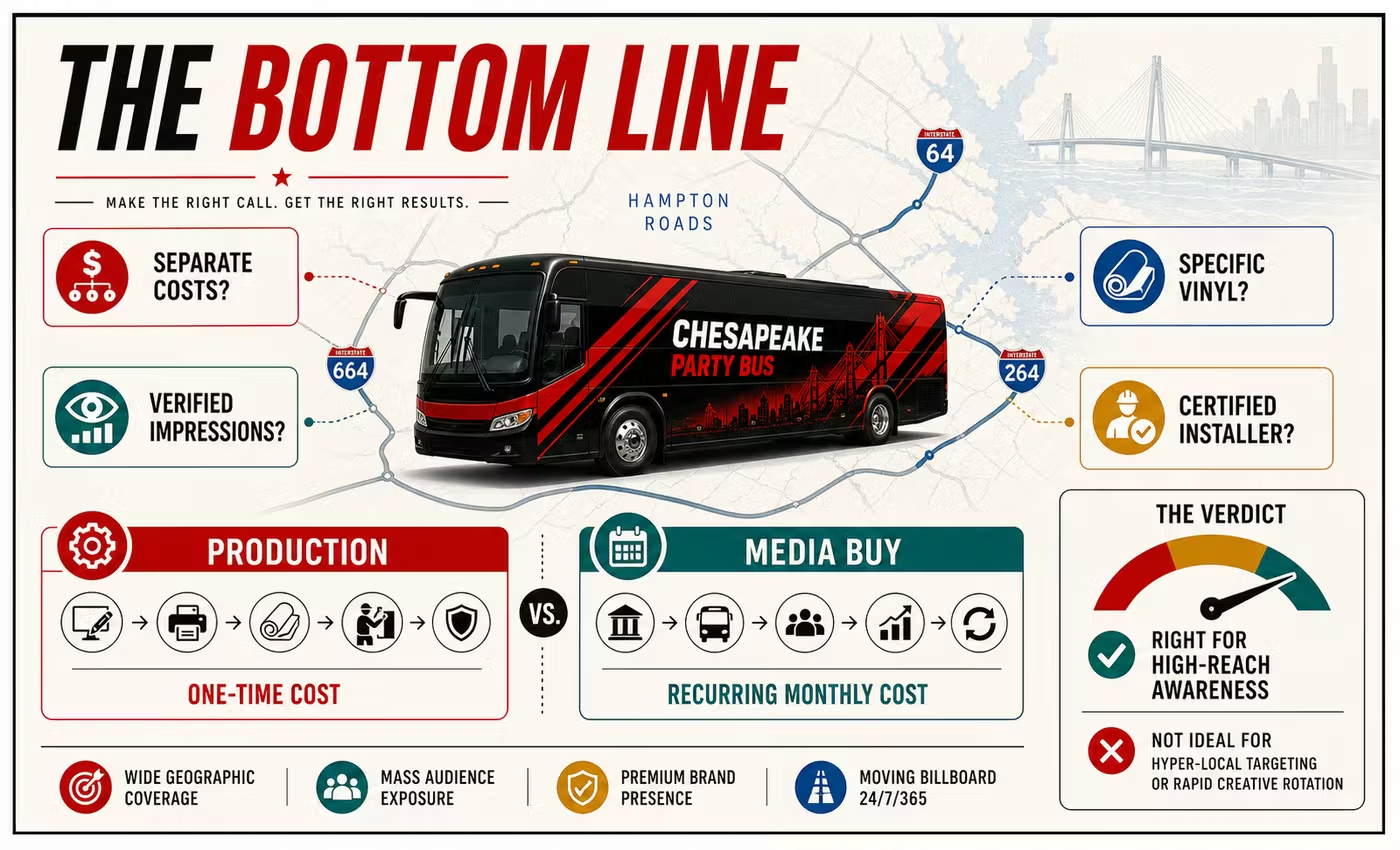
Bus wraps can be one of the lowest-CPM advertising channels available, but only if you keep the two cost models — production vs. media buy — separated in your budgeting from day one. Production is a one-time cost tied to design, print, materials, prep, install, and removal.
Media buy is a recurring cost on someone else’s bus. For Hampton Roads campaigns, HRT’s published rate card lists $2,915/month for a one-month full bus wrap, $2,310/month on a twelve-month term, a separate $7,791 production fee, and a $3,000 minimum ad-space purchase. Fleet graphics can be extremely low-CPM when production cost is amortized over the useful life of a vehicle you own, but short-term transit-authority media buys should be calculated from actual monthly media cost, production cost, campaign length, and verified impressions.
OAAA and Morning Consult found that 49% of adults noticed wrapped vehicles or other signs on vehicles in the past 30 days, while 47% noticed ads on the side of a public bus. The wrap is right for high-reach brand awareness; it is wrong for hyper-local geographic targeting or campaigns needing rapid creative rotation.
If you are weighing a wrap for a Chesapeake-area campaign — or wrapping a vehicle in your own fleet that runs the I-64, I-264, or I-664 corridor — the smart starting move is to walk into the conversation with the production-vs-media-buy distinction already drawn. Ask any vendor to quote the two separately. Ask for verified impression numbers, not vendor estimates.
Ask which specific vinyl SKU they will use, and require a credible certification or warranty-backed installer. If they can answer all four questions in the first call without backtracking, you are talking to the right shop.