Whether you are planning a wedding shuttle to a Hampton Roads venue, organizing fan travel from Chesapeake to a Washington Commanders game, or vetting an operator for an upcoming corporate retreat to Colonial Williamsburg, the name on the side of the bus actually matters. The major charter bus manufacturers each have distinct strengths, model lineups, and reputations for build quality, longevity, and ride comfort. At Party Bus Chesapeake, we have spent over 15 years moving groups across the country in coaches from every major OEM, so we put this guide together to help trip planners, fleet buyers, and curious researchers understand who builds the buses that move group travel in North America today.
Below you will find a cross-manufacturer comparison matrix, a flagship-model spec table, and a 2026 state-of-the-industry callout you will not find anywhere else. Want to skip the research and just book. Call 757-755-8162 for an all-inclusive quote on a Chesapeake charter bus rental, or use our online tool to compare pictures and pricing in under 30 seconds.
What Is a Charter Bus Manufacturer?
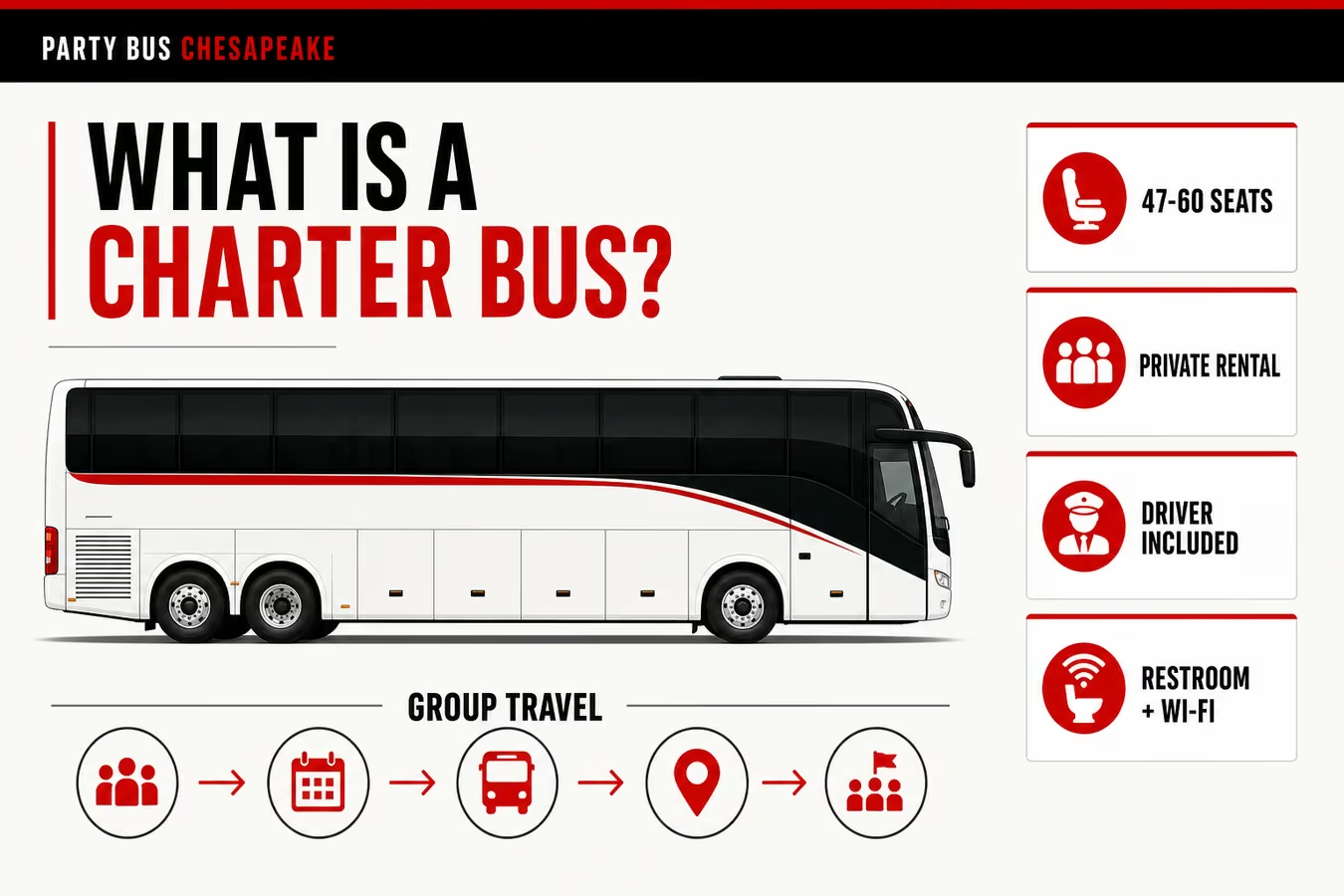
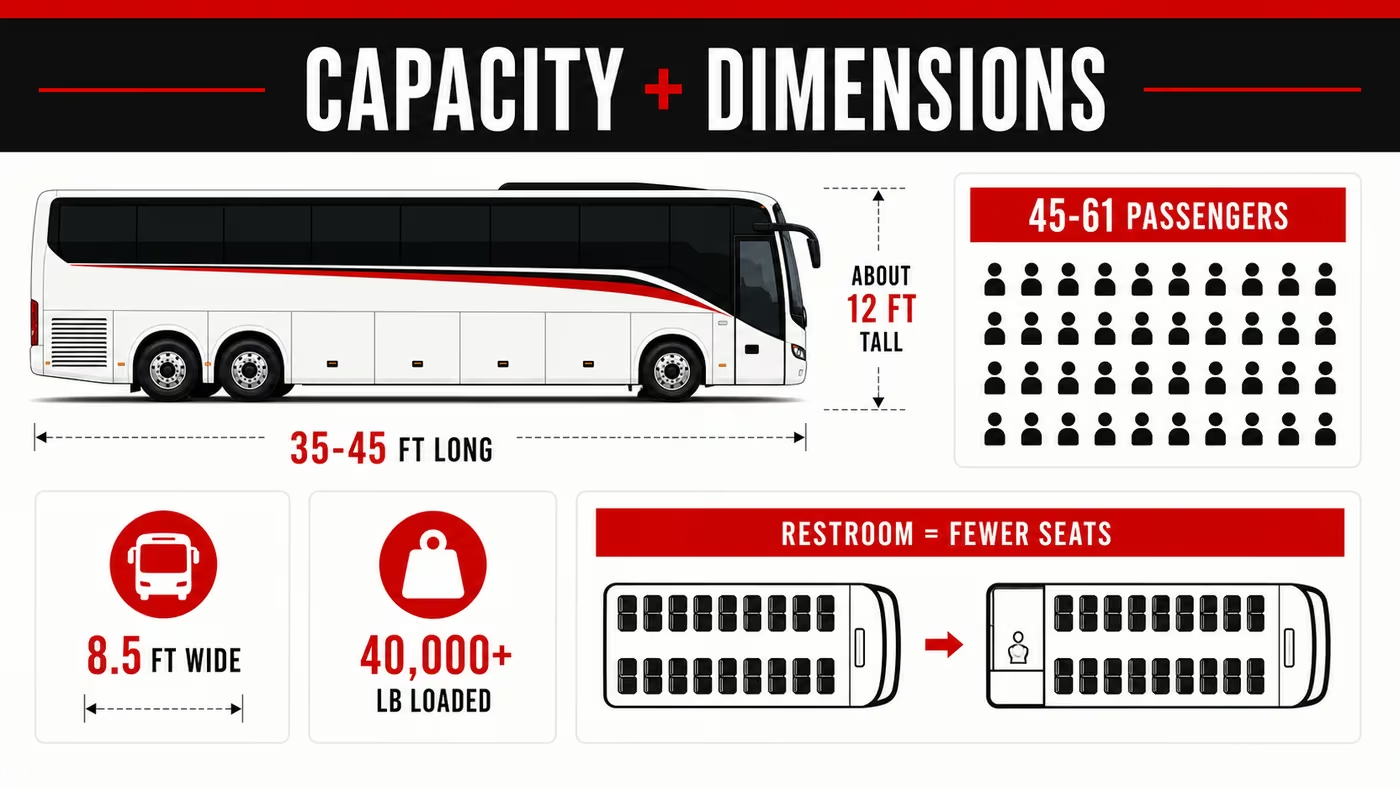
A charter bus manufacturer is an original equipment manufacturer (OEM) that designs and builds the long-distance coach buses used for chartered group travel. These are sometimes called motorcoaches, intercity coaches, or touring coaches, and they are built to a different standard than transit buses, school buses, or shuttle vans. A typical full-size charter bus from a major OEM seats 40 to 56 passengers, carries undercarriage luggage bays, includes climate control and reclining seats, and is engineered for highway-speed long-haul service over a 12- to 18-year operational life.
It helps to disambiguate a few related terms upfront. A motorcoach is the industry term for a touring or charter coach—the kind of vehicle you book through Party Bus Chesapeake for a group trip. A motorhome is a Class A recreational vehicle (RV) designed for personal lodging, not group transportation.
A coach bus is generally synonymous with motorcoach. A charter bus is a motorcoach rented for a specific trip or event. A school bus is built to federal school-transportation safety standards (FMVSS 222) and is yellow for a reason.
A transit bus is the city-route bus you see in urban service, built by manufacturers like New Flyer or Gillig. A minibus is a smaller cousin to the full coach, typically seating 15 to 35 passengers—see our 15- to 35-passenger minibus page for the smaller end of our fleet.
One more distinction worth knowing: an OEM (like MCI or Prevost) actually builds the bus, while a distributor (like ABC Companies) handles sales and service for OEMs in a region, and a converter (like Liberty Coach or Marathon) buys a finished coach shell from an OEM and customizes the interior into an ultra-luxury entertainer or executive coach. We will cover each of these below.
The State of the Charter Bus Industry Today (2026)
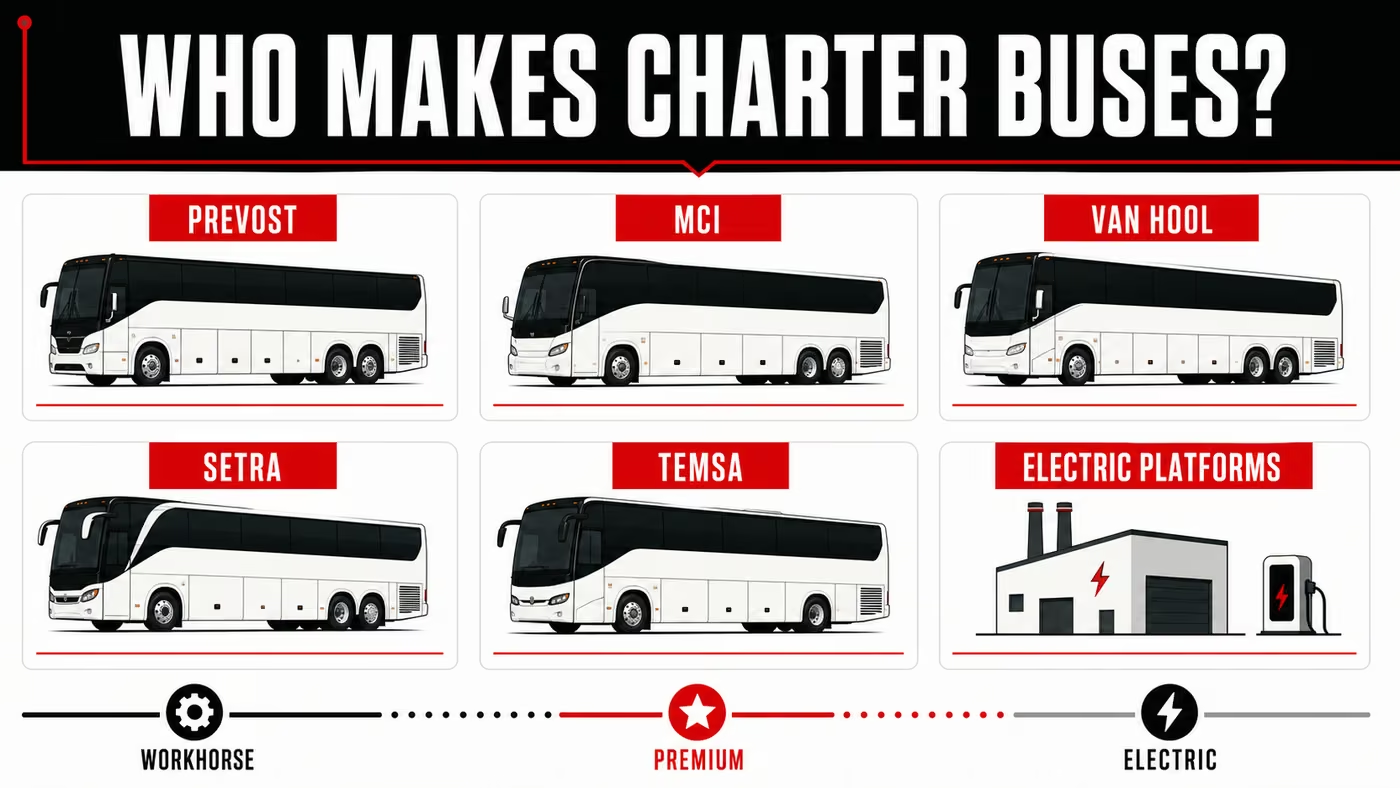
The North American motorcoach industry moves hundreds of millions of passengers a year, according to the American Bus Association, and is dominated by a handful of OEMs. In the United States and Canada, the “Big Four” charter bus manufacturers are MCI (Motor Coach Industries), Prevost, Van Hool, and Temsa—with Volvo Buses playing a meaningful role through the Volvo 9700 and its ownership of Prevost. Setra, the German premium-coach brand under Daimler Buses, was historically a fifth major presence but withdrew from the North American market in 2019.
The market has shifted noticeably since 2023. Here is a quick recency callout for trip planners and fleet buyers:
- Van Hool filed for bankruptcy in 2024, with its bus and coach operations subsequently restructured under VDL Bus & Coach and Guido Dumarey’s investment vehicle GVM. The Van Hool name continues, but its US new-sales distribution remains in transition through 2026.
- Setra withdrew from the North American market in 2019, and Daimler Buses no longer sells new Setra coaches to US buyers. Existing Setra units in operator fleets continue to run, but they are legacy assets at this point.
- MCI has been part of NFI Group since 2015, the Winnipeg-based parent that also owns transit-bus maker New Flyer. NFI is publicly traded on the Toronto Stock Exchange (TSX: NFI).
- Proterra, the early electric-coach startup, filed for Chapter 11 in 2023 and was acquired in pieces, with Volvo picking up the battery business. The deployable electric-coach landscape in 2026 is narrower than the press cycle of 2021 suggested.
- The electric charter coach is here, but in small numbers. MCI offers the J4500 CHARGE, Temsa has the TS 45E, and BYD assembles electric coaches in Lancaster, California, primarily for transit applications.
What this means for a trip planner in 2026: when you book a charter coach through Party Bus Chesapeake in Chesapeake, it is most likely to be an MCI or a Prevost, with a smaller share of Van Hool, Temsa, or Volvo units depending on the operator. Setra coaches may still appear on certain fleets but are no longer being sold new.
The Major North American Charter Bus Manufacturers
Motor Coach Industries (MCI)
If you have ridden a Greyhound, a corporate shuttle to a convention center, or a typical 56-passenger charter coach anywhere in the US, there is a strong chance it was an MCI. Motor Coach Industries was founded in 1933 by Harry Zoltok in Winnipeg, Manitoba, and has grown into the largest North American supplier of intercity and charter coaches by market share. The company is headquartered in Des Plaines, Illinois, with production facilities in Pembina, North Dakota and Winnipeg, and has operated as part of NFI Group since 2015.
MCI’s flagship is the J4500, the best-selling touring coach in North America for over two decades running. The J4500 is the model most likely to be parked in the lot at the Hampton Roads Convention Center, or pulled up curbside at a Norfolk International Airport (ORF) charter zone for an arriving group. It seats up to 56 passengers, includes massive undercarriage luggage bays, and is engineered for highway-speed long-haul service.
Other current MCI models include the J3500 (a slightly shorter version of the J4500), the D45 CRT LE (a low-entry commuter variant), and the J4500 CHARGE (the battery-electric version). Recent J4500 model years pair a Detroit Diesel DD13 inline-six engine with an Allison or ZF automatic transmission depending on the operator’s spec.
If you book a 40- to 56-passenger charter bus through Party Bus Chesapeake in the Chesapeake area, an MCI J4500 is statistically the most likely coach to show up.
Prevost Car
Prevost is the prestige nameplate in the North American coach market. Founded in 1924 by Eugene Prevost as a cabinetry shop in Sainte-Claire, Quebec, the company has built buses since the 1940s and has been owned by Volvo Group since 1995. Prevost is widely considered the build-quality and resale-value leader among charter bus manufacturers, and its coaches are the chassis of choice for nearly every major entertainer-coach converter (Liberty Coach, Marathon, Featherlite, Newell).
Prevost’s two flagship models for the North American charter market are the H3-45 and the X3-45. The H3-45 is the high-deck luxury touring coach—the one with the elevated passenger compartment and the dramatic side profile—favored for long-distance tour groups, premium charter operators, and the entertainer-coach conversion market. The X3-45 is the more modern, aerodynamic flagship introduced to bring Prevost into a contemporary highway profile while keeping the build quality the brand is known for.
Prevost also distributes the Volvo 9700 through its dealer network in North America, since Volvo owns the company.
Prevost’s Sainte-Claire plant is ISO 14001 certified, and the company’s H3-45 is referenced occasionally for its high-profile customer base—Ground Force One, the US president’s road convoy bus, is a heavily customized Prevost H3-45. If your operator hands you a Prevost on your Chesapeake wedding charter or premium corporate transfer, you are riding on the gold standard of the North American touring coach market.
Van Hool
Van Hool was, for decades, the most respected European entrant in the North American charter market. Founded in 1947 by Bernard Van Hool in Koningshooikt, Belgium, the company stayed family-owned for most of its history and built a reputation for FRP (fiber-reinforced plastic) monocoque construction, distinctive European styling, and a build philosophy that prized engineering elegance over volume.
In the US, Van Hool was historically distributed by ABC Companies (based in Faribault, Minnesota, with Tennessee operations), and the most common Van Hool coaches in US fleets are the CX45 (a mid-level touring coach), the TX45 and TX Acron (luxury touring coaches), and the TDX double-decker. The CX45 in particular became a popular choice for operators wanting a step up from the standard J4500 without paying full Prevost prices.
The big news in Van Hool’s recent history is the 2024 bankruptcy filing, which led to the company’s bus and coach operations being acquired and restructured under VDL Bus & Coach and GVM. As of 2026, Van Hool-branded coaches are still being built in Belgium under the new ownership, but the US new-sales picture remains in transition. Existing Van Hool coaches in US charter fleets continue to operate normally, and parts and service remain available through the historical distributor network, but a buyer evaluating a brand-new Van Hool order in 2026 should verify the current US-market status directly.
Setra (and Daimler Buses)
Setra is the premium coach nameplate of EvoBus / Daimler Buses, headquartered in Ulm, Germany, with roots going back to 1893. Setra’s TopClass and ComfortClass coaches are the European charter market’s equivalent of Prevost in North America—premium, well-engineered, and known for long service lives.
Setra withdrew from the North American market in 2019, citing the costs of certifying European-spec coaches to US Federal Motor Vehicle Safety Standards (FMVSS) for a relatively small US market share. Daimler Buses no longer sells new Setra coaches to US buyers. The reason Setra still matters in a 2026 US charter conversation is that operator fleets purchased before 2019 are still in service—if you see a Setra parked at a hotel block during a wedding weekend or pulled up to a Williamsburg attraction for a group tour, it is a legacy unit, not a new order.
Parts and service for existing US Setra units remain available through the Daimler Buses parts network, but the brand’s active US new-sales presence is over.
Temsa
Temsa is a Turkish coach manufacturer founded in 1968 by the Sabancí Group, with coach manufacturing operations dating to 1987. The company is jointly owned by Sabancí Holding and Skoda Transportation (since 2020) and exports coaches globally, with US distribution historically handled through CH Bus Sales.
Temsa’s US lineup centers on the TS 30 (a smaller 30-foot mid-coach popular with smaller operators and hotel-shuttle conversions), the TS 35 (35-foot mid-coach), and the flagship TS 45 (45-foot full-size coach). Temsa also offers the TS 45E, a battery-electric version of the TS 45 introduced for fleet operators looking at zero-emission charter service. Temsa coaches are particularly common in small-to-mid-size fleet operations, hotel and resort shuttle fleets, and university transportation programs.
Volvo Buses (and the 9700)
Volvo Buses is the bus and coach division of the Volvo Group (separate from Volvo Cars, which is owned by Geely). In North America, Volvo’s flagship coach is the Volvo 9700, a 45-foot intercity coach built for the US and Canadian market. Because Volvo owns Prevost, the 9700 is distributed through Prevost’s North American dealer network, and the two coaches share engineering DNA in places, including chassis and drivetrain options.
Volvo Buses globally also offers hybrid and battery-electric coach variants, with the electric story largely centered on the European market. In a US charter context, the Volvo 9700 functions as a less-common alternative to the MCI J4500 or Prevost H3-45, with a particular following among operators who value the Volvo drivetrain reputation.
ABC Companies (the Distributor)
ABC Companies is not an OEM, but it functions as one in the day-to-day reality of charter bus procurement. Headquartered in Faribault, Minnesota, with regional operations across the US, ABC has historically been the exclusive US distributor for Van Hool and a key partner for Temsa through its CH Bus Sales subsidiary. ABC handles sales, parts, service, used coach resale, and operator financing for the OEMs it represents.
If you are a fleet operator and you buy a Van Hool in the US, you buy it through ABC.
NFI Group (the Parent That Owns MCI)
NFI Group, headquartered in Winnipeg, is the publicly traded parent (TSX: NFI) of both MCI and New Flyer—giving it ownership of the largest North American supplier of both charter coaches (MCI) and transit buses (New Flyer). NFI’s investor reports are a useful public source for MCI sales figures and model-year update news. The company also operates Carfair Composites (body panels), Alexander Dennis (UK double-deckers), and a parts and service network under the NFI Parts and Vehicle Innovation Center brands.
Charter Bus Manufacturers Compared
Below is a cross-manufacturer comparison matrix you will not find on competing pages. Facts verified against OEM model pages, Wikipedia entity references, and NFI Group / Volvo Group investor materials as of May 2026.
| Manufacturer | Founded | Headquarters | Current Parent | Primary Production | Flagship Coaches | Electric Offering | Selling New in US (2026) |
|---|---|---|---|---|---|---|---|
| MCI | 1933 | Des Plaines, IL | NFI Group | Pembina, ND and Winnipeg, MB | J4500, J3500, D45 CRT LE | J4500 CHARGE | Yes, largest US market share |
| Prevost | 1924 | Sainte-Claire, QC | Volvo Group | Sainte-Claire, QC | H3-45, X3-45 | X3-45e, limited deployment | Yes |
| Van Hool | 1947 | Koningshooikt, Belgium | VDL and GVM, post-2024 | Belgium | CX45, TX45, TDX | None current US | In transition |
| Setra | 1893 | Ulm, Germany | Daimler Buses | Germany | TopClass, ComfortClass | EU only | No, exited North America in 2019 |
| Temsa | 1968 | Adana, Turkey | Sabanci and Skoda | Turkey | TS 30, TS 35, TS 45 | TS 45E | Yes, via CH Bus Sales |
| Volvo Buses | 1928 | Gothenburg, Sweden | Volvo Group | Multiple | Volvo 9700 | EU primary | Yes, via Prevost network |
Flagship Charter Bus Models Compared
Here is a side-by-side spec comparison of the flagship 45-foot coach models from each major manufacturer. Specs verified against OEM model pages where published; figures vary slightly by model year and operator order spec.
| Spec | MCI J4500 | Prevost H3-45 | Prevost X3-45 | Volvo 9700 | Van Hool CX45 | Temsa TS 45 |
|---|---|---|---|---|---|---|
| Length | 45 ft | 45 ft | 45 ft | 45 ft | 45 ft | 45 ft |
| Seating capacity | Up to 56 | Up to 56 | Up to 56 | Up to 56 | Up to 56 | Up to 57 |
| GVWR | About 54,000 lb | About 54,000 lb | About 54,000 lb | About 54,000 lb | About 54,000 lb | About 50,700 lb |
| Height | About 11 ft 9 in | About 12 ft 5 in | About 12 ft | About 12 ft | About 12 ft 3 in | About 12 ft 4 in |
| Width | 102 in | 102 in | 102 in | 102 in | 102 in | 102 in |
| Luggage capacity | About 450 cu ft | About 440 cu ft | About 450 cu ft | About 440 cu ft | About 450 cu ft | About 480 cu ft |
| Fuel tank | About 183 gal | About 200 gal | About 200 gal | About 183 gal | About 200 gal | About 180 gal |
| Engine | Detroit DD13 | Volvo D13 | Volvo D13 | Volvo D13 | Cummins X15 | Cummins X15 |
| Transmission | Allison / ZF | Volvo I-Shift | Volvo I-Shift | Volvo I-Shift | Allison / ZF | Allison / ZF |
| Year introduced | 2001 | 1993 | 2015 | 2001 | 2003 | 2008 |
| Electric variant | J4500 CHARGE | None current US | X3-45e, limited deployment | EU only | None current US | TS 45E |
Luxury Entertainer-Coach Converters
If you have ever seen a country music star’s tour bus or a Fortune 500 CEO’s private coach, the chances are high that the shell underneath the custom interior is a Prevost H3-45 or a Prevost X3-45, with a smaller number on MCI shells. The reason is that a handful of specialist converters—not OEMs—buy a finished coach shell from Prevost or MCI and rebuild the interior into an ultra-luxury private coach. The leading names in this niche are Liberty Coach (Stuart, Florida), Marathon Coach (Coburg, Oregon), Featherlite Coaches (Cresco, Iowa), and Newell Coach (Miami, Oklahoma).
These are not the buses you book through a charter operator. They are private executive and entertainer coaches sold to individual owners—musicians, athletes, corporate executives, high-net-worth families—for personal use. They matter to a charter bus conversation only because they explain why the Prevost H3-45 silhouette is so iconic; you have probably seen the H3-45 shell more often as a tour bus on the road than as a fleet charter coach.
For group charter rentals through Party Bus Chesapeake, you are looking at the standard OEM-spec coach, not a converted entertainer bus.
Emerging-Market and Electric Coach Manufacturers
Outside the established Big Four, several global manufacturers have a meaningful presence worth knowing about. Yutong (China) is by some measures the world’s largest bus manufacturer by volume, though its North American charter presence is limited. BYD (China) operates a US assembly plant in Lancaster, California, primarily for transit electric buses and trucks, with limited US charter-coach distribution.
King Long and Golden Dragon are additional major Chinese OEMs with global presence but minimal US charter-fleet adoption. Zhongtong rounds out the major Chinese coach exporters.
For US fleet operators receiving federal funding for transit projects, the Buy America Act requires US-produced or US-assembled vehicles, which has limited Chinese OEM expansion into the US transit and coach market beyond BYD’s Lancaster operation.
On the electric-coach side, the deployable options in 2026 are narrower than the press coverage of 2021 might have suggested. The MCI J4500 CHARGE, the Prevost X3-45e (in development and limited deployment), the Temsa TS 45E, and BYD’s coach platforms are the main electric options reaching US fleet buyers. Proterra, which had been an early-2020s electric-bus headline, filed for Chapter 11 in 2023 and exited the coach market entirely, with its battery business acquired by Volvo.
How to Identify a Charter Bus’s Manufacturer
You can usually identify a charter coach’s manufacturer from the curb without even seeing a badge. Here are the visual cues:
- MCI J4500: A clean, somewhat boxy highway-coach silhouette with a relatively flat front face, a tall windshield, and the MCI roundel badge usually centered on the front above the windshield. The most common 45-foot coach you will see on US roads.
- Prevost H3-45: Instantly recognizable by its elevated high-deck profile—the passenger compartment sits noticeably higher than the engine bay area at the rear, giving the coach a tall, almost double-decker-adjacent silhouette. The Prevost badge sits on the front above the windshield.
- Prevost X3-45: A more aerodynamic, sloped front and modern proportions compared to the H3-45. Still tall, but less dramatically high-decked.
- Van Hool CX45 / TX45: Distinctive European styling with a more rounded, sculpted exterior than the boxier American coaches. The Van Hool name is usually badged on the rear and sides.
- Volvo 9700: Resembles the Prevost X3-45 in proportions (shared engineering) but with Volvo’s iron-mark badge on the front.
- Temsa TS 45: European-styled with characteristic Turkish coach proportions; Temsa script badging on the front.
If you are vetting a charter operator, asking what manufacturers are in their fleet is a fair question. A serious operator will answer honestly.
Best Charter Bus by Use Case
Different groups need different coach profiles. Here is how the OEM landscape maps to common Party Bus Chesapeake trip types in the Chesapeake and Hampton Roads area:
Wedding shuttles: The standard 45- to 56-passenger coach—usually an MCI J4500 or Van Hool CX45—is the workhorse. For the bridal party itself, a 14-passenger Sprinter limo is the photo-ready pick, and our 15- to 50-passenger party buses handle bachelor and bachelorette nights out with a built-in bar and LED lighting. See our Chesapeake wedding charter bus page for the full options.
Sports team travel: Coaches need undercarriage luggage bays for equipment, reclining seats for post-game rest, and onboard restrooms for long highway hauls to away games. MCI J4500 and Prevost H3-45 are the typical picks. Visit our Chesapeake sporting event charter bus page for fan group and team options.
Senior citizen trips: Prevost H3-45 high-deck coaches give better sightlines for scenic tours along the Blue Ridge Parkway or to Colonial Williamsburg. Onboard restrooms and ADA-accessible features can be included at no extra charge—just let us know when you book.
School field trips: The standard MCI J4500 with overhead storage and luggage bays is ideal. Climate control, three-point lap-and-shoulder seatbelts on newer model years, and overhead bins for student backpacks make full-size coaches a meaningful upgrade over yellow school buses. See our school field trip transportation page for the details.
Corporate events and conventions: Hampton Roads Convention Center shuttles, Norfolk International Airport (ORF) arrivals, and DC business transfers run best on coaches with onboard WiFi, power outlets, and the comfortable seating that lets executives keep working on the road. For smaller VIP groups, a Sprinter Van handles executive transfers cleanly. See our Chesapeake corporate event charter bus page.
Music tours and entertainer travel: This is the entertainer-coach converter market—the Liberty Coach, Marathon, Featherlite, and Newell custom builds on Prevost shells. Party Bus Chesapeake does not handle entertainer-coach conversions, but we do shuttle music tour ground crews on standard charter coaches between venues.
Small fleet operators and boutique charter: Temsa TS 30 and TS 35 mid-coaches and the MCI J3500 are popular picks for operators serving smaller groups, hotel shuttles, and university transportation contracts. Our Chesapeake minibus rental page covers the smaller end of our fleet.
Frequently Asked Questions About Charter Bus Manufacturers
Who is the largest charter bus manufacturer in North America?
MCI (Motor Coach Industries), now part of NFI Group, is the largest charter and intercity coach manufacturer by US market share. Its J4500 model is the best-selling touring coach in North America and has been for over two decades.
What is the most popular charter bus model?
The MCI J4500 is the most popular and most widely deployed charter bus in the US, with a single-model market share that exceeds any other current touring coach. The Prevost H3-45 and Prevost X3-45 are the most popular premium-tier options.
What is the best charter bus brand?
It depends on what you mean by “best.” For build quality and resale value, Prevost is widely considered the leader. For market share, parts availability, and the kind of coach you will most commonly book through Party Bus Chesapeake in the Chesapeake area, MCI is the leader. For European engineering and FRP monocoque construction, Van Hool has historically been the standout, though its US distribution is in transition after the 2024 restructuring.
Are there American-made charter buses?
Yes. MCI builds coaches in Pembina, North Dakota and Winnipeg, Manitoba, with substantial US-content production. Prevost builds in Sainte-Claire, Quebec.
Van Hool coaches are built in Belgium. Temsa coaches are built in Adana, Turkey. Setra coaches were built in Germany.
So the US-built share of new charter coach sales is meaningful, primarily through MCI’s Pembina, ND facility.
How long does a charter bus last?
A well-cared-for full-size charter coach typically runs 12 to 18 years and 1.5 to 2 million highway miles in commercial service before being retired or sold to a secondary market. Prevost coaches tend to hold up longest at the high end of that range; MCI J4500s tend to land squarely in the middle of it.
What’s the difference between a motorcoach and a motorhome?
A motorcoach is a commercial passenger coach built for group transportation—the kind of vehicle you book through Party Bus Chesapeake. A motorhome is a Class A recreational vehicle (RV) built for personal lodging. They look superficially similar from the outside (and many high-end motorhomes use Prevost coach shells as a starting point), but they are not interchangeable.
What engine comes in the latest MCI J4500?
Current J4500 model years use a Detroit Diesel DD13 inline-six diesel engine, paired with either an Allison or ZF automatic transmission depending on operator spec. The J4500 CHARGE electric variant uses a battery-electric drivetrain instead.
How much does an MCI J4500 weigh?
The MCI J4500’s gross vehicle weight rating (GVWR) is approximately 54,000 pounds (about 24,500 kg). Empty curb weight is around 38,000 to 40,000 pounds depending on configuration and onboard amenities.
What is the top speed of a charter bus?
Most US charter coaches are governor-limited to 65 to 70 mph in commercial service, though the chassis is mechanically capable of higher speeds. Top speed is a function of operator policy and safety regulation, not OEM capability.
Who makes the buses used by Greyhound, Megabus, and the US President?
Greyhound’s long-distance fleet has historically been dominated by MCI J4500 and Prevost X3-45 coaches. Megabus operates a mix of double-deckers (historically Van Hool TDX and Alexander Dennis Enviro units) and standard MCI coaches. Ground Force One, the US president’s road convoy bus, is a heavily customized Prevost H3-45 built by a specialist converter.
Booking a Charter Bus in Chesapeake
Now that you know who builds the coaches, the next step is matching the right coach to your group. Party Bus Chesapeake has worked with every major OEM in this guide—MCI, Prevost, Van Hool, Setra (legacy units), Temsa, Volvo—and our fleet in the Chesapeake and Hampton Roads area gives you access to 14-passenger Sprinter limos, 15- to 50-passenger party buses with built-in bar and LED lighting, 15- to 35-passenger minibuses, and 40- to 56-passenger charter coaches. Whether you are heading from Chesapeake to a Washington Commanders game, organizing a wedding shuttle for a ceremony at a Hampton Roads venue, or planning a school field trip to Colonial Williamsburg, we will match you with the right coach for the trip.
Call our 24/7 reservation team at 757-755-8162 for an all-inclusive quote, or use our online tool to compare pictures and pricing in under 30 seconds. Want to read more about what to expect when you book? Visit our FAQ page, or check out our Chesapeake party bus pricing guide.