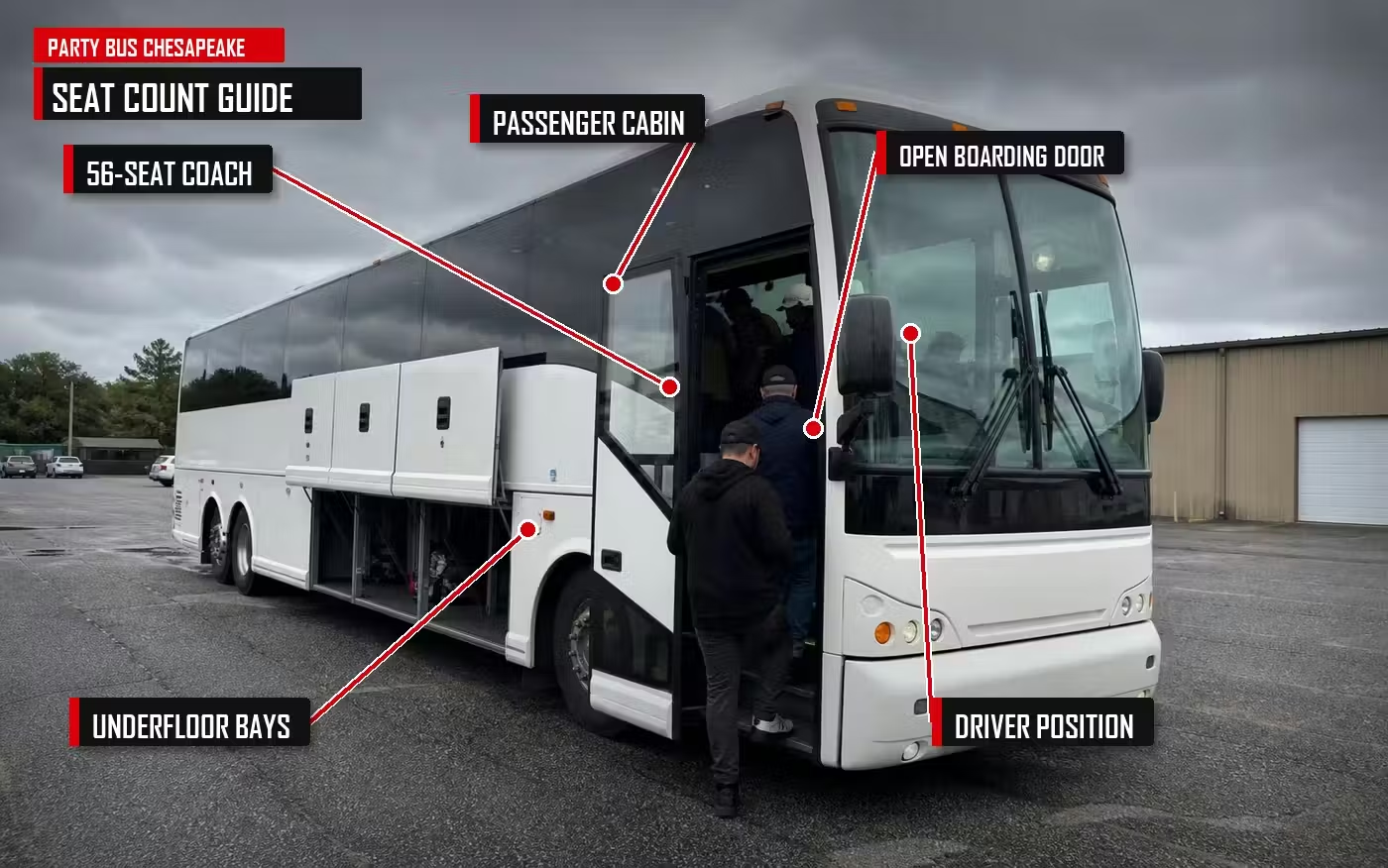
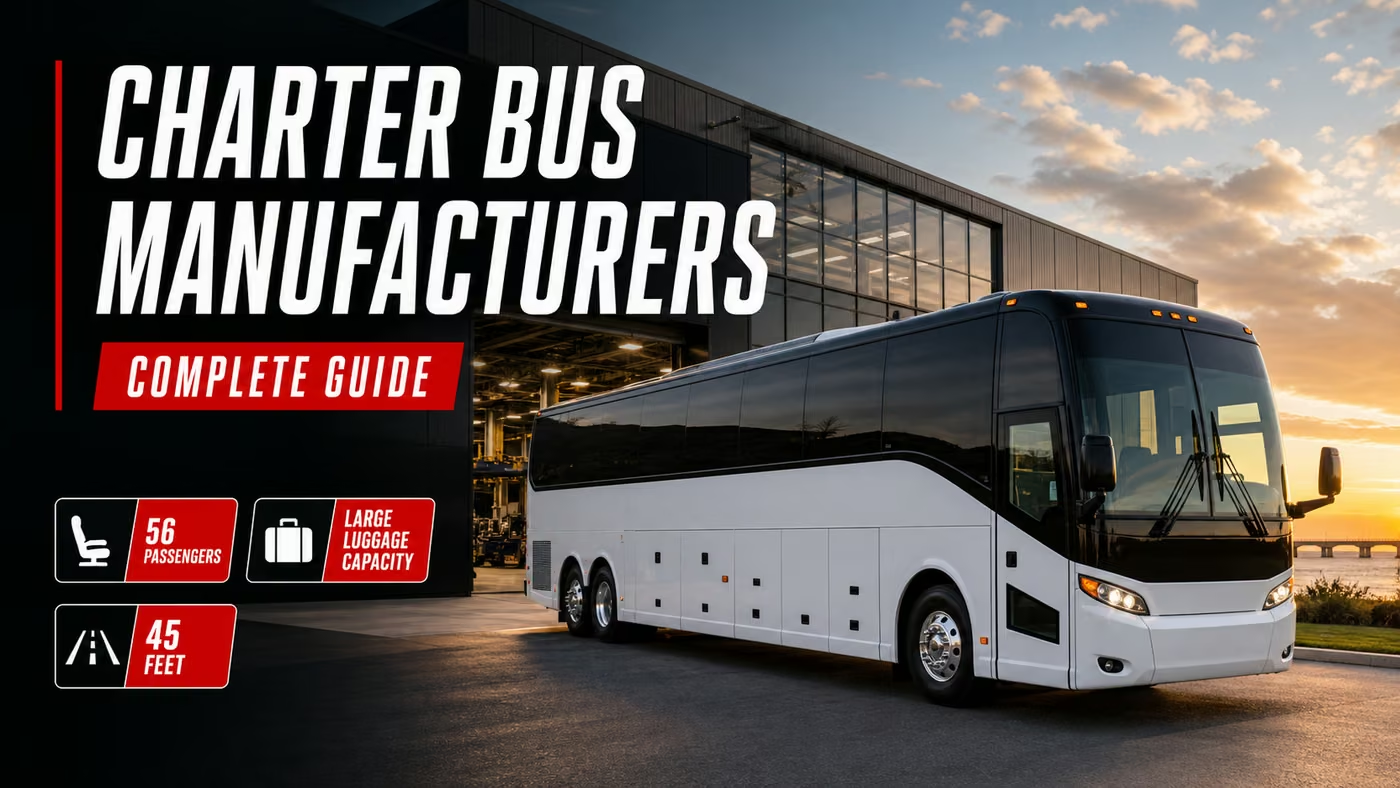
Before you book a charter bus in Chesapeake, Virginia—or before your venue, parking deck, or driveway commits to a vehicle that might not actually fit—you should know the numbers. A standard US charter bus is usually a 45-foot (13.72 m) single-deck motorcoach. Most modern highway coaches are at or near the 102-inch (8'6" / 2.59 m) federal width limit, excluding mirrors and certain safety devices, though some models list slightly narrower body widths—for example, the Prevost X3-45 passenger coach is 101.5 inches wide.
Common single-deck coach heights are roughly 11'2" to 12'2" across mainstream models, with prudent access planning still using 12'6" of overhead clearance. Empty weight varies by model and powertrain, but full-size coaches commonly fall in the mid-30,000 to mid-40,000 lb range empty, with GVWRs around 50,500–54,000 lb; for example, the Mercedes-Benz Tourrider, Van Hool CX45, and MCI J4500 CHARGE list GVWRs between 50,535 and 54,000 lb. That single paragraph answers most of what people Google about charter bus dimensions, but it does not solve the planner's real problem: will this specific vehicle clear my porte-cochère, fit my gate, make the turn into my parking lot, and clear every bridge between pickup and drop-off.
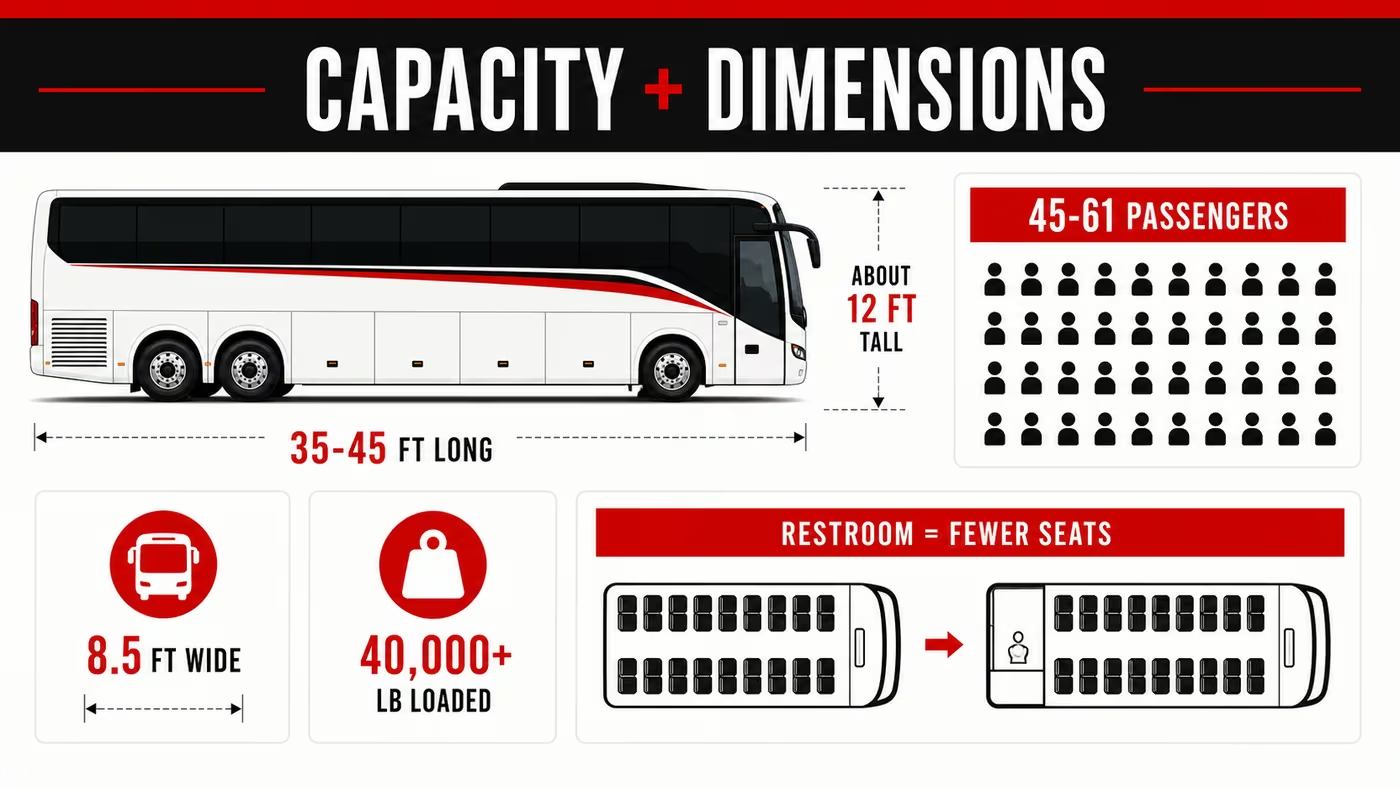
This guide gives you all the dimensions in one place. We pull verified regulatory references from FHWA's Federal Size Regulations for Commercial Motor Vehicles, Virginia Code § 46.2-1110, and VDOT tunnel and bridge restriction guidance, plus manufacturer pages for Prevost, MCI, Van Hool, Mercedes-Benz Tourrider, Temsa, and older Setra references where applicable—then we walk you through how those numbers play out at gates, garages, and historic Hampton Roads venues. Party Bus Chesapeake has spent more than 15 years matching the right vehicle class to the right route, and every dimension cited here ties directly to a real-world fit decision our reservation team makes daily.
Have your venue diagram or parking measurements handy. Call 757-755-8162 24/7 for a free, no-obligation quote.
Charter Bus Dimensions at a Glance (Comparison Table)
The fastest way to size up a charter bus is to compare classes side-by-side. The chart below covers the seven vehicle classes you'll encounter most often when renting in Chesapeake or anywhere else in the United States, plus a school bus (Type C) reference row because everyone instinctively pictures a yellow school bus when imagining "a big bus."
| Vehicle Class | Length | Width | Height | Curb Weight | GVWR | Typical Seats |
|---|---|---|---|---|---|---|
| Sprinter Van (12–15 pass.; dimensions from MBUSA) | ~19'6"–22'10" / 234–274" (5.94–6.96 m) | ~6'8" body / ~7'8" with mirrors; 80" body / 92" with mirrors (2.03 / 2.34 m) | ~8'7"–9'6" / 103–114" (2.62–2.90 m, passenger van range) | ~6,000–7,000 lb (2,722–3,175 kg; varies by configuration) | ~9,050–9,480 lb (4,105–4,300 kg) | 12–15 |
| Sprinter Limo (14-pass.; upfit varies, confirm exact build; chassis dimensions from MBUSA) | ~22'10"–24'2" / 274–290" (6.96–7.37 m) | ~6'8" body / ~7'8" with mirrors; 80" body / 92" with mirrors (2.03 / 2.34 m) | ~8'11"–9'6" (2.72–2.90 m, depending chassis/upfit) | Varies by upfit | ~9,050–12,125 lb (4,105–5,500 kg, depending chassis/upfit) | 14 |
| Minibus (18–25 pass.) | ~25–30 ft (7.62–9.14 m) | ~7'10" / 94" (2.39 m) | ~9'6"–10' (2.90–3.05 m) | ~14,000–18,000 lb (6,350–8,165 kg) | ~19,500 lb (8,845 kg) | 18–25 |
| Minibus (28–35 pass.) | ~30–35 ft (9.14–10.67 m) | ~8' / 96" (2.44 m) | ~10'–11' (3.05–3.35 m) | ~18,000–22,000 lb (8,165–9,979 kg) | ~26,000–33,000 lb (11,793–14,969 kg) | 28–35 |
| Motorcoach (40 ft) | 40' / 480" (12.19 m) | 102" (2.59 m) | ~11'5"–11'9" (3.48–3.58 m) | ~35,100 lb (15,921 kg) | ~44,400–48,000 lb (20,140–21,772 kg) | 38–53 |
| Motorcoach (45 ft) | 45' / 540" (13.72 m); some models run longer with bumpers, including the Mercedes-Benz Tourrider at 45'8" | 101.5"–102" (2.58–2.59 m) | ~11'2"–12'2" (3.40–3.72 m) across common single-deck models; plan 12'6" clearance | ~35,000–45,000 lb (15,876–20,412 kg) | ~50,535–54,000 lb (22,922–24,494 kg) | 50–60 |
| Executive Coach (45 ft) | 45' / 540" (13.72 m) | 101.5"–102" (2.58–2.59 m) | Up to 143.625" / ~12' (3.65 m), depending shell/upfit | ~36,000–45,000 lb (16,329–20,412 kg) | ~50,500–54,000 lb (22,907–24,494 kg) | 18–36 (luxury config) |
| Double-Decker Coach | ~40–45 ft (12.19–13.72 m) | ~102" (2.59 m) | ~13–14 ft (3.96–4.27 m) | ~30,000–38,000 lb (13,608–17,237 kg) | ~50,000+ lb (22,680+ kg) | 70–100 |
| School Bus, Type C (reference; capacity/GVWR from Thomas Built Buses Saf-T-Liner C2) | ~35–40 ft (10.67–12.19 m) | ~96" / 8' (2.44 m) | ~10'–11' (3.05–3.35 m; model-dependent) | ~16,000–28,000 lb (7,257–12,701 kg) | Up to ~33,000 lb (14,969 kg) | 54–81 children |
Two big takeaways from the table. First, most full-size motorcoaches in the US are at or very near 102 inches (8'6") wide—that is the federal maximum on the National Network and reasonable access routes, excluding mirrors and certain safety devices—but not every model lists exactly 102 inches. For example, the Prevost X3-45 passenger coach lists a 101.5-inch body width, while models such as the Van Hool CX45, Temsa TS45, and Mercedes-Benz Tourrider list 102 inches.
Second, height is the dimension that varies most and the one that bites planners. A 45-foot Temsa TS45 is 3,505 mm / roughly 11 feet 6 inches tall, while a Prevost X3-45 VIP entertainer chassis can reach 143.625 inches—just under 12 feet—and double-deckers can be significantly taller.
How Long is a Charter Bus?
A standard US charter bus is 45 feet long (13.72 m), the length states must allow on the National Network and reasonable access routes under federal size rules following the Intermodal Surface Transportation Efficiency Act of 1991 and FHWA's bus-length guidance. Today, common North American motorcoaches include the MCI J4500 and the Prevost X3-45; the X3-45 is listed at 45 feet, while the MCI J4500 CHARGE spec lists 45.58 feet (about 13.89 m), and Mercedes-Benz's Tourrider is 45'8" / 13.92 m including the energy-absorbing bumper.
Smaller classes drop down from there. A 40-foot motorcoach is 40 feet (12.19 m) on the nose. Minibuses run roughly 25–35 feet (7.62–10.67 m) depending on passenger count.
A Sprinter passenger van ranges from 234 to 274 inches long, with the 170-inch wheelbase version commonly used for 15-passenger layouts at about 22'10" (6.96 m). Extended Sprinter-based upfits can stretch to roughly 24'2" (7.37 m), depending on the chassis and conversion.
Why does length matter for Chesapeake-area groups? Three reasons: parking stall depth, turning radius into a property, and route bridge clearance over long-distance legs (which we cover in the planning section below). For a deeper FAQ on length specifically, our reservation team also runs you through bus-by-bus measurements at 757-755-8162.
How Wide is a Charter Bus?
Charter buses are generally up to 8 feet 6 inches (102 inches / 2.59 m) wide at the body, with mirrors and certain safety devices excluded from the federal width measurement. The main federal commercial vehicle size framework is 23 CFR Part 658, and FHWA summarizes the 102-inch width limit on the National Network and reasonable access routes in its Federal Size Regulations for Commercial Motor Vehicles. You'll find a 102-inch width on the spec sheet of many modern motorcoaches: MCI J4500 CHARGE—102", Van Hool CX45—102", Temsa TS45—2,591 mm / roughly 102", and Mercedes-Benz Tourrider—102".
Prevost lists the X3-45 passenger coach at 101.5" and the H3-45 passenger coach at 102".
Older and school-bus-style vehicles may be narrower. Many older coaches and many Type C school buses are about 96 inches (8 feet) wide, while modern full-size charter coaches are normally near the 102-inch envelope. For charter rentals, plan on roughly 8'6" at the body unless your operator confirms a smaller vehicle class.
Mirrors add another wrinkle. A motorcoach's exterior body is roughly 102 inches, but with the side mirrors swung out for highway operation, the effective width can reach 10–10.5 feet (3.05–3.20 m). This is why a 10-foot gate looks impassable even though the body would technically squeeze through—the mirrors won't, and folding them in to clear a gate is not a practical maneuver on arrival.
Plan on a minimum gate width of 12 feet for a comfortable approach, with 14 feet preferred.
How Tall is a Charter Bus?
A standard 45-foot single-deck motorcoach is usually between about 11 feet 2 inches and 12 feet 2 inches tall, depending on the model. For venue planning, 12 feet 6 inches remains a smart practical clearance threshold because it creates margin for pavement slope, suspension movement, signage, mirrors, roof equipment, and measurement error. Double-deckers, used in some sightseeing fleets, can be taller—often around 13 to 14 feet—and may trigger state height-limit issues depending on the route.
Here is where you really need to look at the spec sheet for the actual vehicle, because there is a meaningful swing between the shortest and tallest single-deck motorcoaches in service today:
- Temsa TS45: 3,505 mm / roughly 11'6" (3.51 m)
- Prevost X3-45 passenger coach: 134" / roughly 11'2" (3.40 m)—one of the lowest mainstream passenger-coach heights
- Prevost H3-45 passenger coach: 146" / roughly 12'2" (3.71 m)
- Mercedes-Benz Tourrider: 11'11" for Business and 12'1" for Premium
- MCI J4500 CHARGE: 140.75" / roughly 11'8.75" (3.58 m)
- Van Hool CX45: 11'6" (3.51 m)
- Prevost X3-45 VIP entertainer: 143.625" / roughly 11'11.6" (3.65 m)
- Double-decker coaches, where available: often around 13–14 ft (3.96–4.27 m), so always verify route legality and clearance before assuming access
FHWA's Interstate vertical-clearance history is more nuanced than a simple “16 feet rural, 14 feet urban” rule: the original AASHO Interstate design minimum was 14 feet, and a 1960 FHWA/DOD revision moved rural Interstate clearance guidance to 16 feet while providing for at least one 16-foot routing through urban areas where economically feasible. Under Virginia Code § 46.2-1110, the statutory maximum vehicle height is 13 feet 6 inches, and the Commonwealth is not required to provide overhead clearance greater than 12 feet 6 inches on existing bridges or structures. That is the practical ceiling: mainstream single-deck motorcoaches sit below the statutory maximum, but porte-cochères, older overpasses, and Hampton Roads tunnels still require route-specific checks.
We dig into this below.
How Much Does a Charter Bus Weigh?
An empty full-size 45-foot motorcoach commonly falls in the mid-30,000 to mid-40,000 lb range, depending on model, powertrain, seating layout, fuel load, batteries, luggage-bay configuration, and luxury conversion equipment. Gross Vehicle Weight Rating (GVWR) on current common 45-foot coaches typically falls around 50,500–54,000 lb: the Mercedes-Benz Tourrider Premium lists 50,535 lb, the Temsa TS45 lists 23,360 kg (about 51,500 lb), and the Van Hool CX45 and MCI J4500 CHARGE list 54,000 lb. Weight scales sharply by class:
| Vehicle Class | Curb Weight | GVWR |
|---|---|---|
| Sprinter Van (12–15 passenger; MBUSA passenger van GVWR) | ~6,000–7,000 lb (2,722–3,175 kg; varies by configuration) | ~9,050–9,480 lb (4,105–4,300 kg) |
| Minibus (18–25 pass.) | ~14,000–18,000 lb (6,350–8,165 kg) | ~19,500 lb (8,845 kg) |
| Minibus (28–35 pass.) | ~18,000–22,000 lb (8,165–9,979 kg) | ~26,000–33,000 lb (11,793–14,969 kg) |
| 40-ft Motorcoach | Model/configuration dependent | ~44,400–48,000 lb (20,140–21,772 kg; confirm exact spec sheet) |
| 45-ft Prevost X3-45 passenger coach | Model/configuration dependent | Operator/VIN-specific; confirm exact spec sheet |
| 45-ft Motorcoach MCI J4500 CHARGE | ~43,500 lb (19,731 kg; electric model estimate) | 54,000 lb (24,494 kg) |
| 45-ft Van Hool CX45 | Model/configuration dependent | 54,000 lb (24,494 kg) |
| 45-ft Temsa TS45 | Model/configuration dependent | 23,360 kg / ~51,500 lb |
| School Bus Type C | 16,000–28,000 lb (7,257–12,701 kg) | Up to ~33,000 lb (14,969 kg) |
Weight matters in three practical scenarios. First, weight-restricted bridges—some older posted bridges in rural Virginia and North Carolina have legal weight limits that a fully-loaded motorcoach can exceed, and your reservation team will route around these. Second, surface load capacity at the destination—some historic stone driveways, courtyards, or aging parking decks were not designed for a vehicle in this weight class.
Third, ground load on grass: a motorcoach parked on a wedding lawn can permanently rut soft ground, which is one reason wedding shuttles often drop guests and stage off-property.
Manufacturer-Specific Dimensions (Prevost, MCI, Van Hool, Setra, Temsa, Mercedes-Benz)
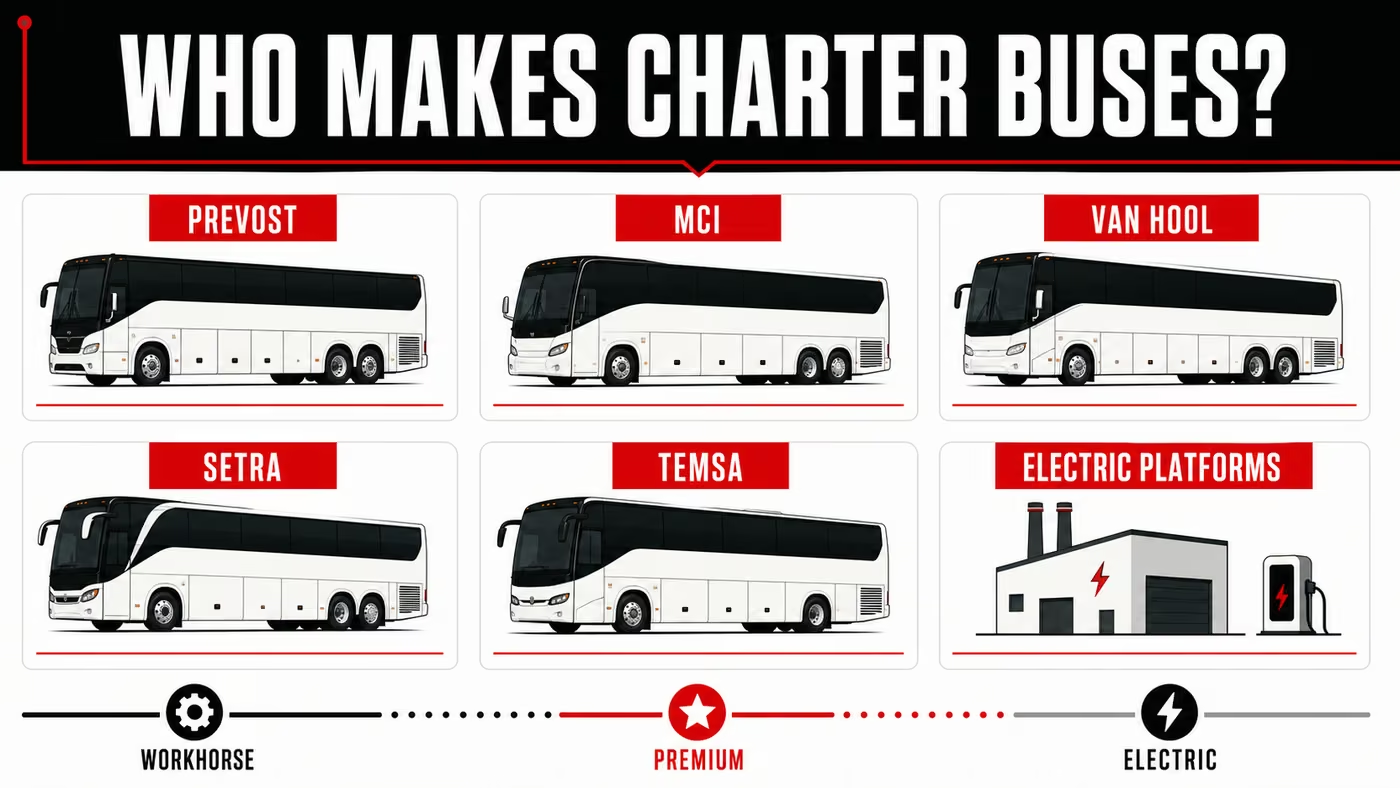
The major motorcoach models you're most likely to encounter in North America include Prevost, MCI, Van Hool, Temsa, Mercedes-Benz Tourrider, and older Setra coaches still operating in legacy fleets. They all cluster around the same legal size envelope, but the dimensional differences between models matter for height-critical routes and venue access.
| Model | Length | Width | Height | Wheelbase | Engine | Max Seats |
|---|---|---|---|---|---|---|
| Prevost X3-45 passenger coach | 45' (13.72 m) | 101.5" (2.58 m) | 134" / ~11'2" (3.40 m) | 334" (8.48 m) | Volvo D13, 12.8L | 55 |
| Prevost H3-45 passenger coach | 45' (13.72 m) | 102" (2.59 m) | 146" / ~12'2" (3.71 m) | 314" (7.98 m) | Volvo D13, 12.8L | 56 |
| MCI J4500 CHARGE | 45.58' / ~13.89 m | 102" (2.59 m) | 140.75" / ~11'8.75" (3.58 m) | Model/spec dependent | Battery-electric powertrain | 60 |
| Van Hool CX45 | 45' (13.72 m) | 102" (2.59 m) | 11'6" (3.51 m) | 25'4.5" (7.73 m) | Cummins X12 | Up to 60 |
| Setra S 417 / S 417 TC (legacy North American fleets) | Use operator/VIN-specific spec sheet | Use operator/VIN-specific spec sheet | Use operator/VIN-specific spec sheet | Use operator/VIN-specific spec sheet | Model-year dependent | Model-year dependent |
| Mercedes-Benz Tourrider | 45'8" / 13.92 m | 102" / 2.60 m | 11'11" Business; 12'1" Premium | 24' main wheelbase, plus 4'5" drive-to-tag spacing | Mercedes-Benz OM 471 | 56 |
| Temsa TS45 | 13,716 mm / ~45' (13.72 m) | 2,591 mm / ~102" (2.59 m) | 3,505 mm / ~11'6" (3.51 m) | 310.8" / 25'11" (7.89 m) | Cummins X12 | 56 |
A few things to note from this table. The Prevost X3-45 passenger coach has a 334-inch wheelbase, while the Prevost X3-45 VIP entertainer shell lists a 334.5-inch wheelbase—both are unusually long coach wheelbases and contribute to a smooth ride, though they can widen the turning sweep. The Prevost X3-45 passenger coach is also one of the shortest mainstream motorcoaches at 134 inches (roughly 11'2"), which is meaningful for routes that have to clear sub-12-foot structures.
The MCI J4500 CHARGE lists an actual overall length of 45.58 feet, so when a venue tells you “we have 45 feet of curbside drop-off”—you don't actually have it for that coach.
Party Bus Chesapeake can specify any of these models when matching your trip to a route. If you have a venue with a 13'0" clearance and need to be sure—tell us and we'll route to a Temsa TS45, Van Hool CX45, or another lower-height coach where available. Get an instant fleet view by calling 757-755-8162.
Charter Bus vs. Other Buses (Size Comparison)
Some quick terminology cleanup before you book. The words charter bus, coach bus, and motorcoach usually refer to the same vehicle in group-travel planning—a high-floor, over-the-road bus with undercarriage luggage bays, designed for long-distance group travel. The word tour bus sometimes means the same thing, sometimes means a band tour bus or entertainer coach built from a converted motorcoach shell.
A school bus is a different vehicle class entirely: built on a school-bus chassis/body configuration, governed by separate federal and state safety standards, and typically about 8 feet wide rather than 8'6".
To put the sizes in your head, compare four vehicles to scale:
- Standard sedan: ~16 ft long × 6 ft wide × 5 ft tall
- Sprinter Van (12–15 passenger): ~19'6"–22'10" long × ~6'8" body width × ~8'7"–9'6" tall, depending configuration, per MBUSA's Sprinter passenger-van specifications
- Minibus (28-passenger): ~30 ft long × 8 ft wide × 10'6" tall
- School Bus (Type C, full-size): ~35–40 ft long × 8 ft wide × ~10–11 ft tall
- 45-foot motorcoach: 45 ft long × about 8'6" wide × roughly 11'2" to 12'2" tall across common single-deck models
- Double-decker coach: ~40–45 ft long × about 8'6" wide × often around 13–14 ft tall
Translation: a 45-foot motorcoach is roughly the length of three sedans parked bumper-to-bumper, narrower than a typical 12-foot highway lane but wide enough that mirrors and turning sweep matter, and tall enough to clear most modern highway overpasses but tall enough to scrape an older porte-cochère.
Planning for Charter Bus Access (Venue, Parking, and Route Section)
This is where dimensions become decisions. Here is what to verify before you commit to a 45-foot motorcoach for a Chesapeake-area trip, broken into the five questions our reservation team asks every time:
1. Gate and Driveway Width
A motorcoach body is roughly 102 inches (8'6") wide. With mirrors deployed it's 10–10.5 feet wide. Plan on a minimum 12-foot (3.66 m) gate or driveway opening for safe access, with 14 feet (4.27 m) being comfortable.
Historic Chesapeake-area properties—older estates along Battlefield Boulevard, Great Bridge plantations, the wedding venues tucked along Cedar Road—sometimes have entrance gates that look generous to a car driver but pinch tight for a coach. Measure between the actual narrowest point (often a brick column or post, not the gate hardware).
2. Porte-cochère and Overhang Height
This is the single most common access failure on Hampton Roads-area wedding and hotel pickups. Many older hotel porte-cochères throughout the Norfolk/Virginia Beach/Chesapeake corridor measure between 12'0" and 12'6". Common single-deck motorcoaches usually fall between about 11'2" and 12'2", but that does not mean a 12'0" or 12'6" overhang is safe: pavement slope, suspension movement, roof equipment, measurement error, and low-hanging signage can erase the margin quickly.
Even a low-roof Prevost X3-45 at 134 inches leaves only about 10 inches under a 12-foot porte-cochère. Confirm overhang clearance of at least 13 feet (3.96 m)—if your venue can't, request a lower-height coach such as a Temsa TS45, Van Hool CX45, or Prevost X3-45 where available, or fall back to a minibus or Sprinter Van.
3. Parking Stall Dimensions
A 45-foot motorcoach needs a parking footprint of approximately 12 feet wide × 50–55 feet long (3.66 m × 15.24–16.76 m), accounting for door swing and side-mirror clearance, plus surrounding maneuver room. The Chesapeake Bay Bridge-Tunnel offers bus parking at the north and south toll plazas, which works as a reliable rest-stop staging area for crossings to the Eastern Shore. Closer to town, designated motorcoach parking exists at most major Hampton Roads attractions, but at private homes, banquet halls, and waterfront venues, your reservation team typically pre-scouts a staging spot.
4. Turning Radius
Turning radius varies by model, so use actual spec sheets when a property has tight access. Current model examples show the range: the Temsa TS45 lists a 40.2-foot turning radius, the Mercedes-Benz Tourrider lists 39'11", and the Van Hool CX45 lists 43'11.5". For planning, assume a full-size motorcoach needs roughly a 40–44-foot turning radius and add extra buffer for curbs, parked cars, gates, slope, and mirror clearance.
Translation: residential cul-de-sacs under about 90 feet in diameter are tight, historic narrow driveways often can't accommodate the swing, and older shopping-center entrance circles sometimes require the coach to use both inbound and outbound lanes momentarily.
5. Bridge and Tunnel Clearance Along Your Route
Virginia statute caps vehicle height at 13 feet 6 inches, and the Commonwealth is not required to maintain overhead bridge clearance above 12'6" on existing structures. VDOT publishes truck restriction guidance and notes that vehicles over 13'6" are prohibited at the Hampton Roads Bridge-Tunnel westbound only, the Midtown Tunnel in both directions, and the Downtown Tunnel in both directions. VDOT also points over-height traffic to the I-664 Monitor-Merrimac Memorial Bridge-Tunnel as an alternate route.
Standard single-deck motorcoaches are normally under 13'6", but every route should still be checked for posted bridge, tunnel, and property-level restrictions.
A few Hampton Roads specifics worth knowing: the Chesapeake Bay Bridge-Tunnel tolls buses as separate vehicle classes, and Virginia Tourism notes bus parking at the north and south toll plazas. The Downtown Tunnel and Midtown Tunnel between Norfolk and Portsmouth prohibit vehicles over 13'6", which standard single-deck motorcoaches normally clear, but those tunnel restrictions still matter for double-deckers, specialty vehicles, and any oversized equipment. The I-664 Monitor-Merrimac Memorial Bridge-Tunnel is the key alternate corridor VDOT identifies for over-height vehicles avoiding those restrictions.
The Pre-Trip Access Checklist
Before you finalize your booking, get answers to these:
- Gate or driveway width at pickup, drop-off, and any intermediate stops (minimum 12 feet, preferably 14)
- Porte-cochère or any overhead structure height at pickup and drop-off (minimum 13 feet for a standard motorcoach, more for double-decker)
- Bridge clearance on every leg of your route (your reservation team handles this, but confirm Eastern Shore routing if applicable)
- Parking stall length at the destination, or a designated motorcoach staging area
- Inside turning radius into any tight property or cul-de-sac (motorcoach needs roughly 40–44 ft outer sweep, plus buffer)
- Surface load tolerance for non-asphalt pickup/drop-off (lawns, courtyards, historic pavers)
When to Fall Back to a Smaller Class
If any of those checks fail—the porte-cochère is 12 feet, the gate is 10 feet, the driveway has a 90-degree turn off a narrow residential street—you don't cancel the trip. You step down a class. A 28-passenger minibus is about 10 feet tall and ~7'10" wide, dropping the height ceiling by roughly 2 feet and the width by roughly 8 inches—enough to slip through many older Hampton Roads venue gates.
A Sprinter Van, which MBUSA lists at up to about 9'6" tall and about 6'8" wide at the body for current passenger-van configurations, can enter many residential driveways in Chesapeake that a full coach cannot. And our 14-passenger Sprinter Limo handles photo-ready bridal arrivals at venues where a full coach simply can't park.
Wrapping It Up
A standard US charter bus is typically a 45-foot single-deck motorcoach, about 8 feet 6 inches wide at the body, roughly 11'2" to 12'2" tall across common models, and up to about 50,500–54,000 lb GVWR depending on the specific coach.
If you're planning a Chesapeake-area group trip and need to match the right bus class to your gate, porte-cochère, parking lot, or route—call Party Bus Chesapeake at 757-755-8162 any time, 24/7. Tell us the access constraints (gate width, overhead clearance, parking, route bridges) and our reservation team will specify the exact vehicle from our fleet that fits. Or use the online quote tool for instant pricing and availability in under 30 seconds.