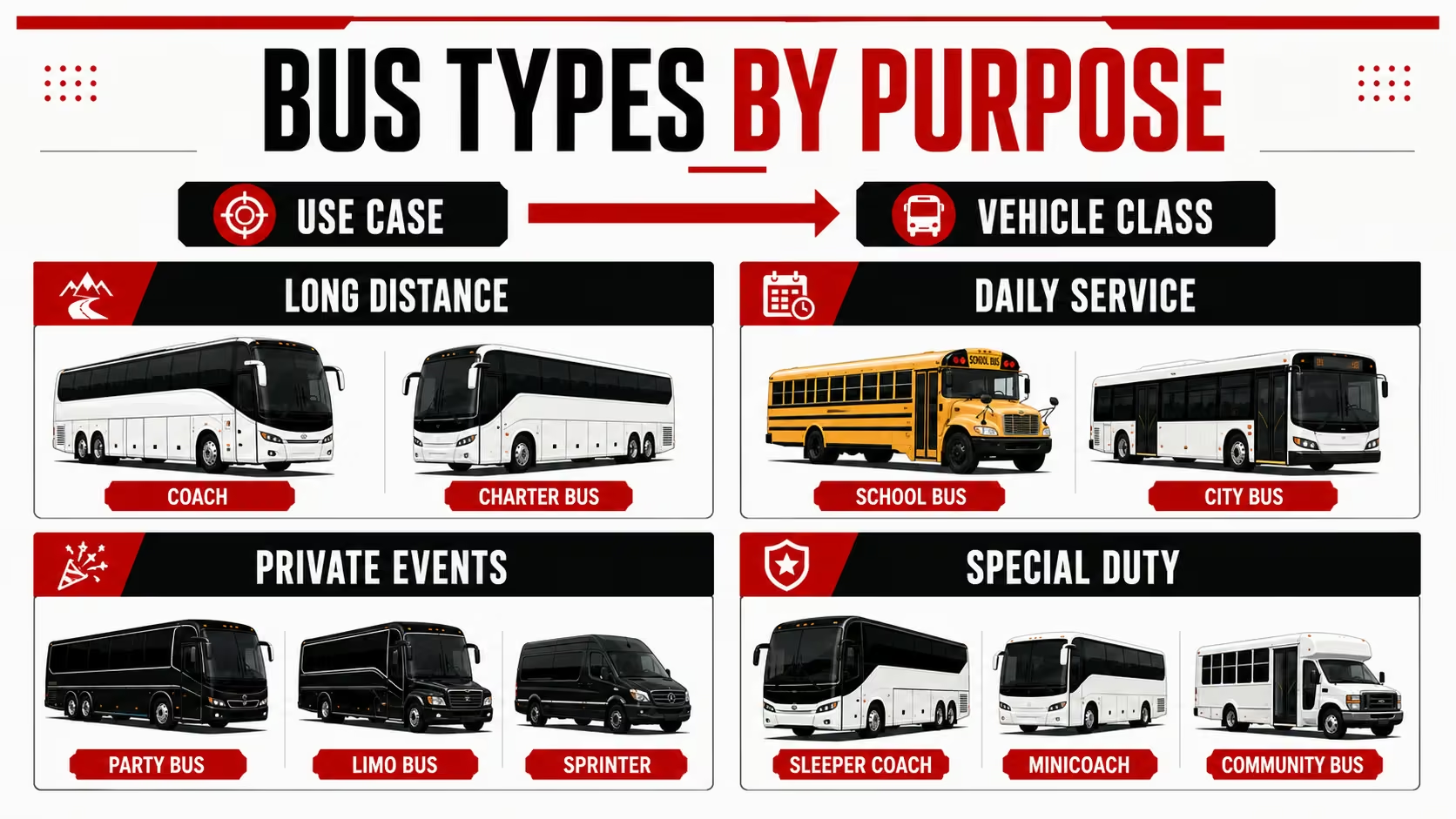
Keep this guide bookmarked—there are more than 25 distinct types of buses in service worldwide, made by manufacturers ranging from Mercedes and Prevost to Blue Bird and Proterra, and most "what kind of bus is that." questions can be answered by knowing just a handful of them. Whether you spotted a sleek double-decker rolling through Norfolk, sat on a 56-passenger motorcoach for a school trip to Williamsburg, or are trying to figure out which vehicle fits your wedding party, this guide has you covered. We've built the most complete bus taxonomy on the web by organizing every type three ways: by purpose (what it's used for), by design (how it's built), and by power source (what fuels it).
Within each lens, you'll find capacity ranges, named manufacturers and models, identifying features, and links to deeper guides. Party Bus Chesapeake has been chartering buses across Chesapeake, Hampton Roads, and the DC region since 2011, so we'll also flag which types you can actually rent locally. Use our online quote tool for 30-second pricing once you've identified your fit, or call 757-755-8162 to talk it through with our 24/7 reservation team.
How buses are categorized—the three lenses
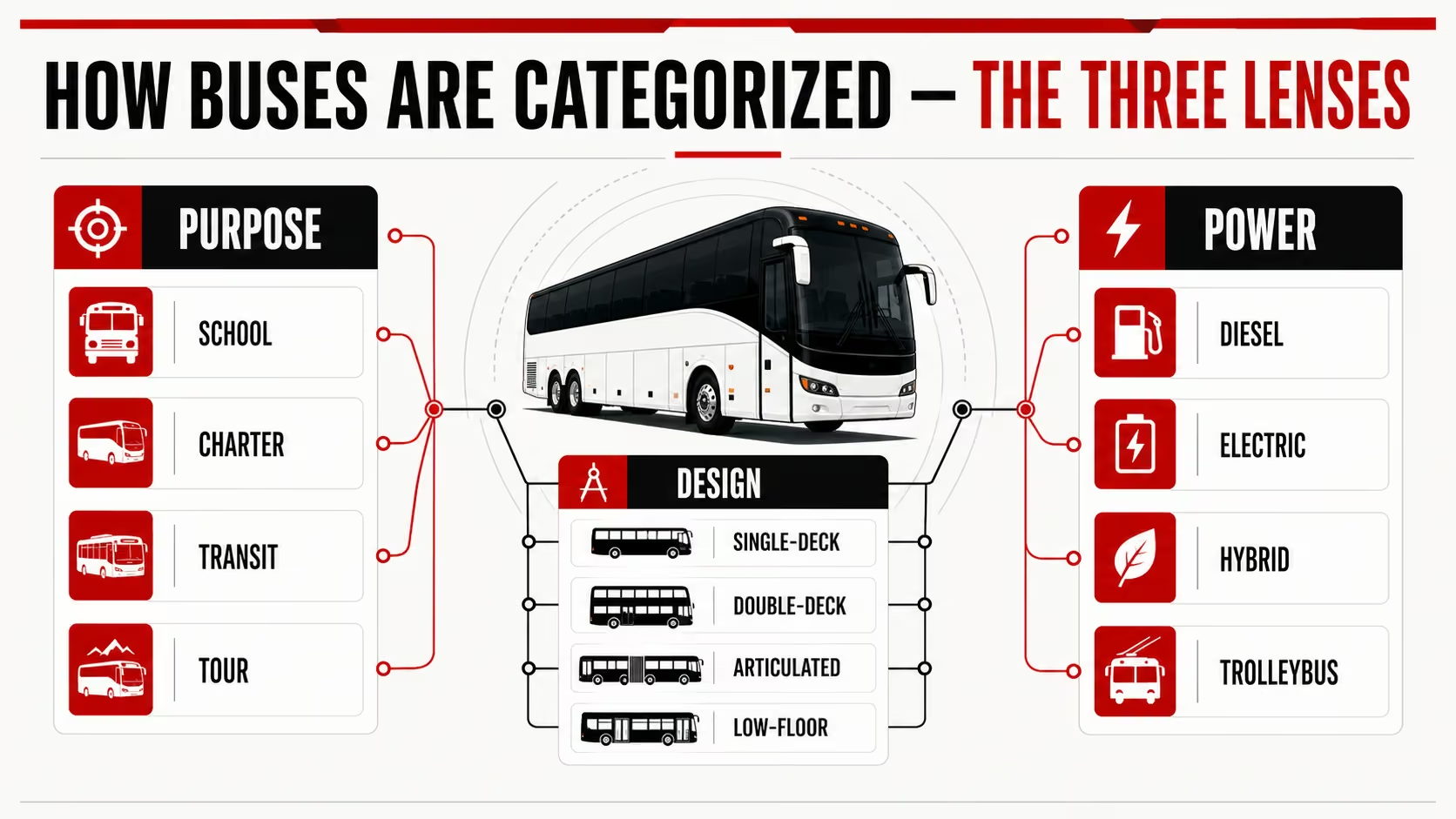
Most online guides list bus types in a single flat catalog, which makes it hard to compare apples to apples. We use three navigational lenses instead. The purpose lens sorts buses by what they're built to do—moving schoolchildren, hauling tourists, ferrying wedding guests, or transporting a touring band.
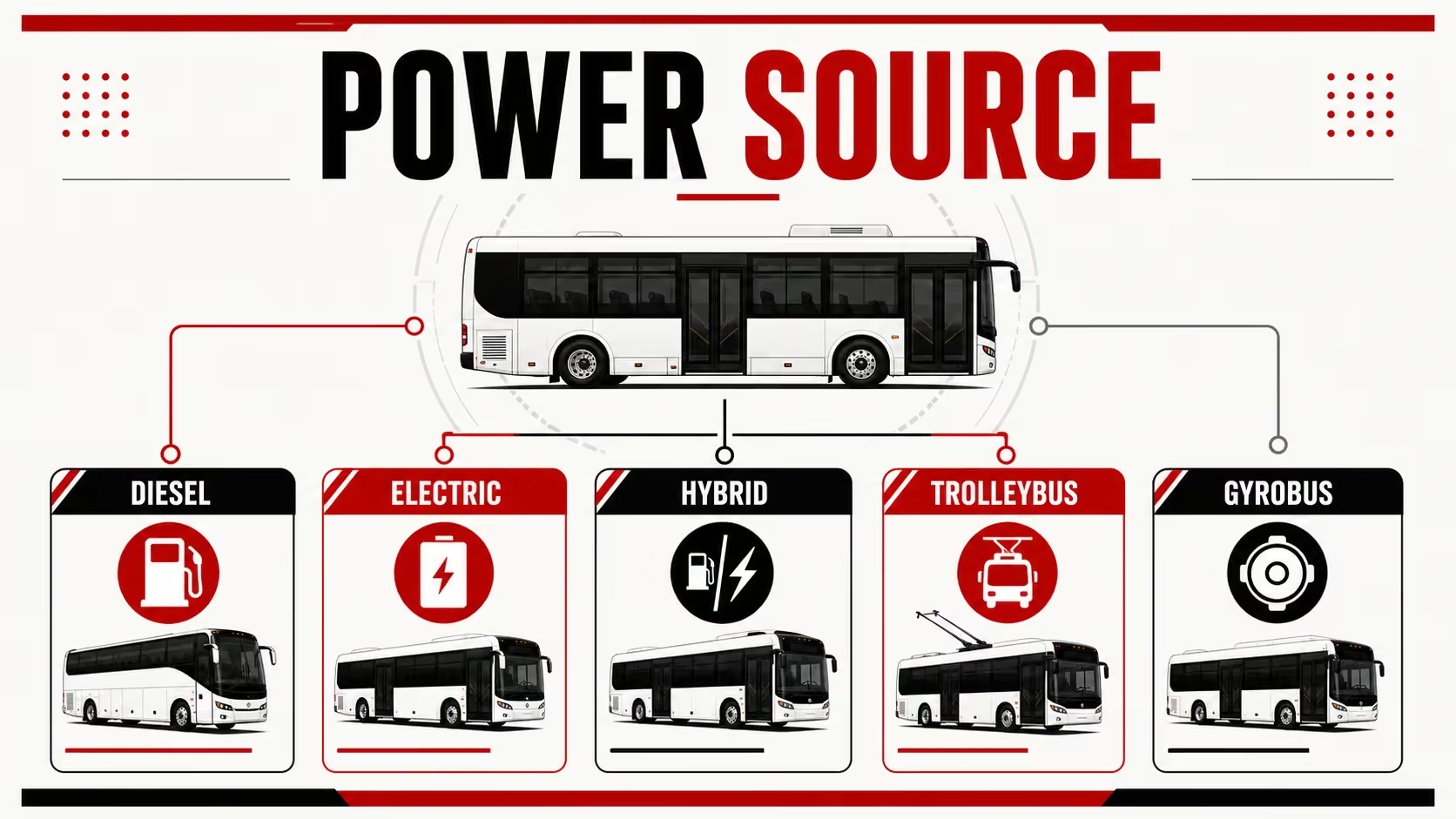
The design lens sorts by physical configuration—single-decker, double-decker, articulated, low-floor, open-top. The power source lens sorts by what makes them go—diesel, electric, hybrid, trolleybus, even the obscure gyrobus. Most buses live in all three categories at once (a Prevost H3-45 is a motorcoach by purpose, single-decker by design, and diesel by power source), so reading across the lenses is the fastest way to identify any bus on the road.
Bus types by purpose
Coach / Motorcoach
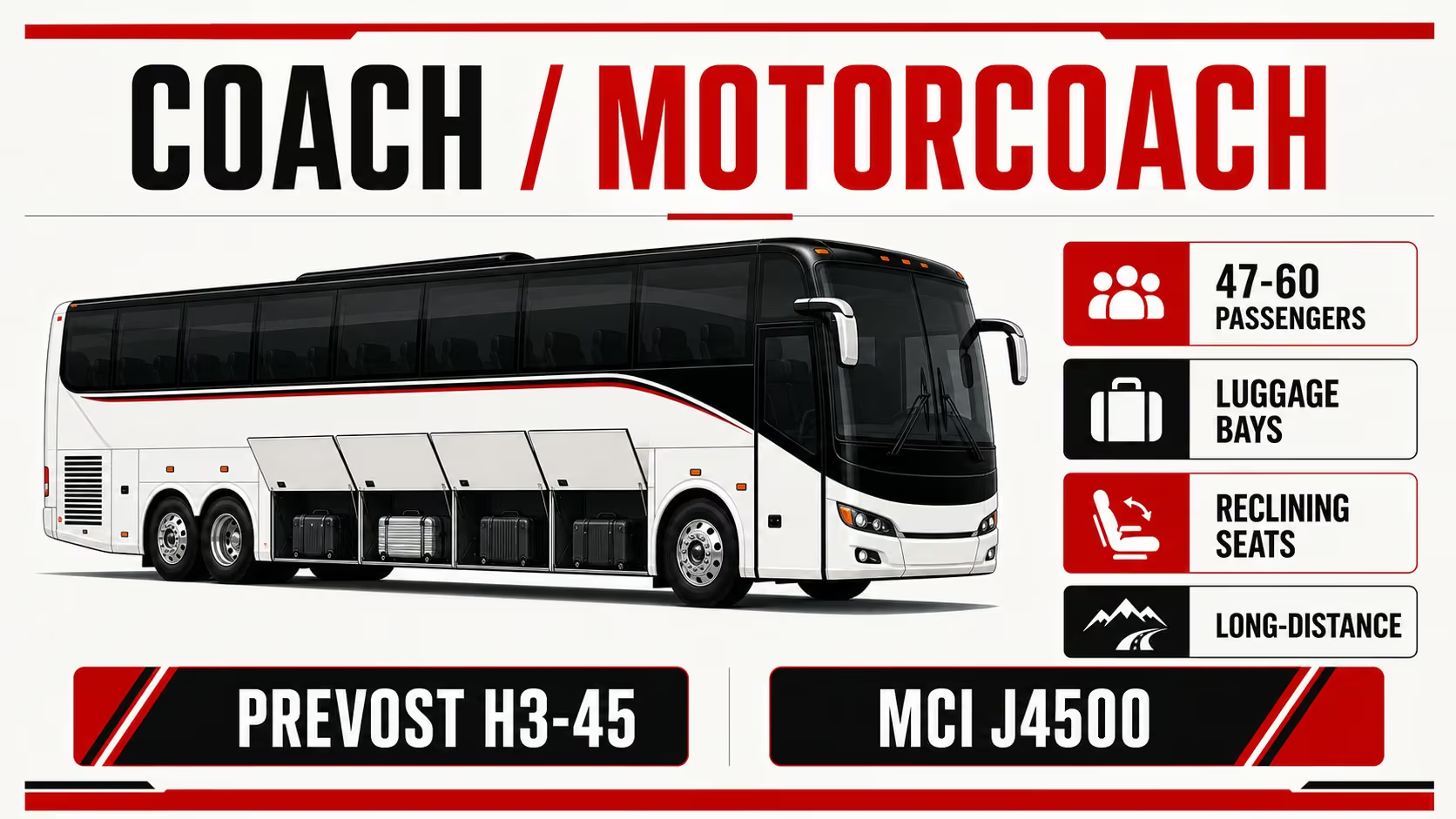
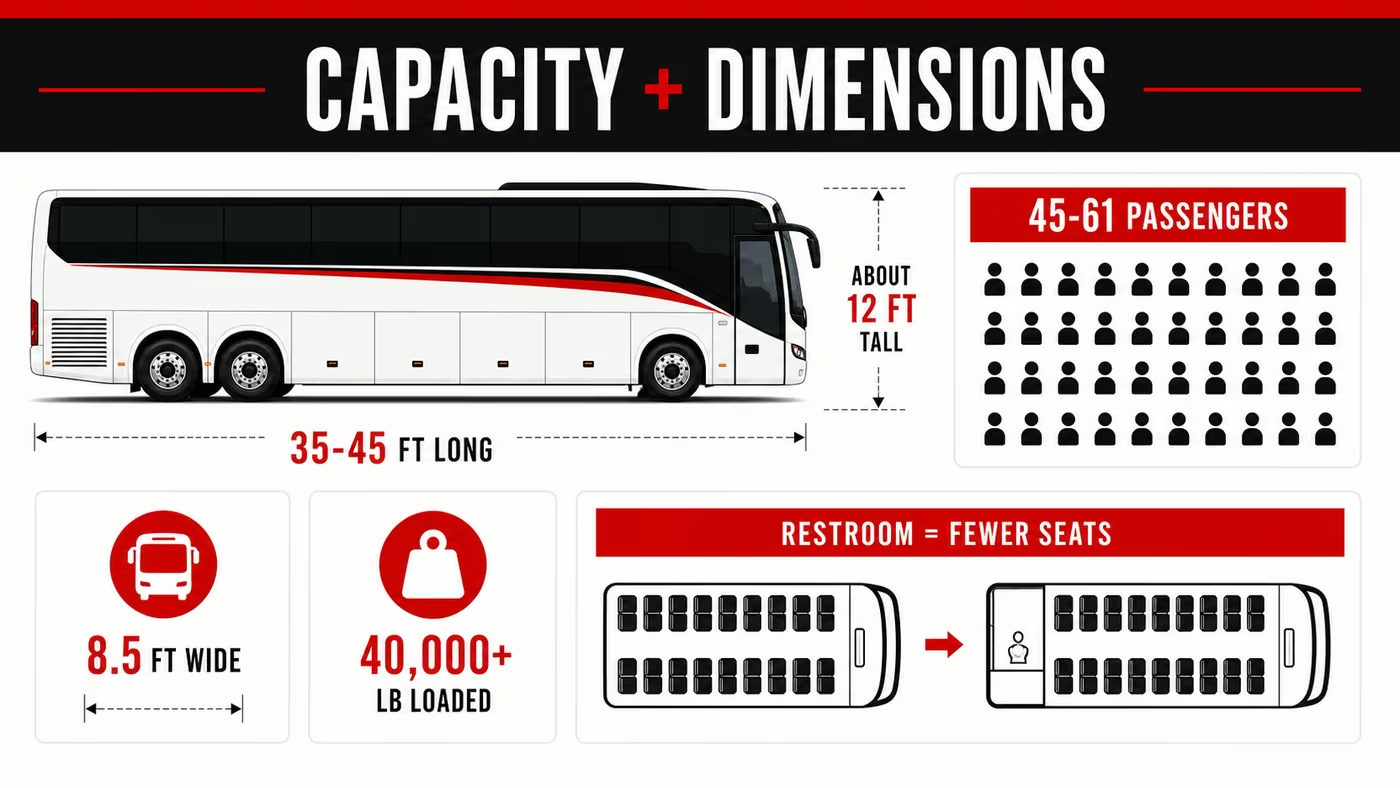
The long-distance king of the bus world. A motorcoach is the high-floor, climate-controlled, undercarriage-storage workhorse you see on intercity routes, charter trips, and corporate shuttles. Capacity typically runs 47–60 passengers, with the 55- and 56-seat configurations being the most common in the US charter market.
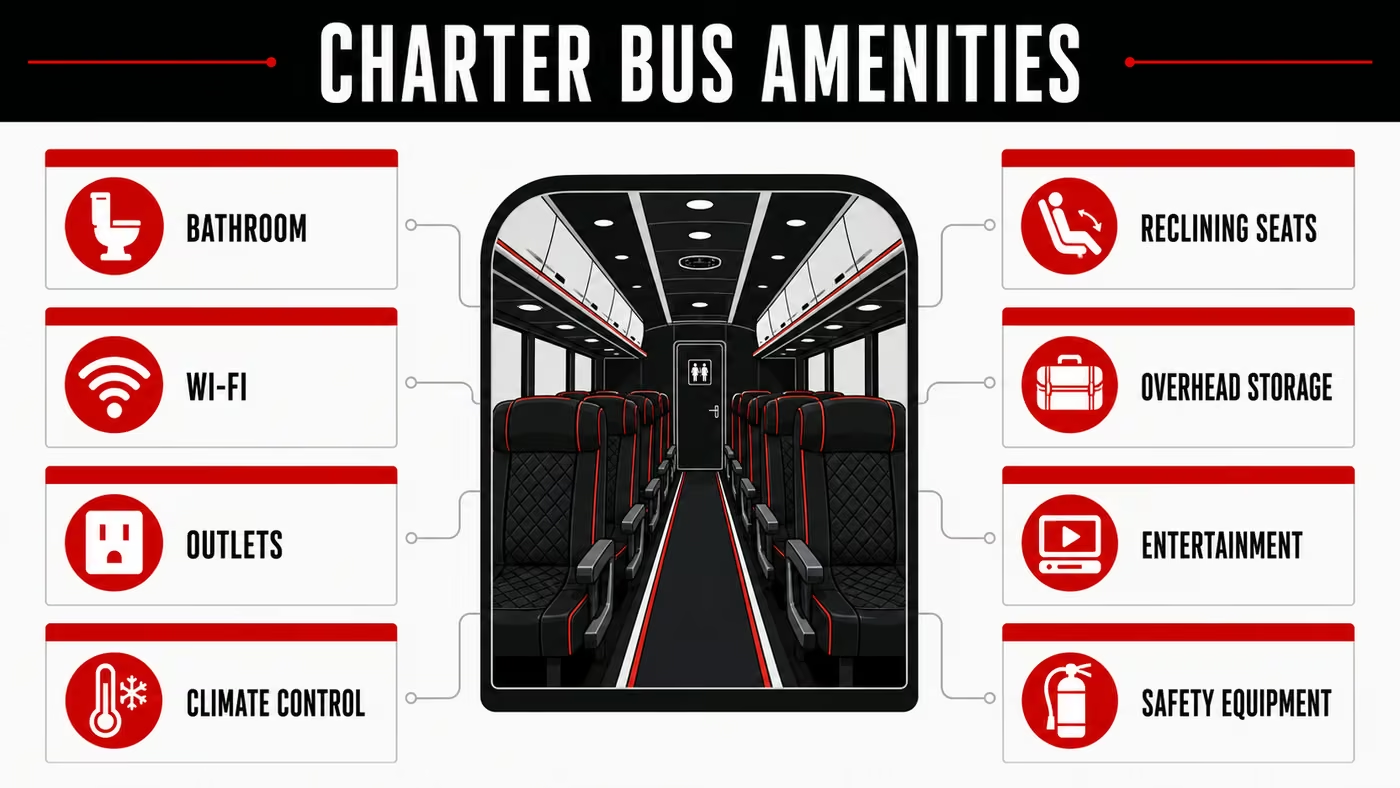
Identifying features include the elevated passenger deck (luggage bays sit underneath), tinted panoramic windows, reclining seats with footrests, an onboard restroom on most models, and the unmistakable wraparound front windshield.
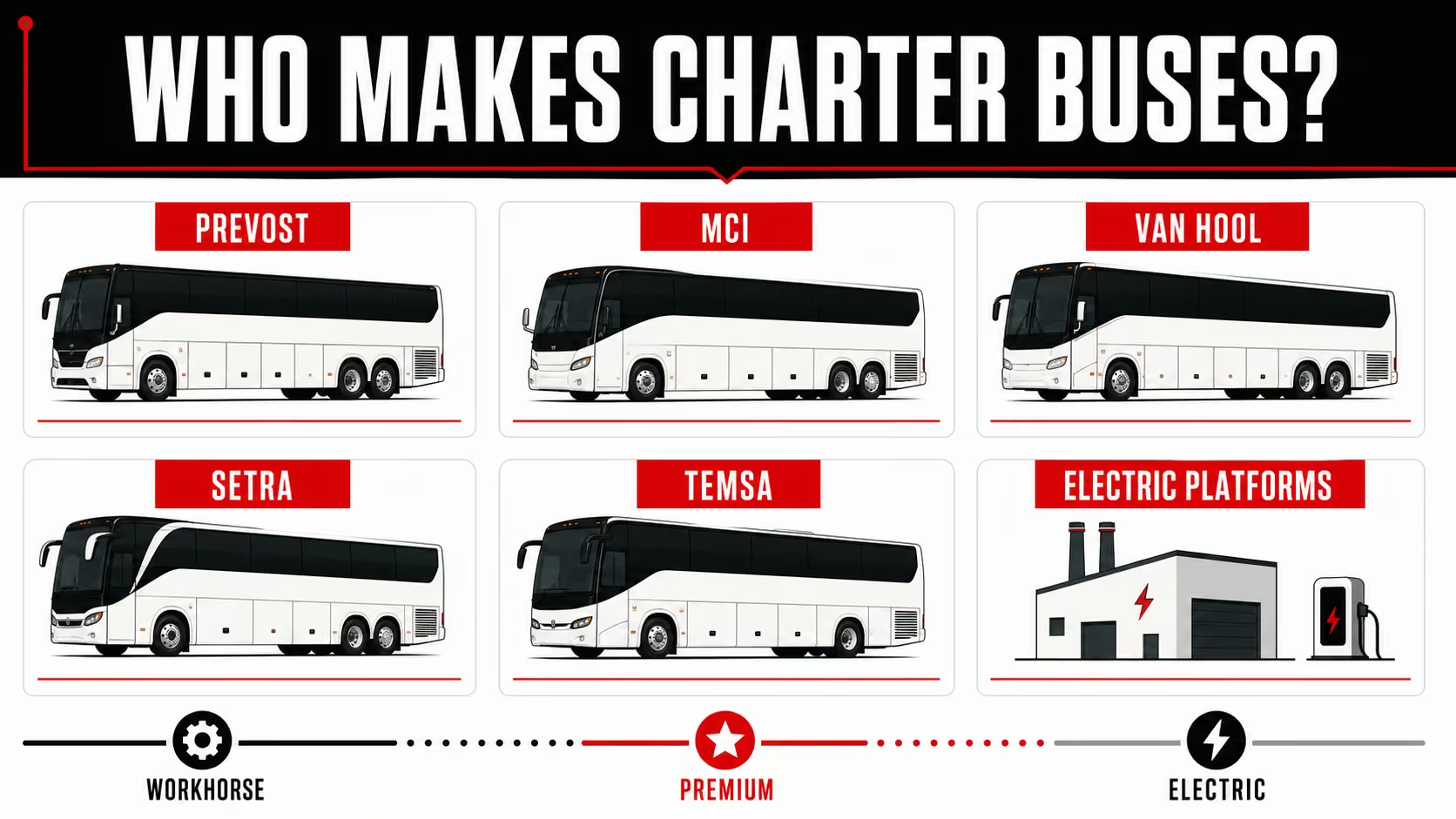
Dominant manufacturers and models include the Prevost H3-45 and Prevost X3-45 (the touring-band favorites), the MCI J4500 and MCI D-Series (workhorses of the US charter fleet), the Van Hool T-Series (popular for luxury operators), and the European Setra TopClass S 517 (rare in the US, common overseas). For a deeper look at platform differences, see our full motorcoach guide or browse our manufacturer cluster for platform deep-dives.
Charter Bus
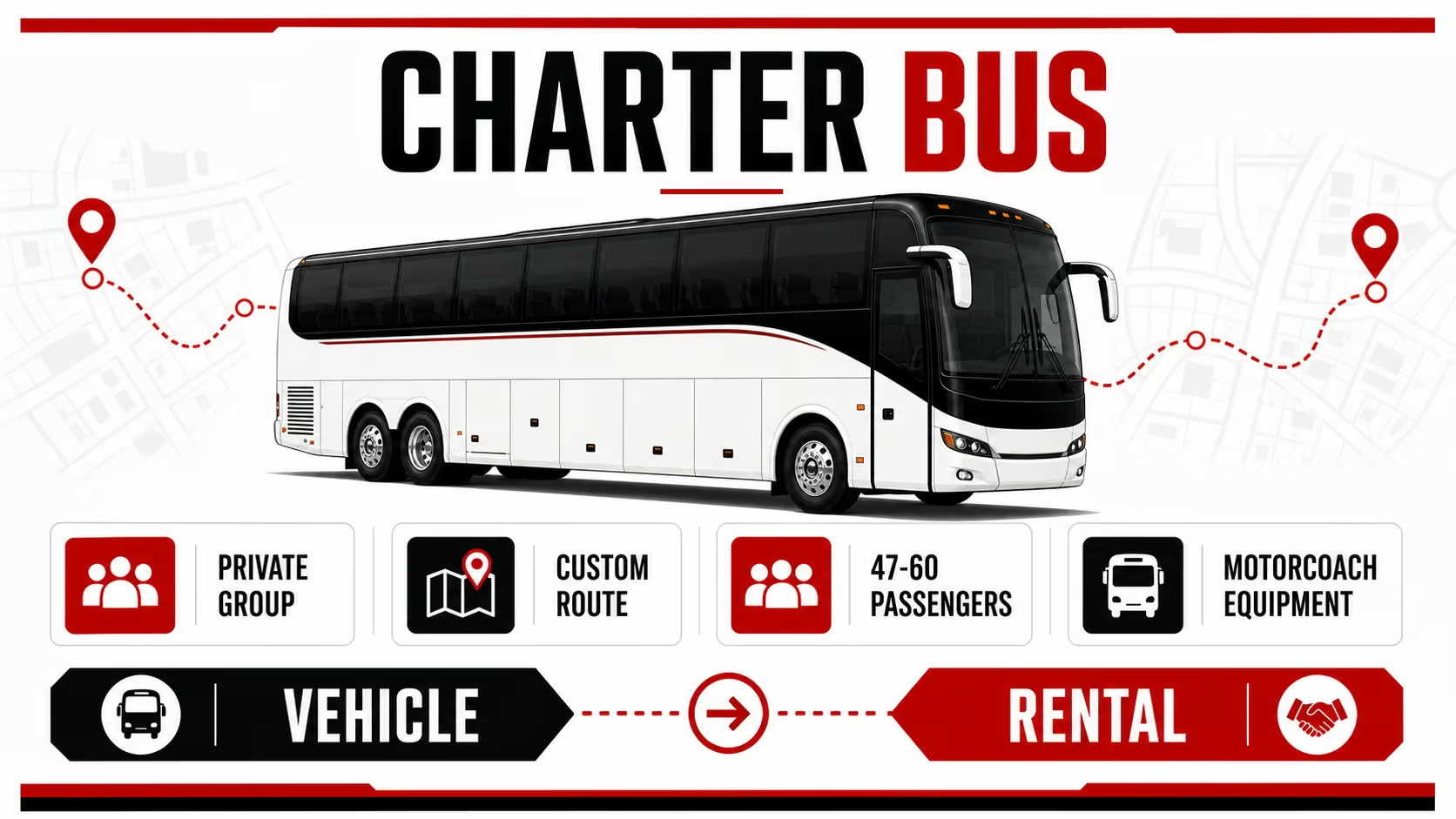
Here's where US terminology gets muddy: in American usage, "charter bus" and "motorcoach" are typically the same vehicle—the distinction is the use case, not the equipment. A motorcoach being rented by a group for a private trip is a charter bus. UK English uses "coach" the same way.
Capacity, manufacturers, and design are identical to the motorcoach section above. For the full breakdown of what "chartering" actually means and how it differs from regular transit, see our charter bus guide. To browse the rentable vehicles in this class, see our 40–56 passenger charter bus.
School Bus
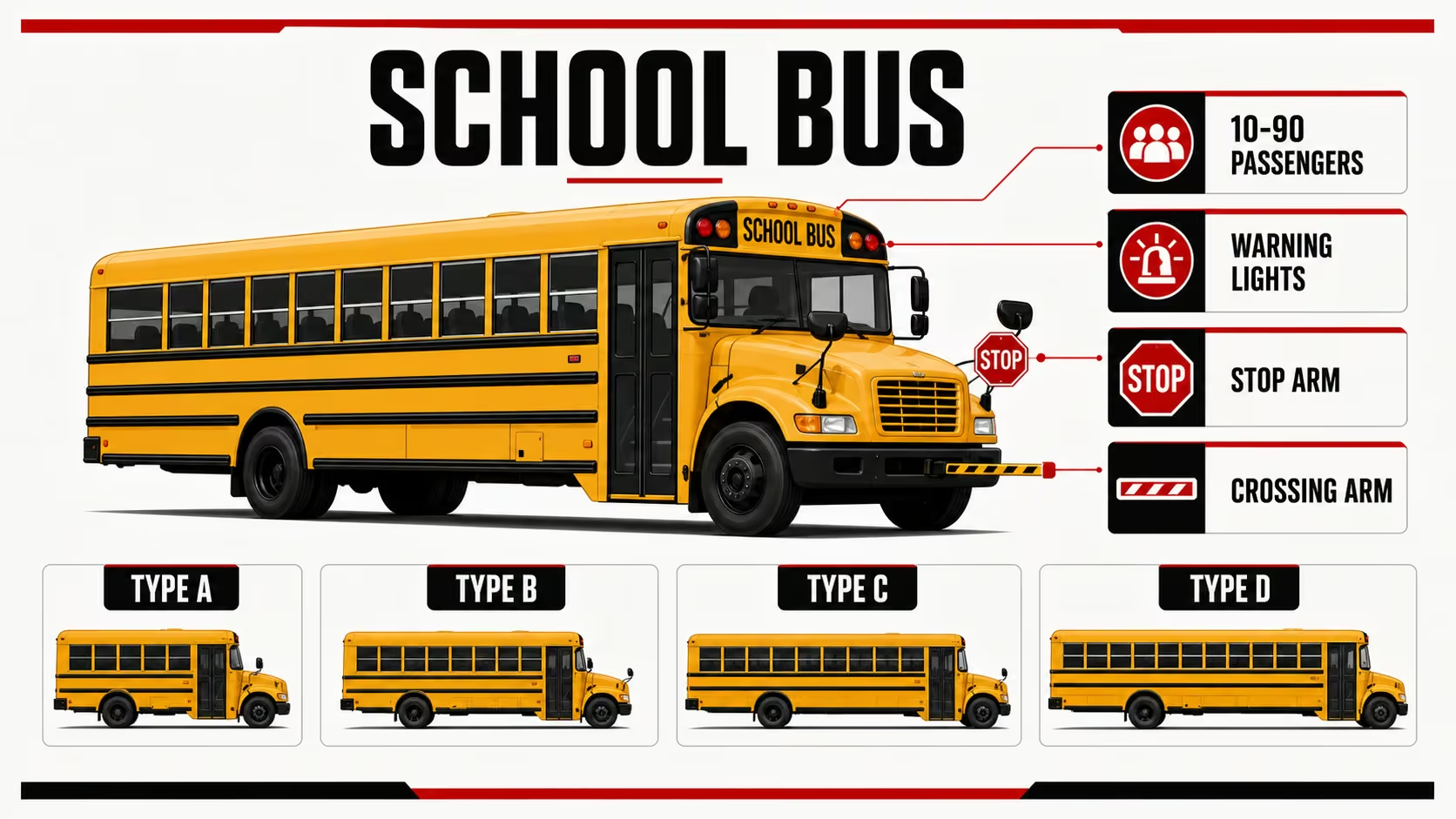
The yellow icon of American childhood. School buses are heavily regulated by the NHTSA and sorted into four sub-types: Type A (cutaway van chassis, 10–30 passengers—the "short bus"), Type B (rare; engine ahead of the front wheels, body built onto a stripped chassis), Type C (the classic "conventional" school bus with the protruding hood, 36–78 passengers), and Type D (the flat-front "transit-style" school bus, often the largest, 54–90 passengers). Identifying features across all four include the National School Bus Glossy Yellow paint code, eight-way warning light system, retractable stop arms, and crossing-control arms.
Dominant manufacturers are Blue Bird (the Vision Type C, All American Type D, and Micro Bird Type A through its joint venture), Thomas Built Buses (the Saf-T-Liner C2, Saf-T-Liner HDX, and Minotour), and IC Bus (the CE-Series, RE-Series, and BE-Series). For charter trips outside the yellow-bus fleet, schools in Chesapeake and Virginia Beach often book full-size motorcoaches instead—they're more comfortable for longer hauls and come with WiFi, restrooms, and undercarriage storage.
City / Transit Bus
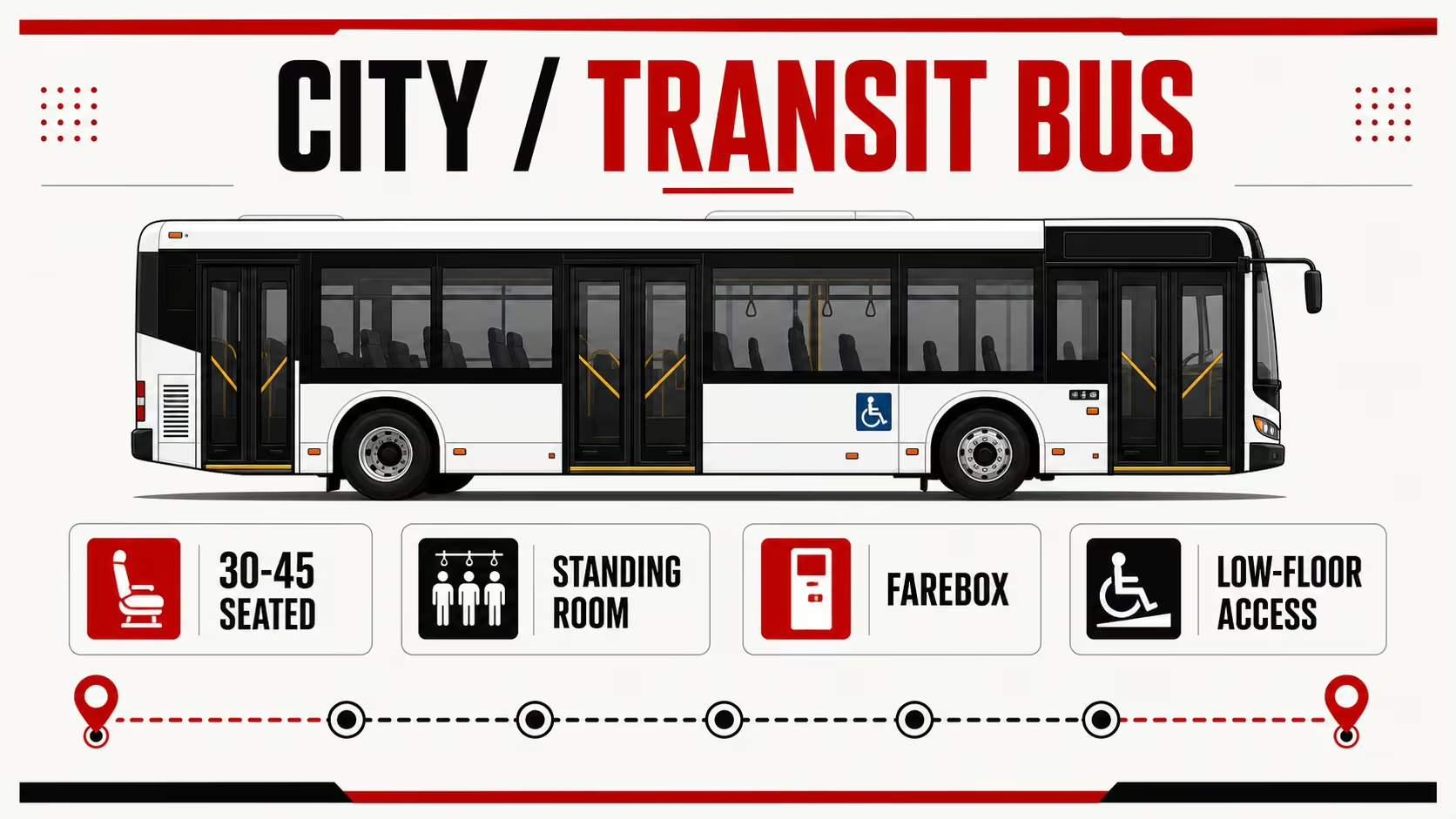
The fare-based, multi-door, stop-every-block bus you ride on Hampton Roads Transit or DC Metrobus. Transit buses are typically single-deck rigid (or articulated, see below), low-floor for accessibility, and built for high passenger turnover with wide aisles and minimal storage. Capacity ranges from 30–45 seated passengers with standing room for another 20–30.
Identifying features include fare boxes near the front door, "stop request" pull-cords or buttons, route signage above the windshield, and dedicated wheelchair securement areas.
Dominant North American manufacturers are New Flyer (the Xcelsior XD40 and XN40 are the best-selling transit platforms on the continent), Gillig (the Low Floor is a workhorse for mid-size US transit agencies), and Nova Bus (the LFS, popular in Canada and the northeastern US). You won't charter a city bus for a wedding, but you'll see them everywhere on Norfolk's Tide light-rail feeder routes and DC's Metrobus network.
Party Bus
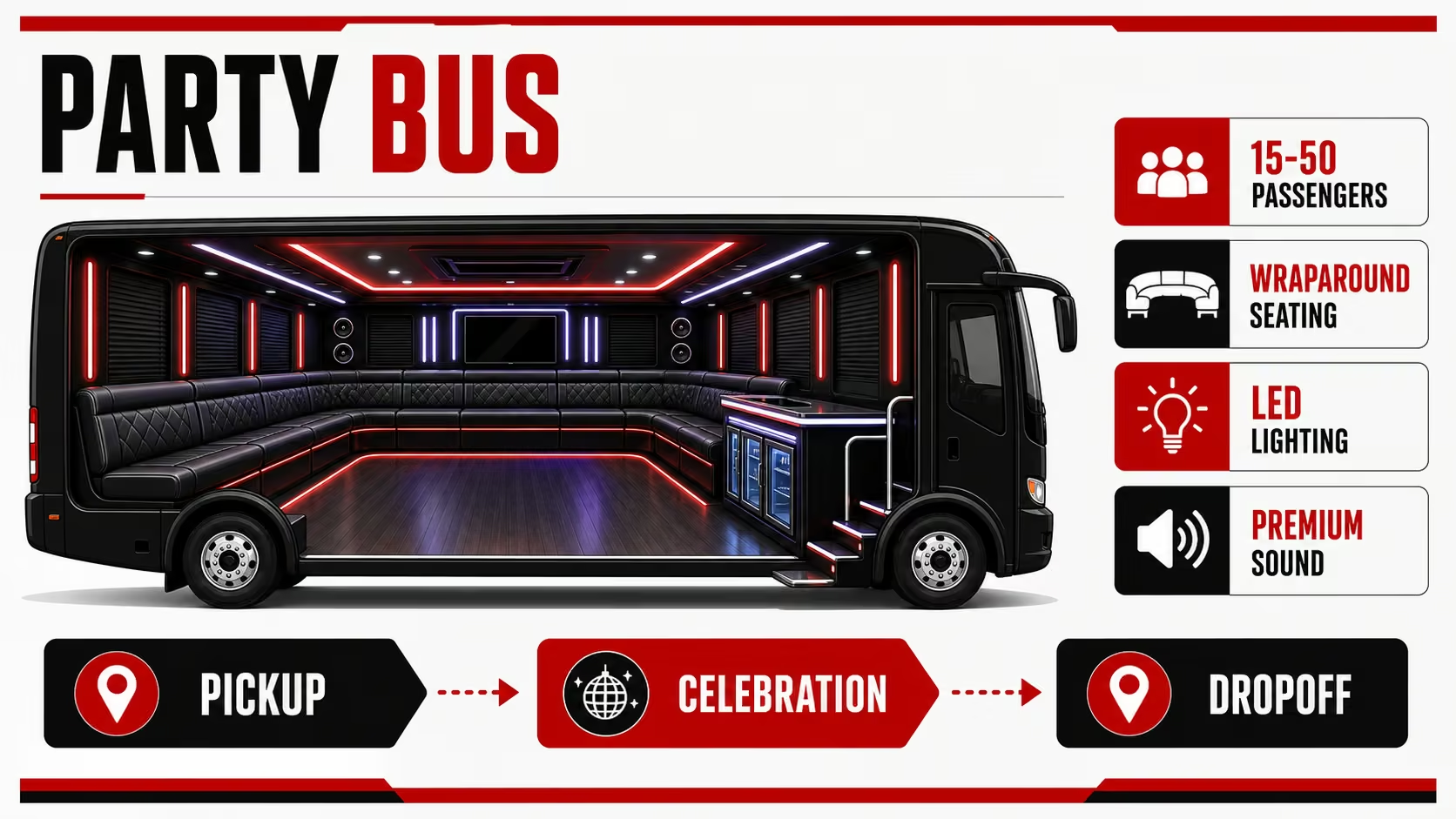
The custom-built celebration vehicle—wraparound perimeter seating, color-changing LED ceiling lighting, a built-in bar with cooler, premium Bluetooth sound system, flat-panel TVs, and an open dance area in the middle of the cabin. Party buses are almost always custom conversions, typically built by specialty coachbuilders on Freightliner or International heavy-duty chassis, with capacities ranging from 15 to 50 passengers depending on the chassis length. Identifying features include the lack of forward-facing seats, blackout windows, and the unmistakable nightclub-on-wheels interior.
For the full deep-dive on party bus history, interiors, and how they differ from limo buses, see our party bus guide. To browse rentable tiers, see our 15-passenger, 20-passenger, 30-passenger, 40-passenger, and 50-passenger party bus pages.
Limo Bus
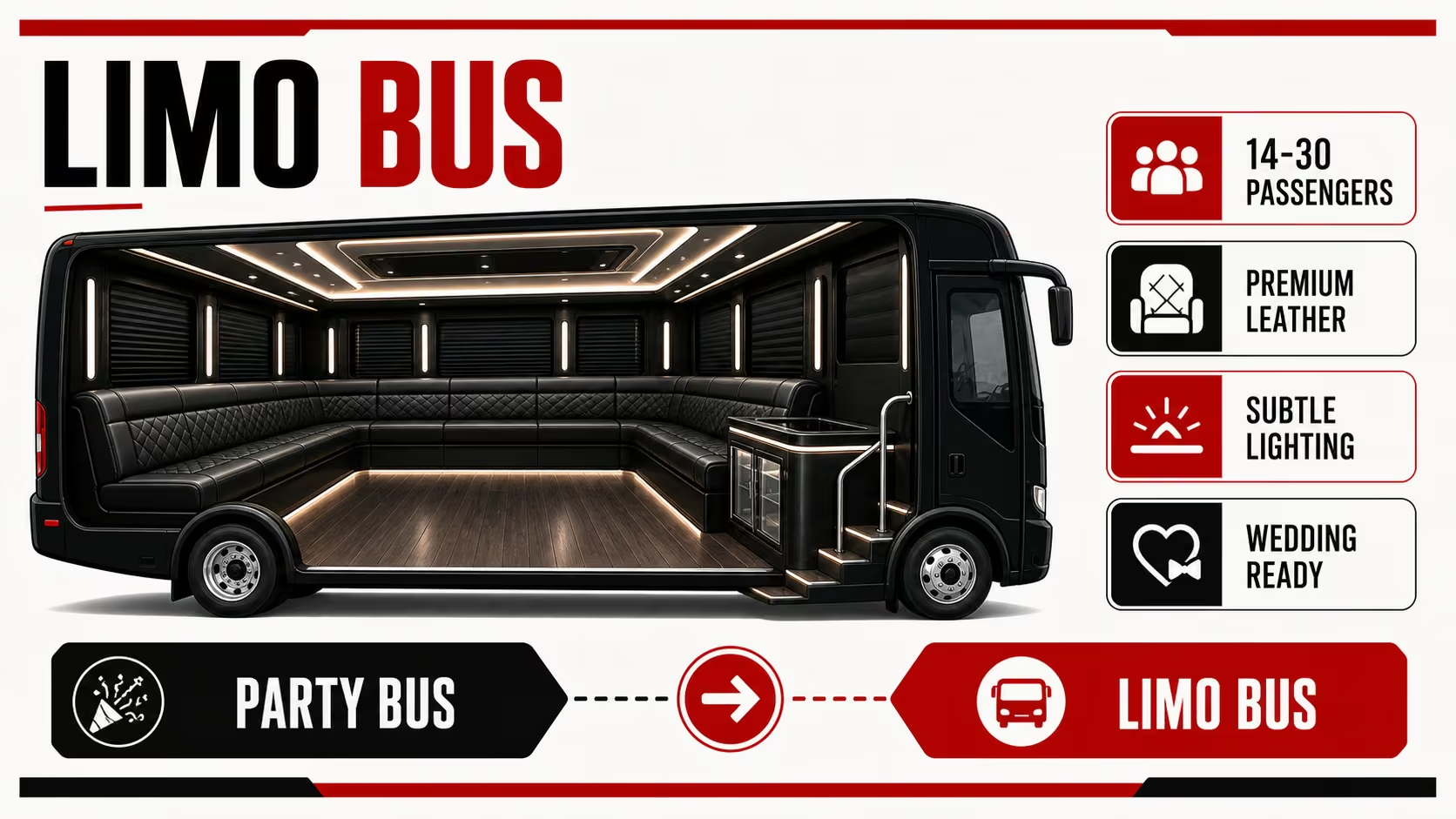
The dressier, more executive cousin of the party bus. Limo buses share the wraparound seating and bar, but lean into premium leather, subtle lighting, wood or chrome accents, and a more upscale vibe—think wedding-party bridal transport rather than bachelorette-rager. Smaller limo buses are often Sprinter-based; larger custom builds use longer wheelbase chassis from Freightliner or International.
Capacities typically run 14–30 passengers.
For the full guide—layout differences, when to pick a limo bus over a party bus, and pricing—see our limo bus guide. To browse a rentable example, see our 14-passenger Sprinter limousine.
Minibus
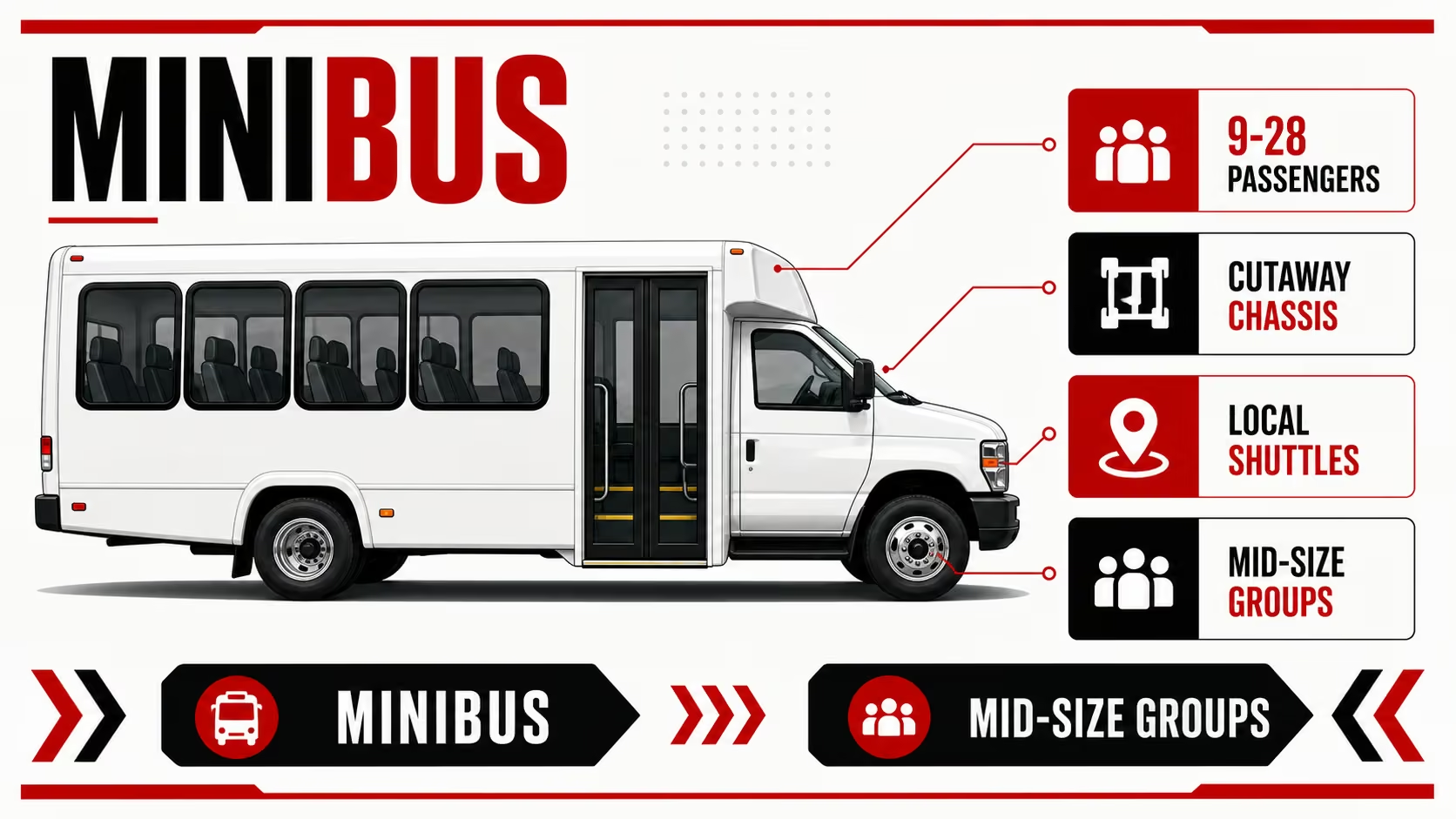
The mid-size workhorse—bigger than a Sprinter van, smaller than a motorcoach—built for groups of 9–28 passengers. Minibuses are body-on-chassis builds, meaning the body is built by a specialty coachbuilder and dropped onto a heavy-duty cutaway chassis from a major manufacturer. Identifying features include the boxy rear, the visible chassis "step" up to the entry door, and the squared-off side windows.
For the full guide—chassis options, body builders, and use cases—see our minibus guide. Common chassis platforms include the Ford Transit, Mercedes Sprinter (longer cutaway versions), and the International CE; common body builders are Glaval, Champion, and Starcraft. To browse rentable vehicles, see our 15–35 passenger minibus.
Minicoach
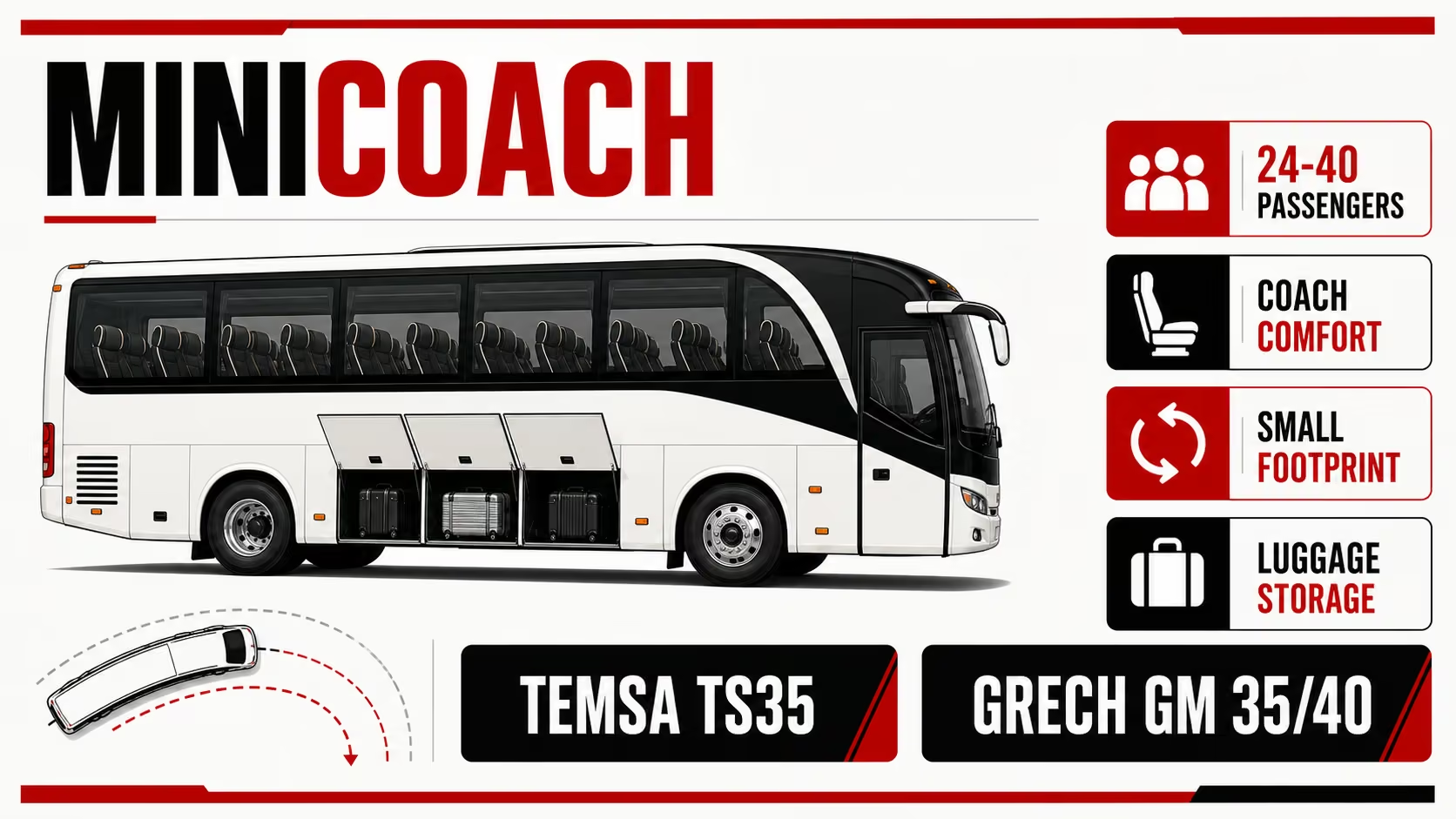
The luxury small-bus tier—think "motorcoach amenities in a minibus footprint." Minicoaches are purpose-built (not bodied on a cutaway chassis like a regular minibus), often run $120,000+ new, and feature reclining motorcoach-grade seats, undercarriage luggage storage, panoramic side windows, and sometimes onboard restrooms—all in a vehicle that seats 24–40 passengers. The dominant models are the Temsa TS35 (Turkish-built, increasingly common in US fleets) and the Grech Motors GM 35/40 (California-built, popular for executive shuttles and wine-country tours). You'll find them in service when groups want motorcoach comfort but the vehicle needs to navigate tighter venues than a full 56-seater can manage.
Sprinter Van / Shuttle Bus
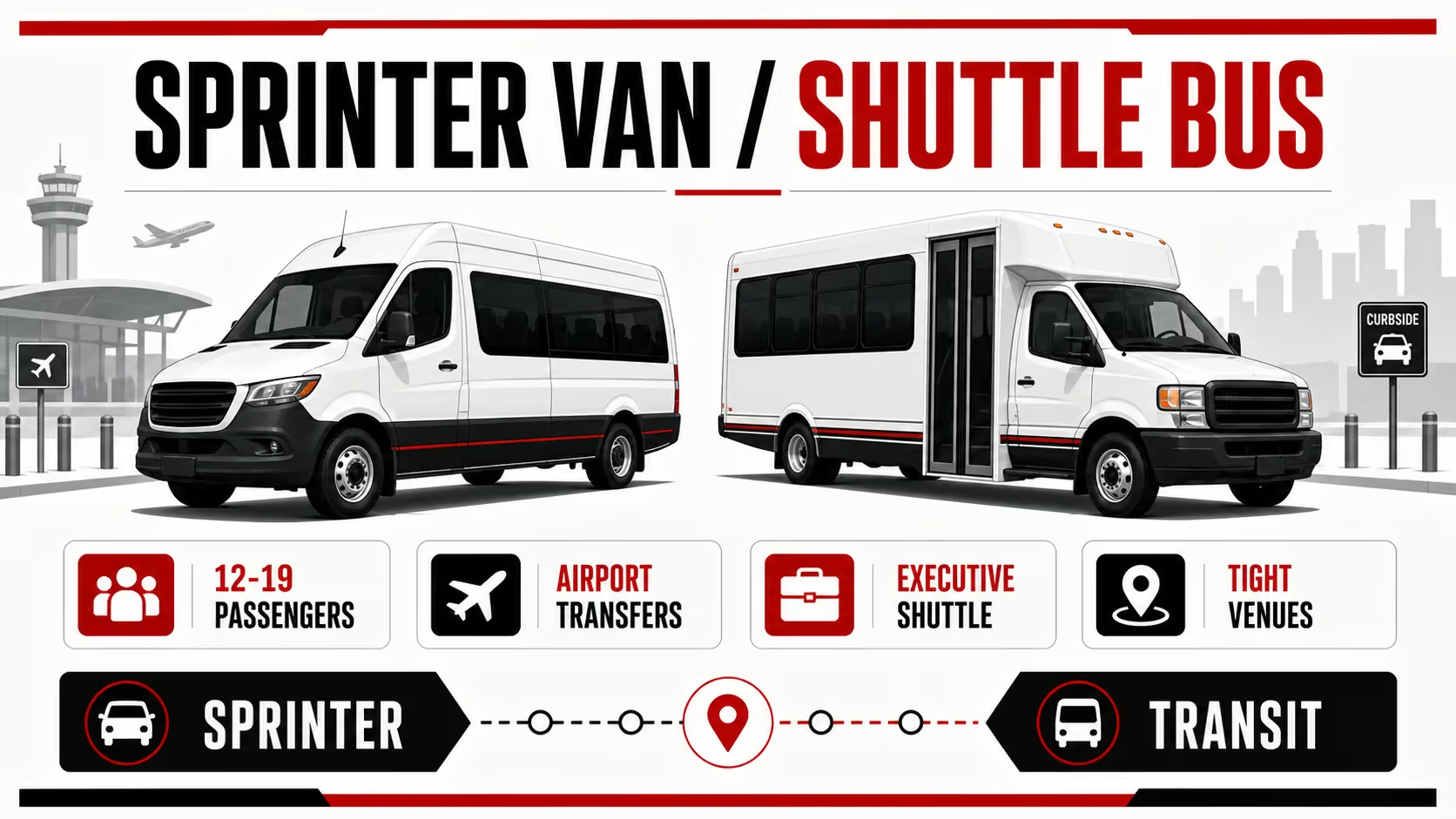
The most versatile small-group vehicle on the road. The Mercedes-Benz Sprinter is the dominant platform—you'll see it in passenger configurations from 12 to 15 seats as a van, and stretched into 14–19 seat shuttle bus configurations with raised roofs and premium interiors. The Ford Transit is the closest US-market competitor, available in similar passenger trims.
For the full guide on shuttle bus categories and uses, see our shuttle bus guide. For the Sprinter platform specifically—trim levels, history, and why it dominates the executive-shuttle market—see our Sprinter van guide. To browse rentable Sprinters, see our Sprinter van rental.
Tour Bus / Sightseeing Bus
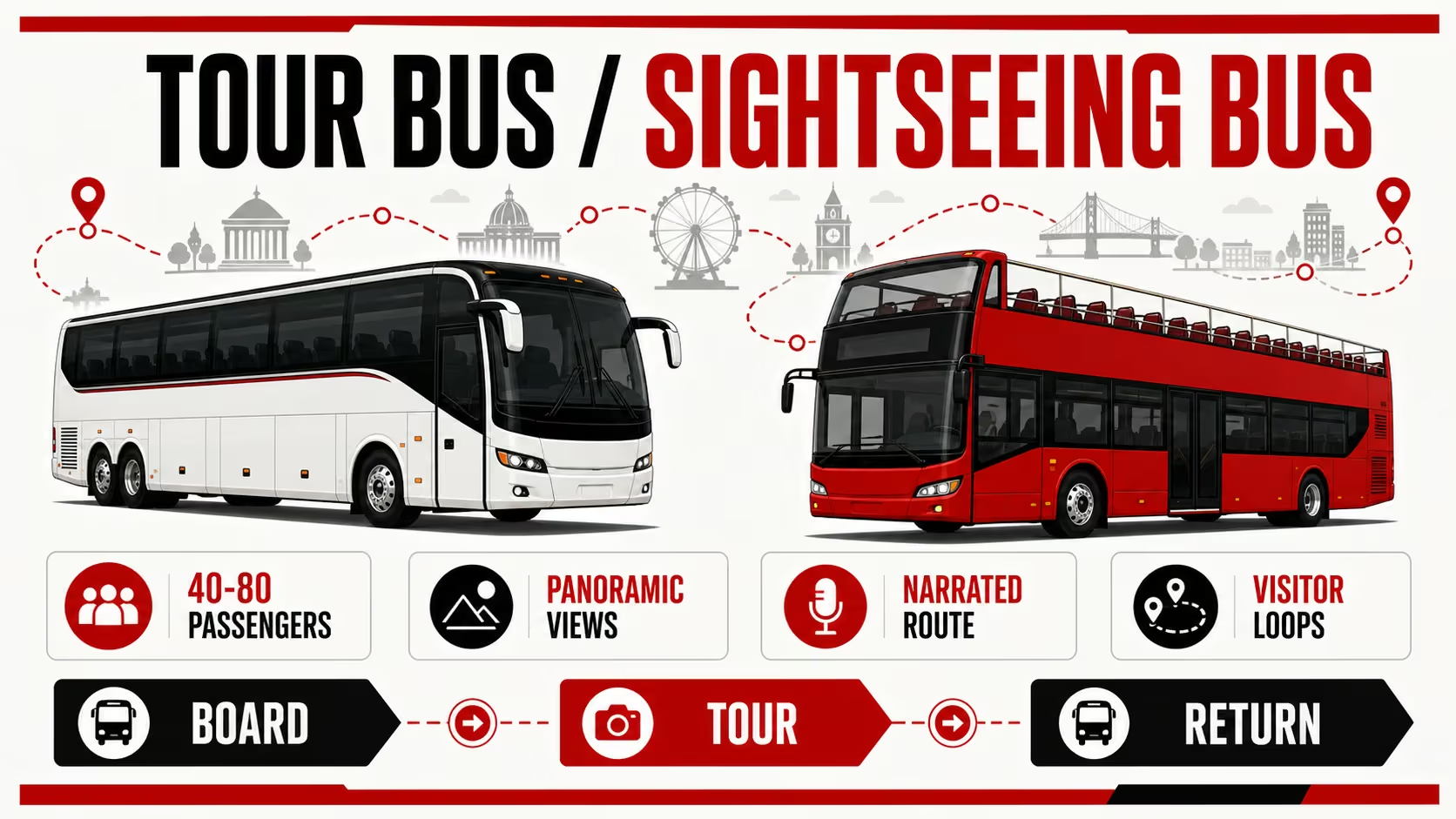
A motorcoach (or double-decker) configured for sightseeing rather than long-distance transport. Identifying features include narrated audio systems, large panoramic windows, sometimes a roof hatch for photos, and on the sightseeing variants, an open top deck. Capacity ranges widely: 40–60 for closed-roof versions, 50–80 for double-deckers.
Common platforms include MCI and Prevost chassis for closed tour coaches, and retrofitted open-tops based on the Van Hool TD927 double-decker. Tour buses are everywhere in DC, where the open-top sightseeing operators run constant loops past the National Mall—and you'll see closed-roof tour coaches running daily routes to Colonial Williamsburg and Mount Vernon from Hampton Roads.
Sleeper Bus / Entertainer Coach
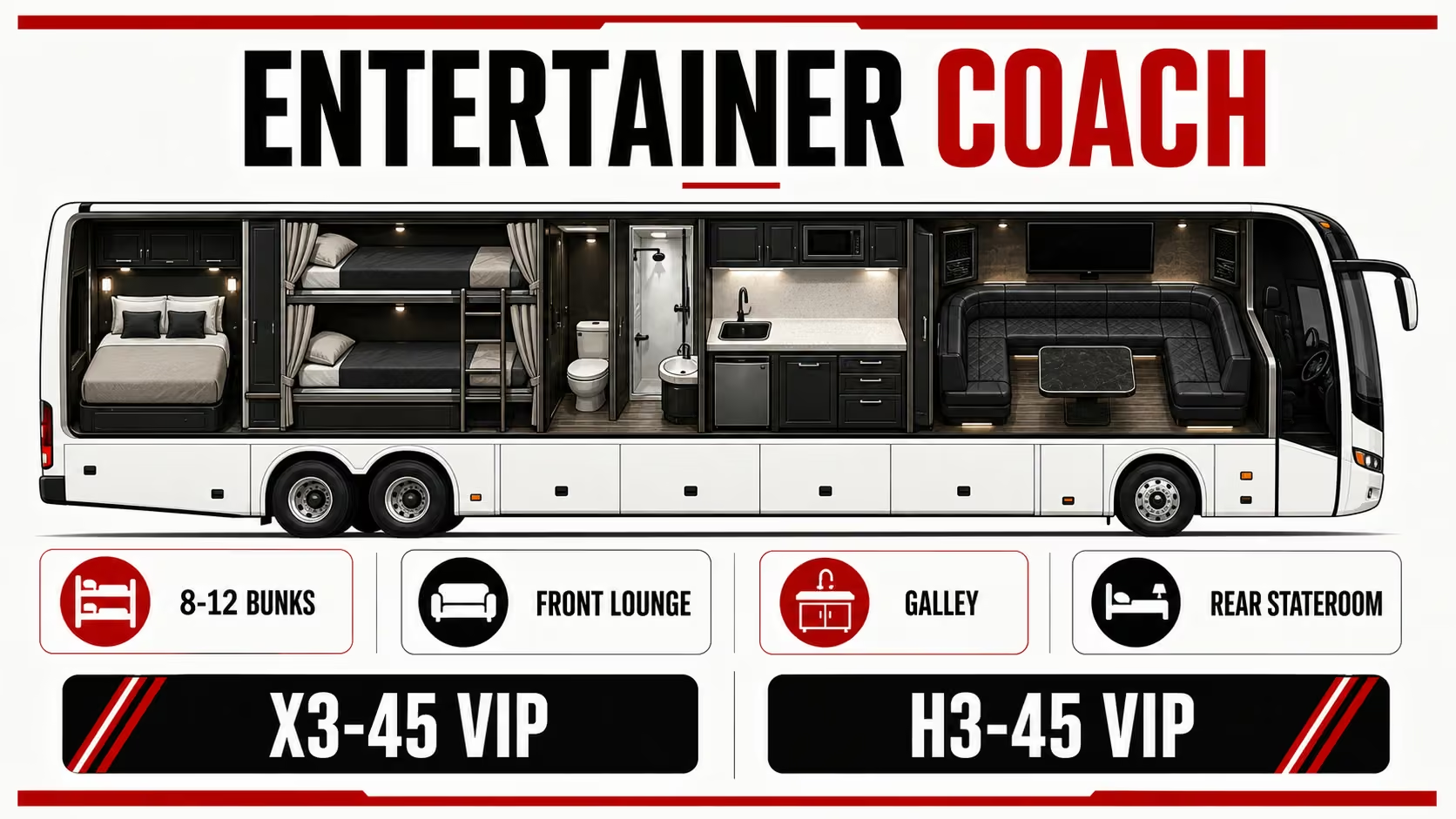
The "tour bus" you've seen behind concert venues with the bunks-and-lounge interior. Sleeper buses (also called entertainer coaches or band buses) are motorcoach shells converted into rolling apartments—typically 8–12 bunks, a front lounge with sofa seating, a rear stateroom, a galley with sink and microwave, and a bathroom. Touring musicians, film crews, sports teams, and political campaigns all use them.
The Prevost X3-45 VIP and Prevost H3-45 VIP are the gold standard—virtually every major touring artist's bus is built on one of these two shells. Conversion is done by specialty coachbuilders like Hemphill Brothers or Florida Coach. You'll occasionally spot them parked behind venues like Norfolk Scope or DC's Capital One Arena on tour nights.
Neighbourhood / Community Bus
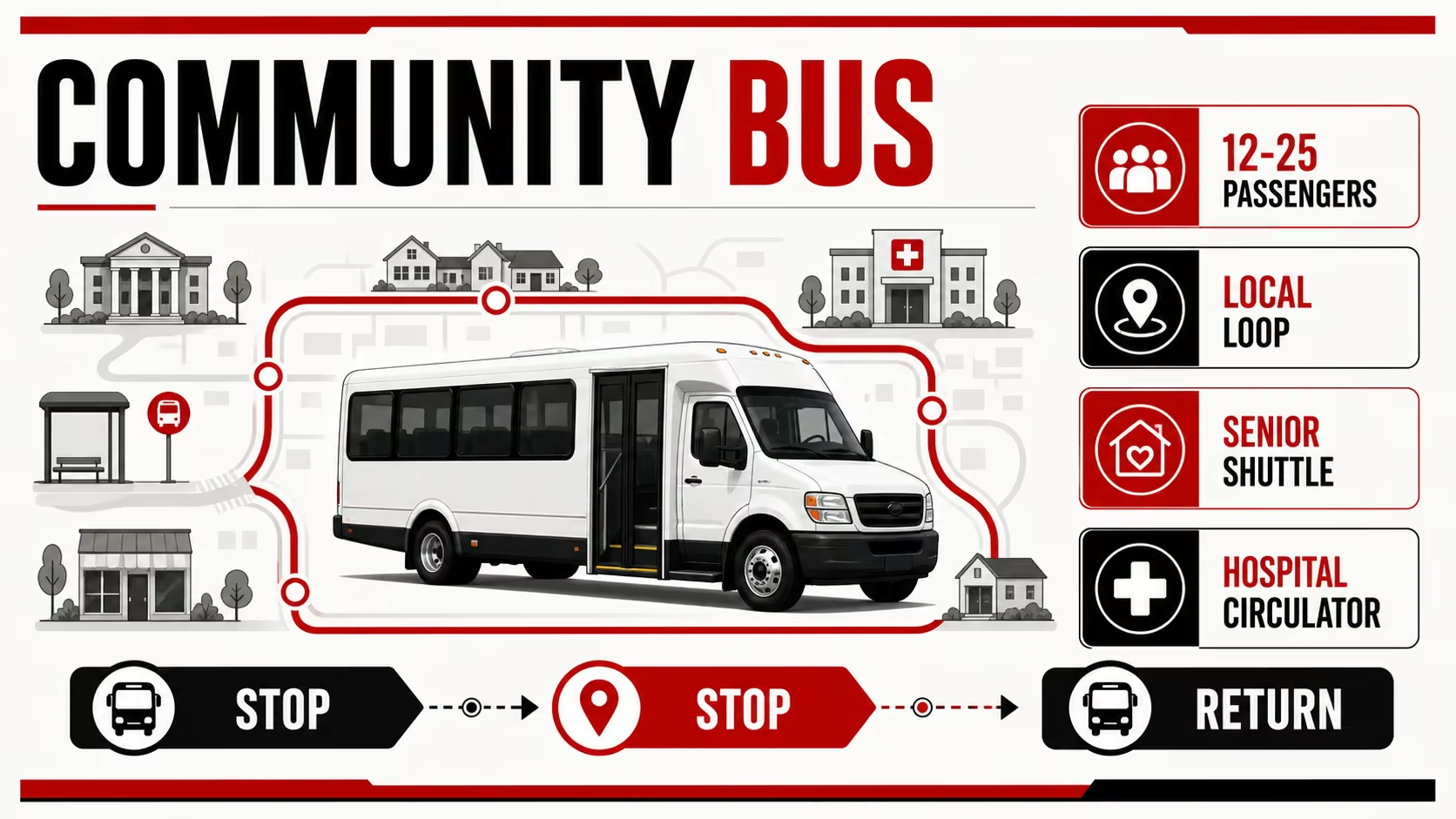
The small, often-free shuttles run by municipalities, retirement communities, hospitals, or shopping districts. Capacity typically 12–25 passengers. These are almost always cutaway minibus builds—Glaval or Starcraft bodies on Ford or Chevy cutaway chassis.
Identifying features include the route or sponsor name painted on the side, low-frequency stop pattern, and short geographic range. You'll see them running senior shuttles in Virginia Beach, hospital circulators at Sentara Norfolk General, and mall-loop shuttles in Northern Virginia.
Bus types by design / configuration
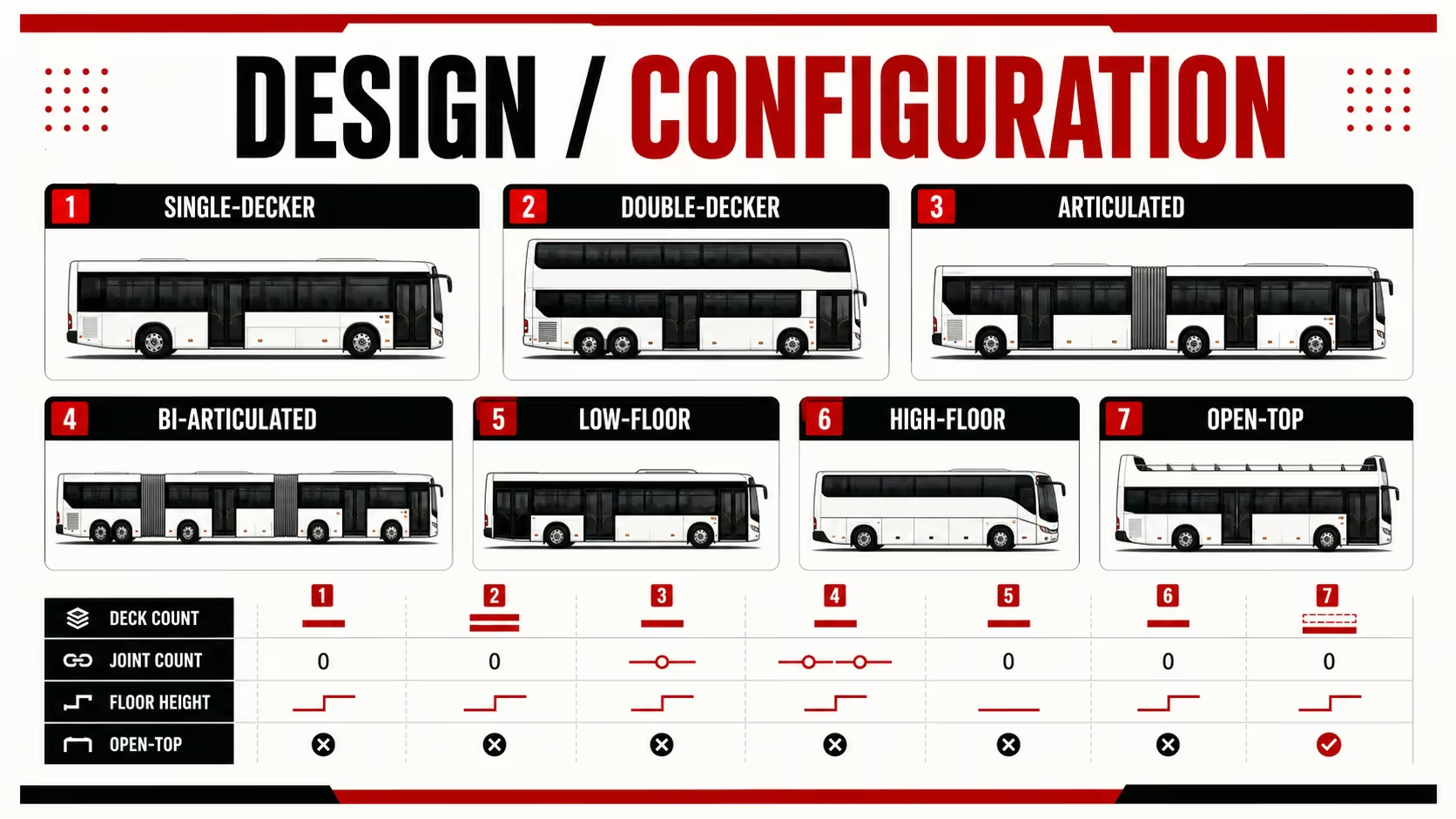
Single-Decker Bus
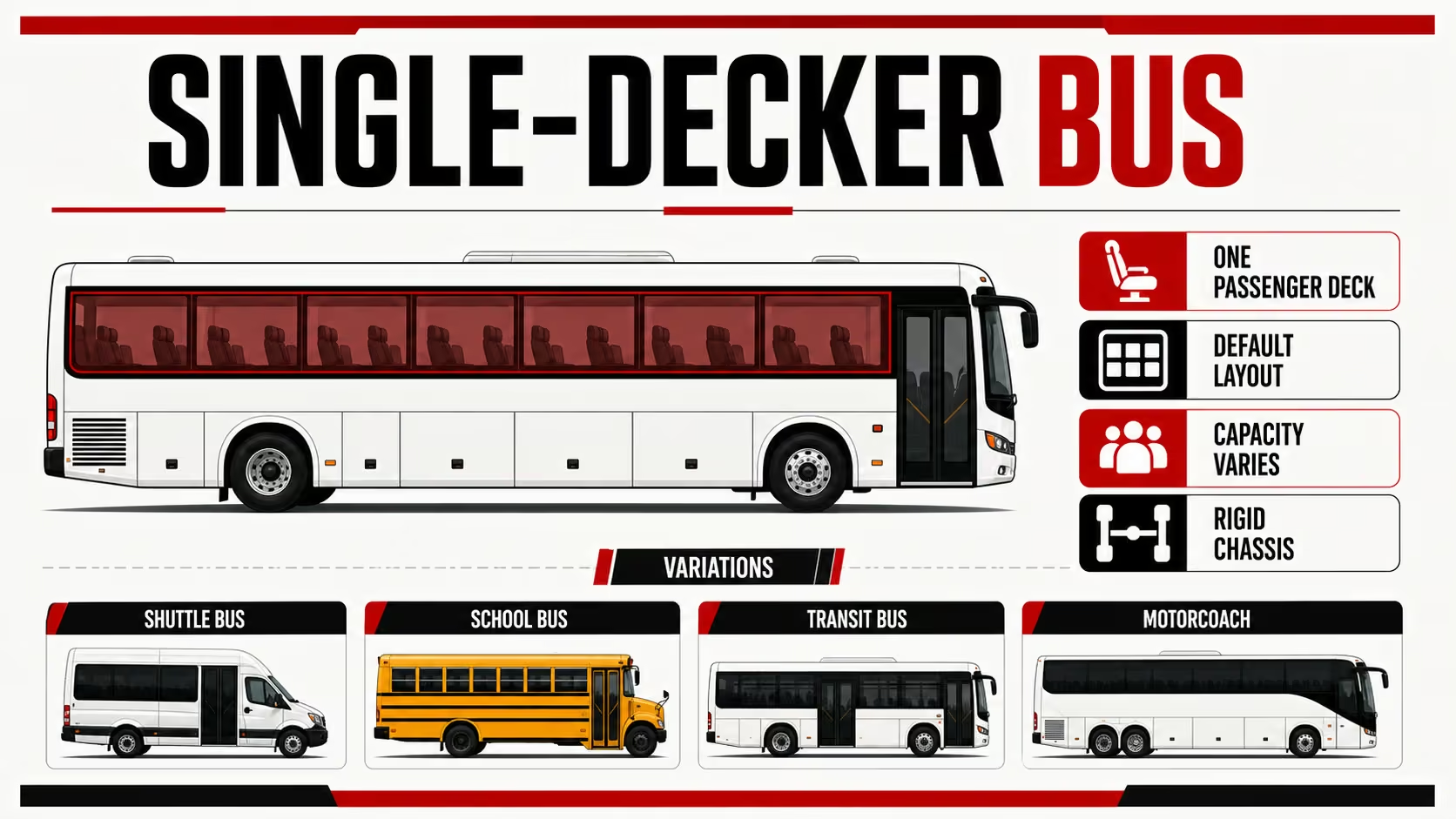
The most common bus configuration globally—one passenger deck, rigid (non-articulated) chassis. Almost every bus you see day-to-day in the US is a single-decker: motorcoaches, transit buses, school buses, minibuses. The single-decker category isn't really a "type" so much as the default.
Capacity varies wildly by purpose: a Sprinter shuttle is single-decker (14 seats), and so is a 56-passenger motorcoach. The category exists mainly to contrast with the double-decker and articulated configurations below.
Double-Decker Bus
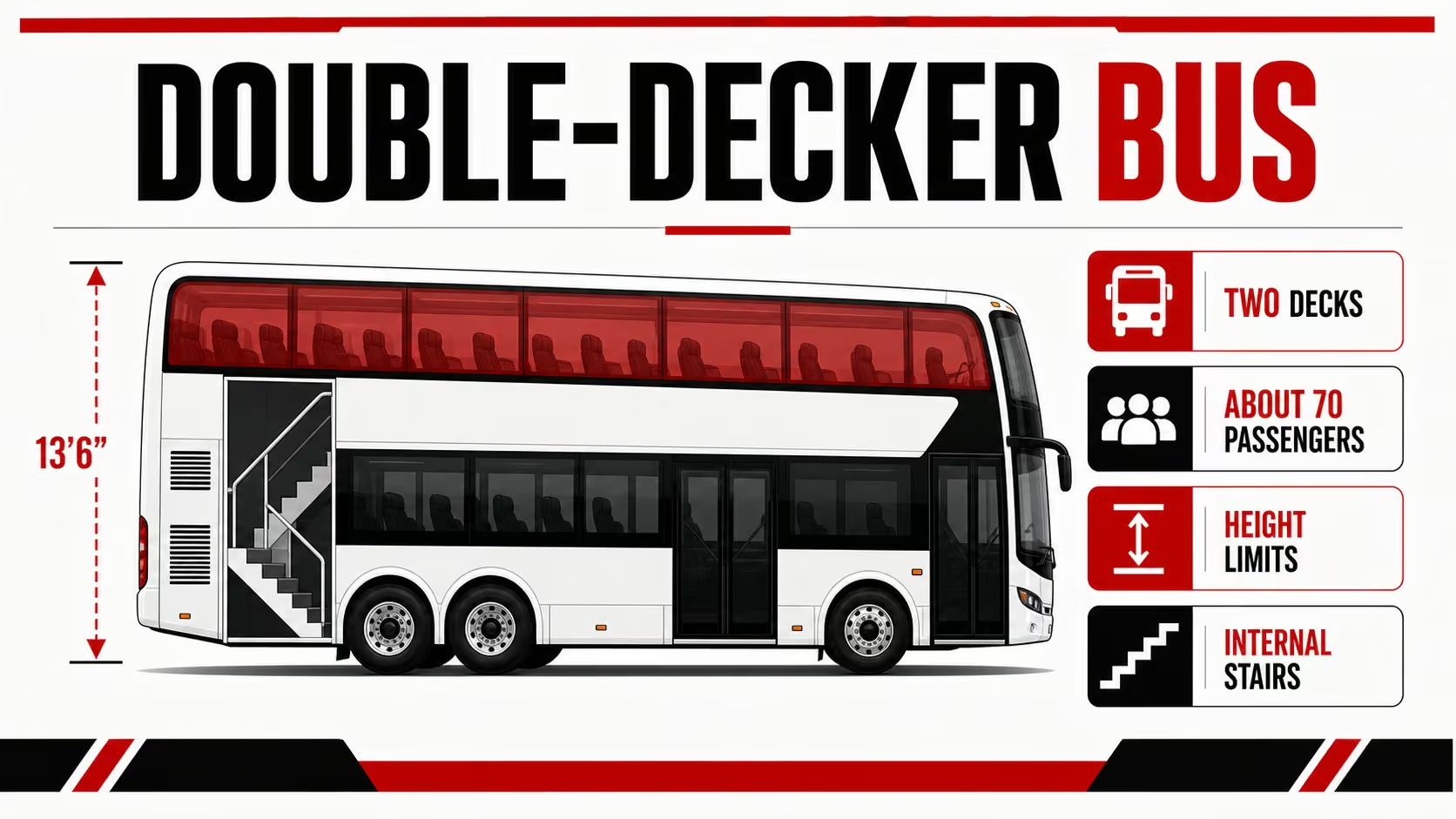
Two passenger decks stacked vertically, connected by an internal staircase. Capacity typically ~70 passengers, sometimes up to 100 in transit configurations. Iconic in the UK (the red London buses) but increasingly common in North American intercity service (Megabus runs a double-decker fleet) and tourist sightseeing.
Identifying features are obvious: the upper deck, the staircase, the roughly 13–14 foot total height (which is why double-deckers can't go everywhere—low bridges, tree-lined roads, and many parking structures are off-limits).
Dominant manufacturers are Alexander Dennis (the Enviro500 is the global standard for double-decker transit and intercity, the Enviro400 is the UK city-bus standard) and Van Hool (the TDX25 is the US intercity favorite). In the DC area, you'll spot Alexander Dennis double-deckers on Megabus and FlixBus routes between DC, New York, and Boston.
Articulated Bus
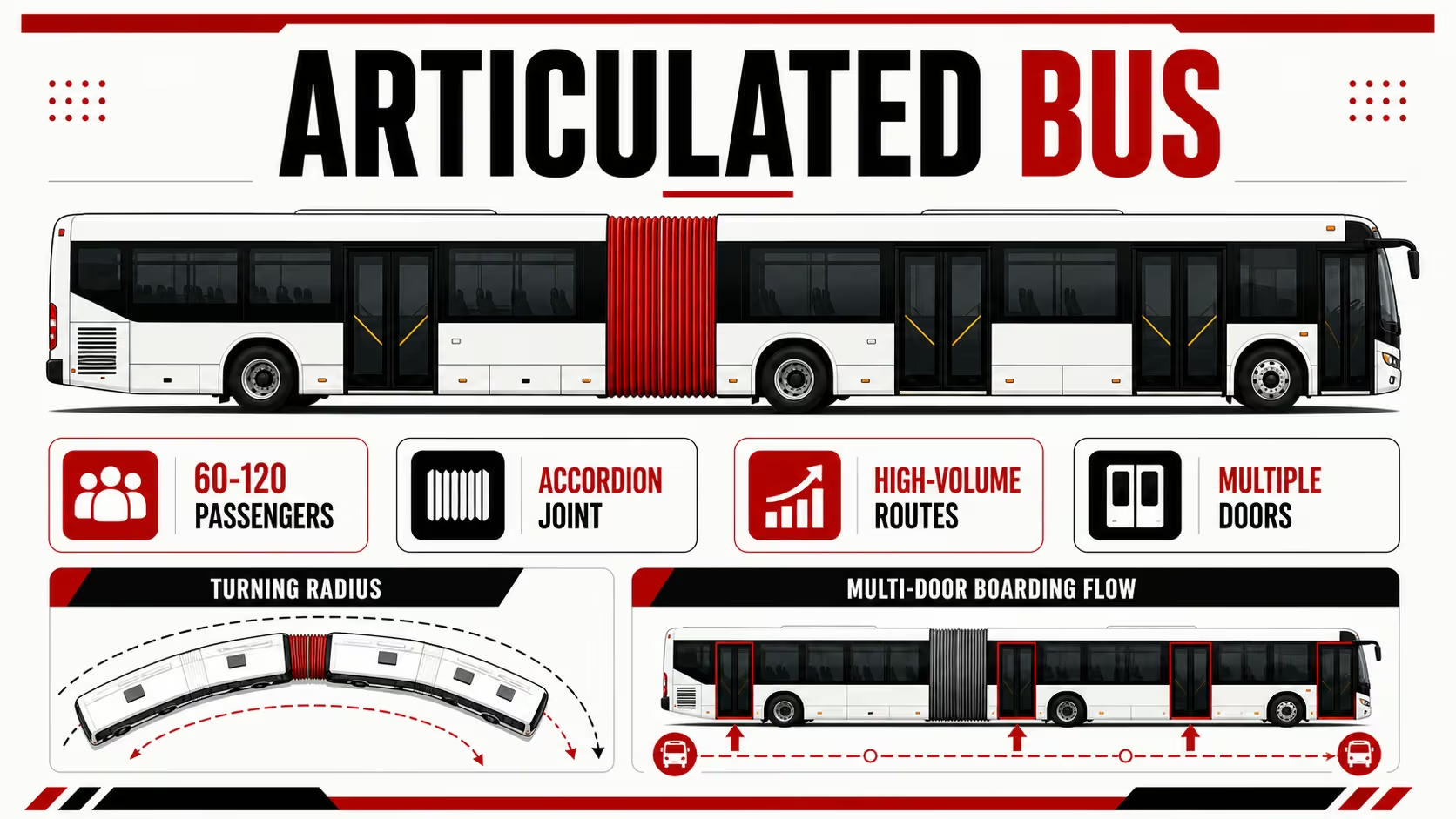
The "bendy bus." Two rigid sections connected by a flexible accordion-style joint in the middle, allowing the vehicle to turn corners that a 60-foot rigid bus couldn't. Capacity 60–120 passengers, with the longer versions used on bus rapid transit (BRT) systems where high passenger volume needs trolley-like efficiency. Identifying features are unmistakable: the visible accordion joint, the extra rear section, and the multiple doors (typically three or four).
Dominant manufacturers are New Flyer (the Xcelsior XN60 and XD60 are the North American standards), Mercedes-Benz (the Citaro G dominates European cities), and Volvo (the 7900A is common globally). DC's MetroExtra and select Metrobus lines run articulated New Flyers—you'll see them on the busy 16th Street and Wisconsin Avenue corridors.
Bi-Articulated Bus
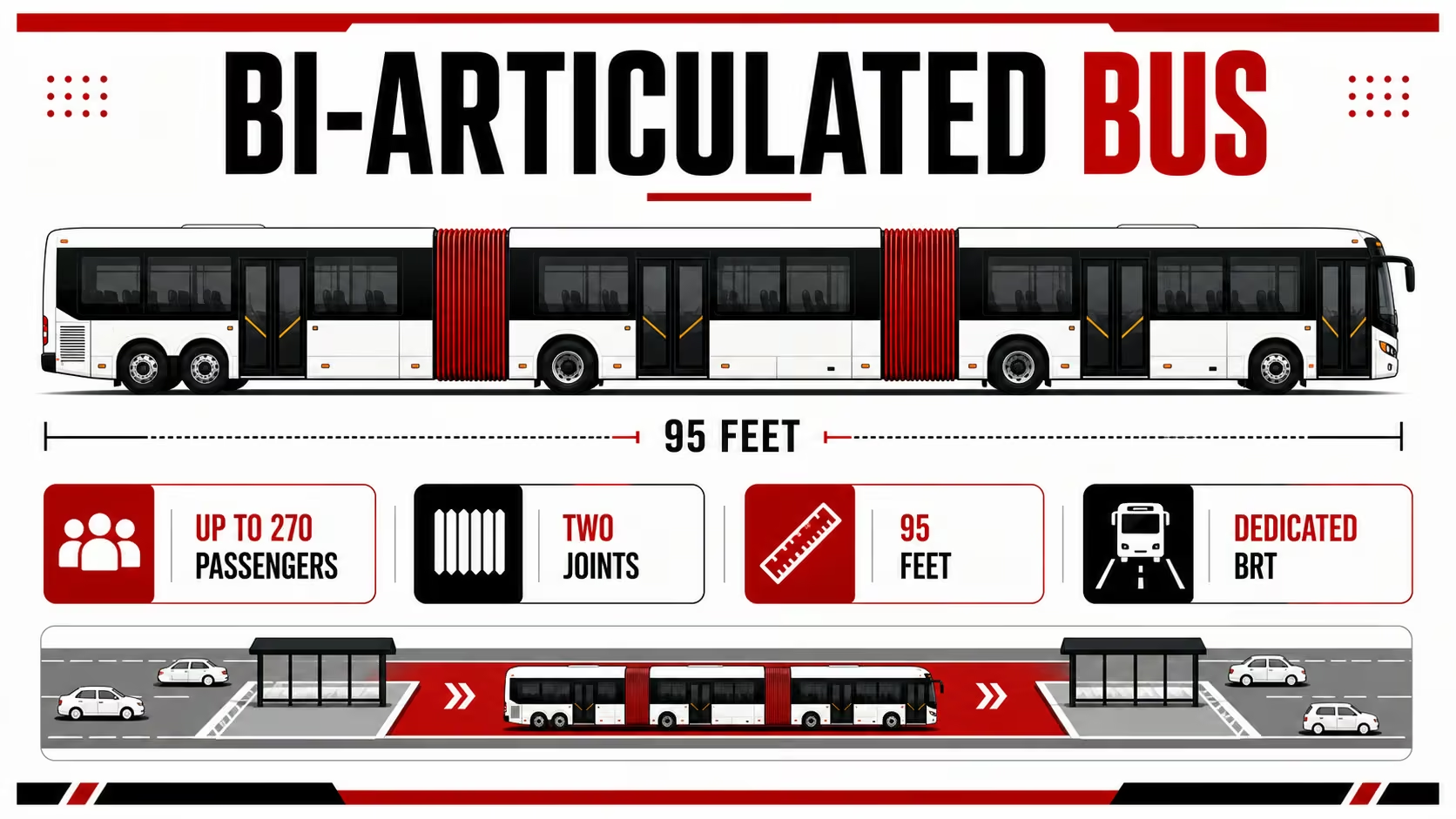
The rare three-section bus—two accordion joints, three rigid sections, total length up to 95 feet, capacity up to 270 passengers in dense BRT configurations. Bi-articulated buses are almost exclusively used in dedicated BRT systems where the road infrastructure is built around them (you can't run one on a normal city street). The Volvo Gran Artic 300 is the global standard; Scania also builds them.
You'll find them in Curitiba (Brazil, where BRT was invented), Mexico City, and a handful of European BRT lines. None operate in the US—our roads and intersections aren't built for them.
Low-Floor Bus
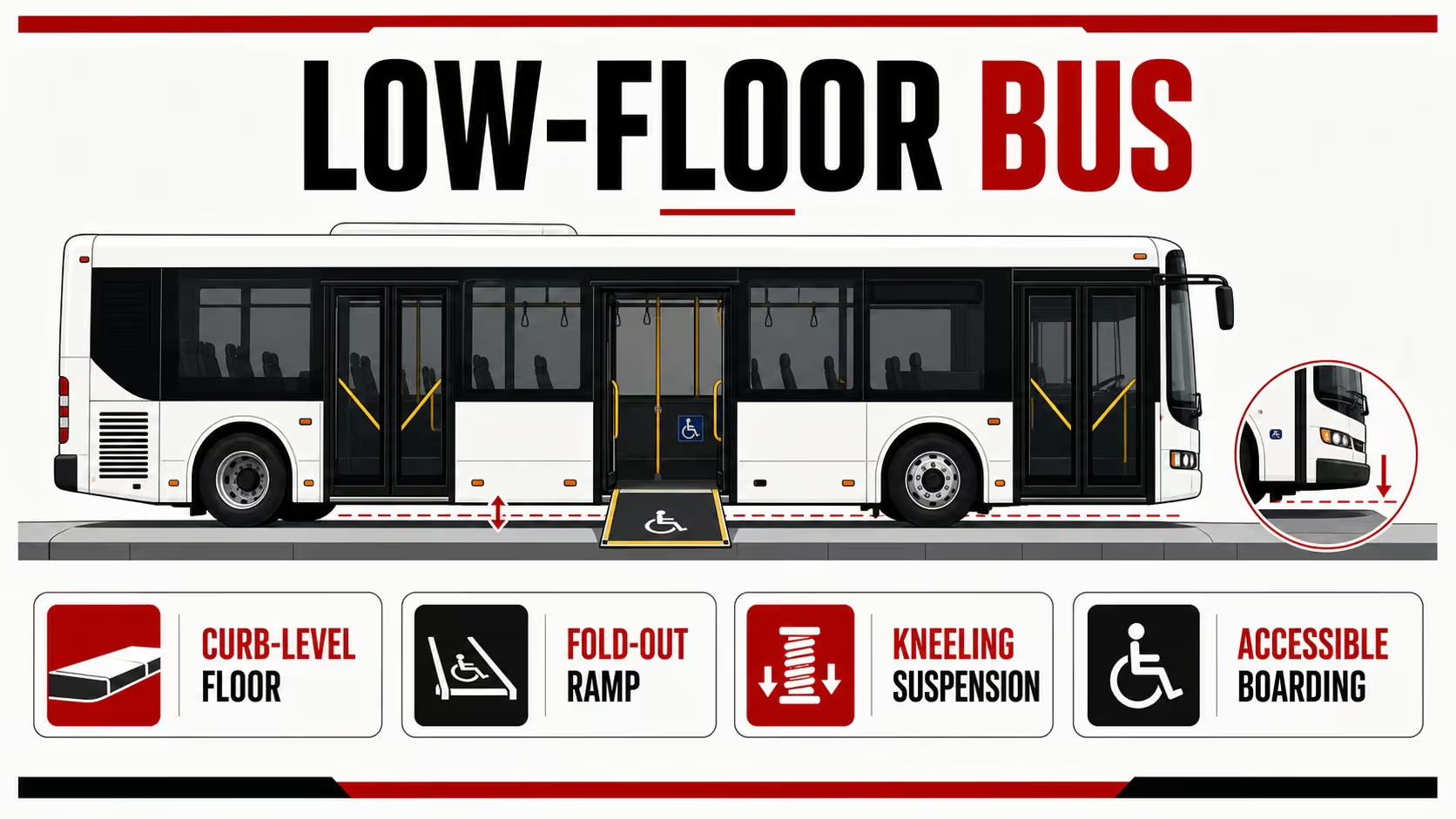
The accessibility standard for modern transit. The passenger floor sits just inches above the road, eliminating the step up at the door and allowing wheelchair users, parents with strollers, and people with mobility limitations to board easily via a fold-out ramp. Nearly every transit bus built in North America since 2000 is low-floor.
Dominant manufacturers are New Flyer, Gillig, and Nova Bus. Identifying features include the absence of the high step at the door, the visible kneeling-suspension system (the bus tilts toward the curb when stopped), and the ramp mechanism by the front or middle door.
High-Floor / Step-Entrance Bus
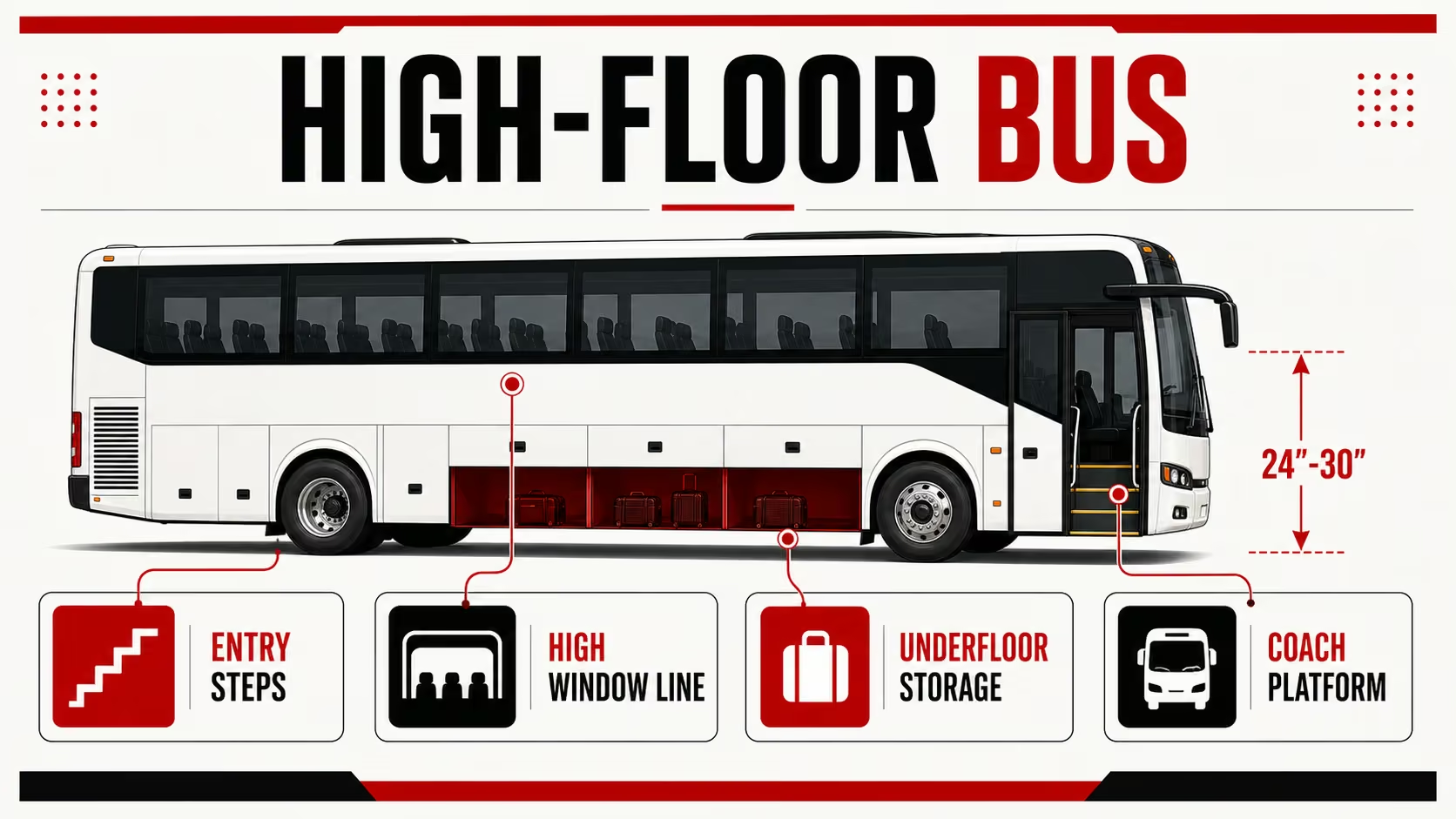
The older transit standard—a high passenger deck with a steep step up at the door. Largely phased out of urban transit fleets due to accessibility requirements, but still common in intercity coach service (motorcoaches are high-floor by design—the luggage bays sit underneath the passenger deck). Identifying features include the visible step at the entry door, the higher window line, and the lack of a kneeling suspension.
A 56-passenger motorcoach is technically a high-floor bus, even though we don't usually describe it that way.
Open-Top Bus
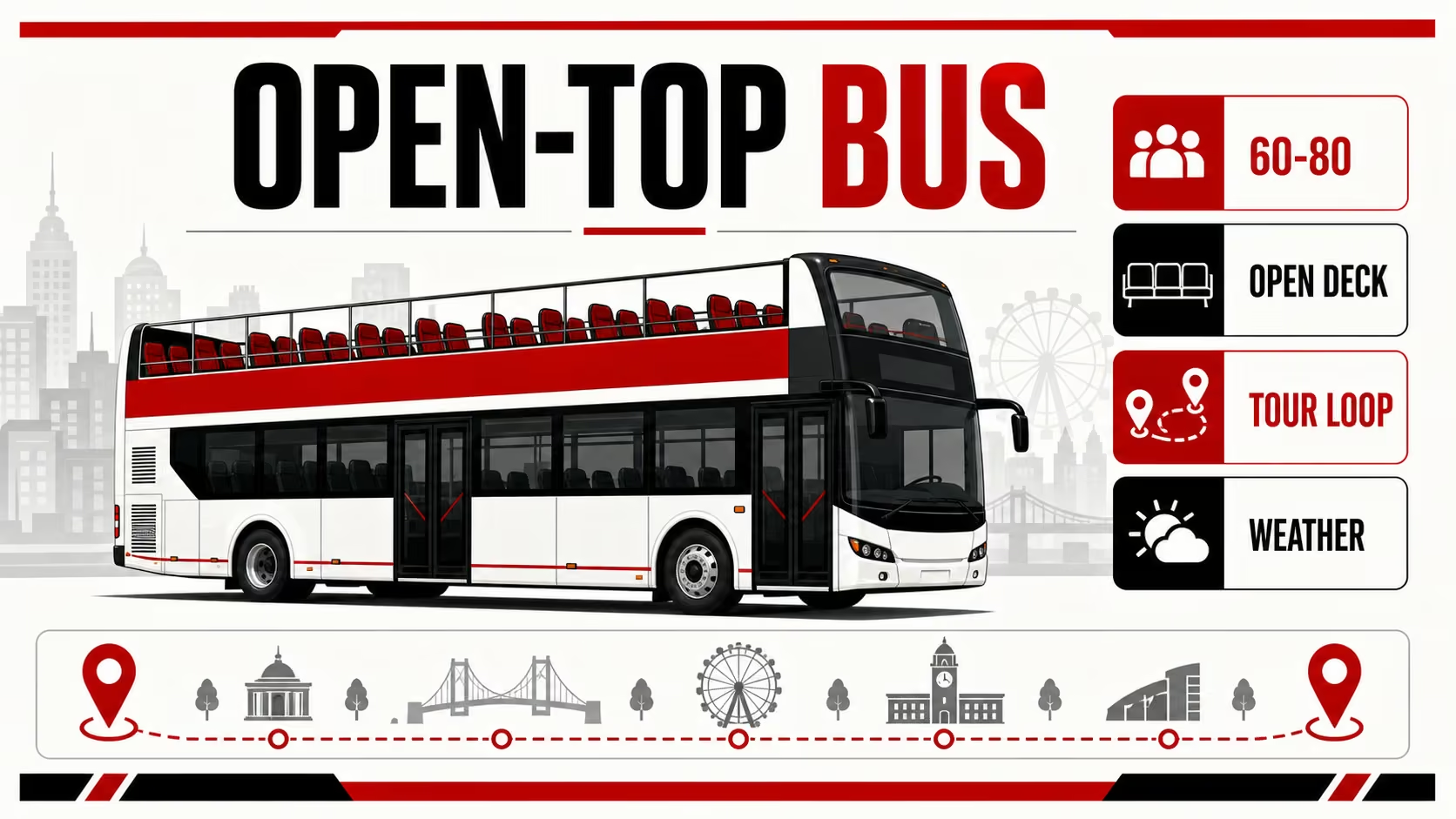
Tourist sightseeing vehicles with the upper deck of a double-decker left open to the sky. Common in major tourist cities—the hop-on, hop-off operators in DC, New York, London, and Paris all run open-tops. Capacity typically 60–80, with the upper deck unsheltered (operators provide ponchos for rain).
Most open-tops are Van Hool TD927 conversions or purpose-built Alexander Dennis Enviro models. You'll see fleets of open-top tour buses circling the National Mall any time the weather is decent.
Bus types by power source
Diesel Bus
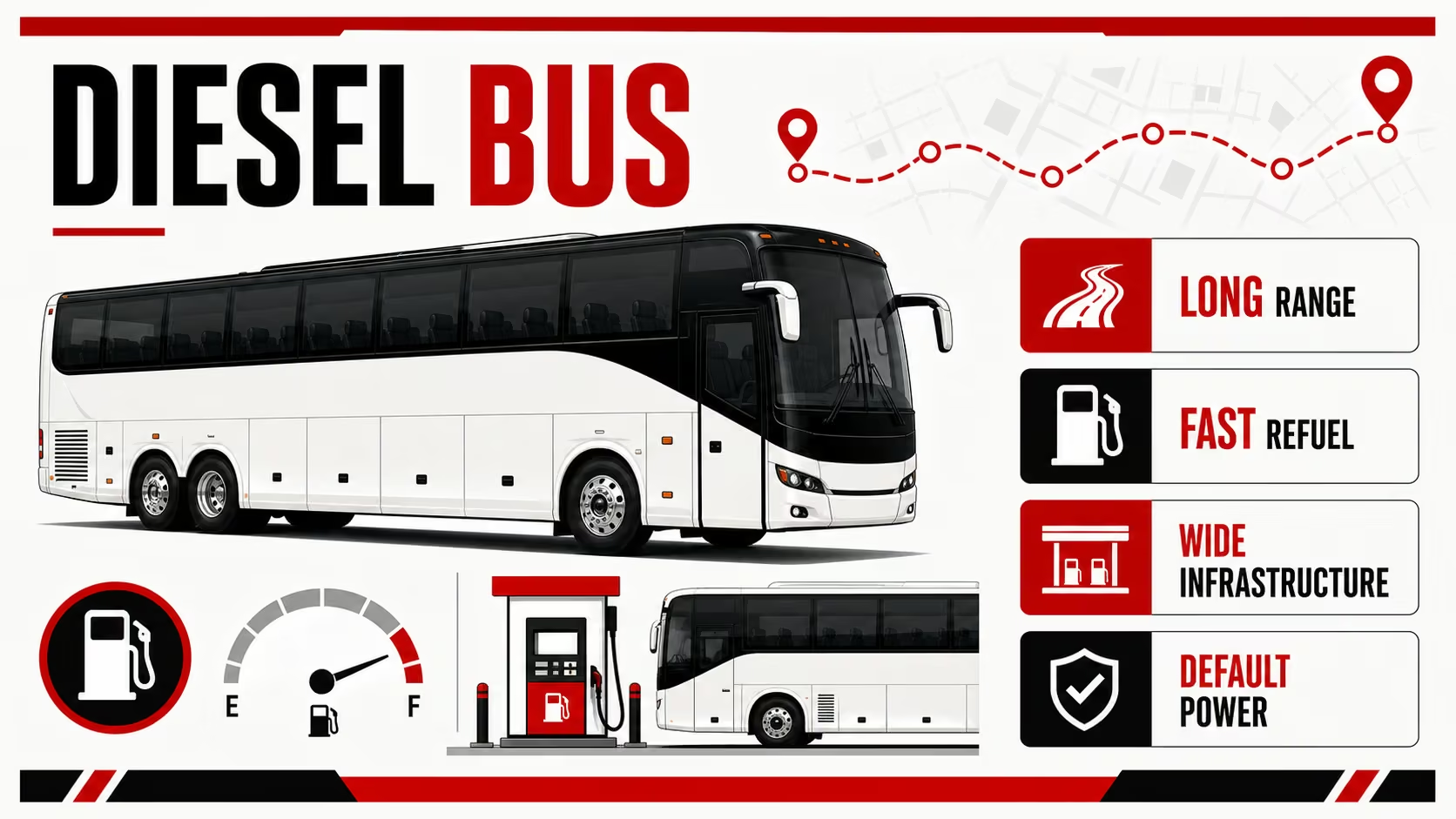
The historical default and still the dominant power source in the global bus fleet. Modern diesel engines in transit buses, motorcoaches, and school buses meet strict EPA emissions standards (the Cummins L9, ISL, and X12 are common in US transit and motorcoach applications). Diesel's advantages are range (a single tank can take a motorcoach 1,000+ miles), refueling speed, and the established infrastructure—every truck stop in America has diesel.
Disadvantages are emissions and noise, which is why transit agencies have been transitioning to hybrid and electric over the past decade.
Electric Bus
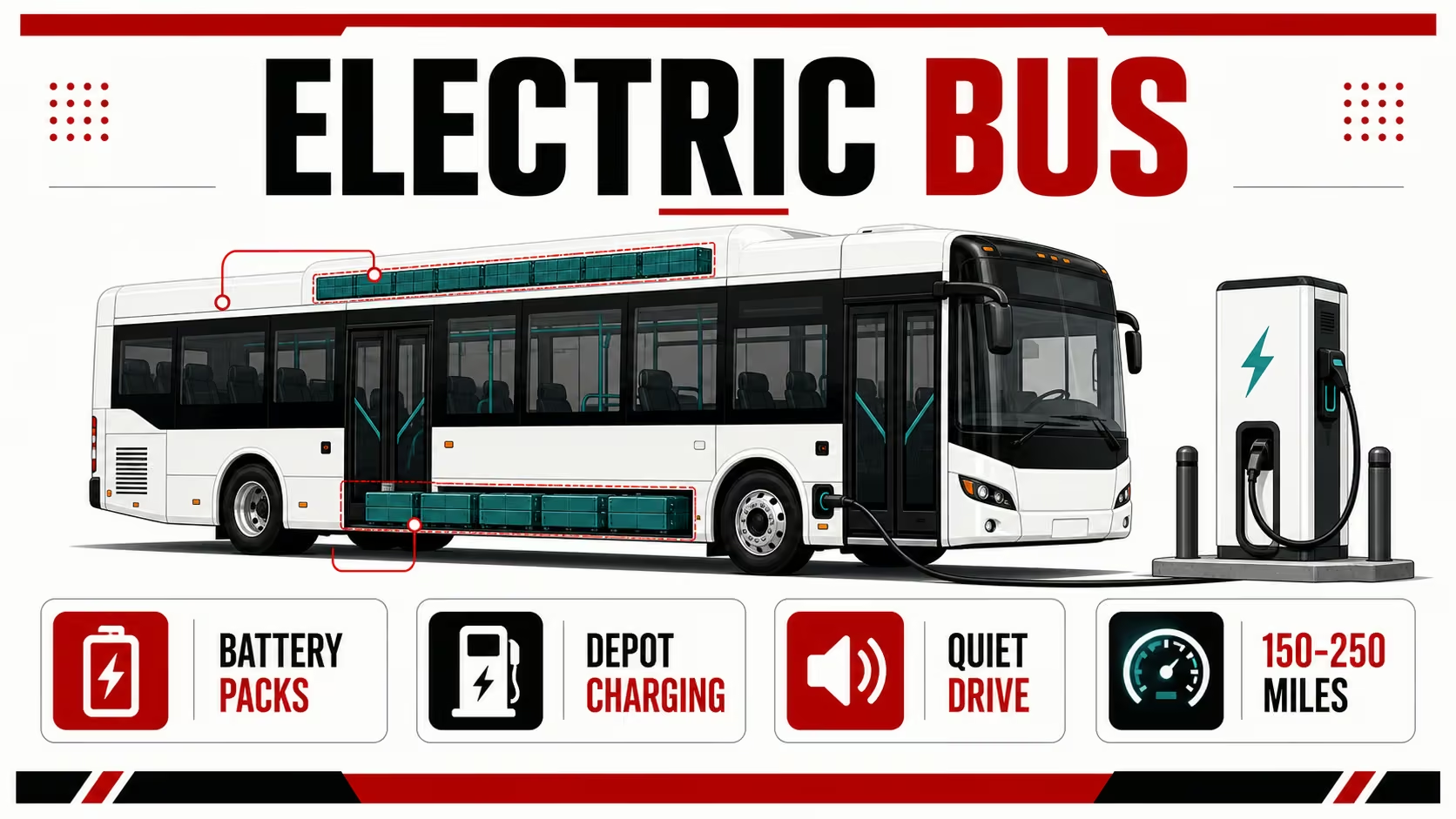
Battery-powered, growing rapidly. Electric buses store energy in onboard lithium-ion battery packs (typically 200–700 kWh) and run on electric drive motors. Range is the trade-off: most electric transit buses get 150–250 miles on a charge, requiring depot charging overnight.
Dominant manufacturers are Proterra (the ZX5 and Catalyst lines—the company has gone through restructuring, but the buses are still on the road), BYD (the Chinese giant; the K-Series and K9 are global bestsellers), New Flyer (the Xcelsior CHARGE is the North American leader), and Yutong (Chinese manufacturer with a growing global footprint). DC's Metrobus and Hampton Roads Transit have both committed to electrifying significant portions of their fleets in the coming years.
Hybrid Bus
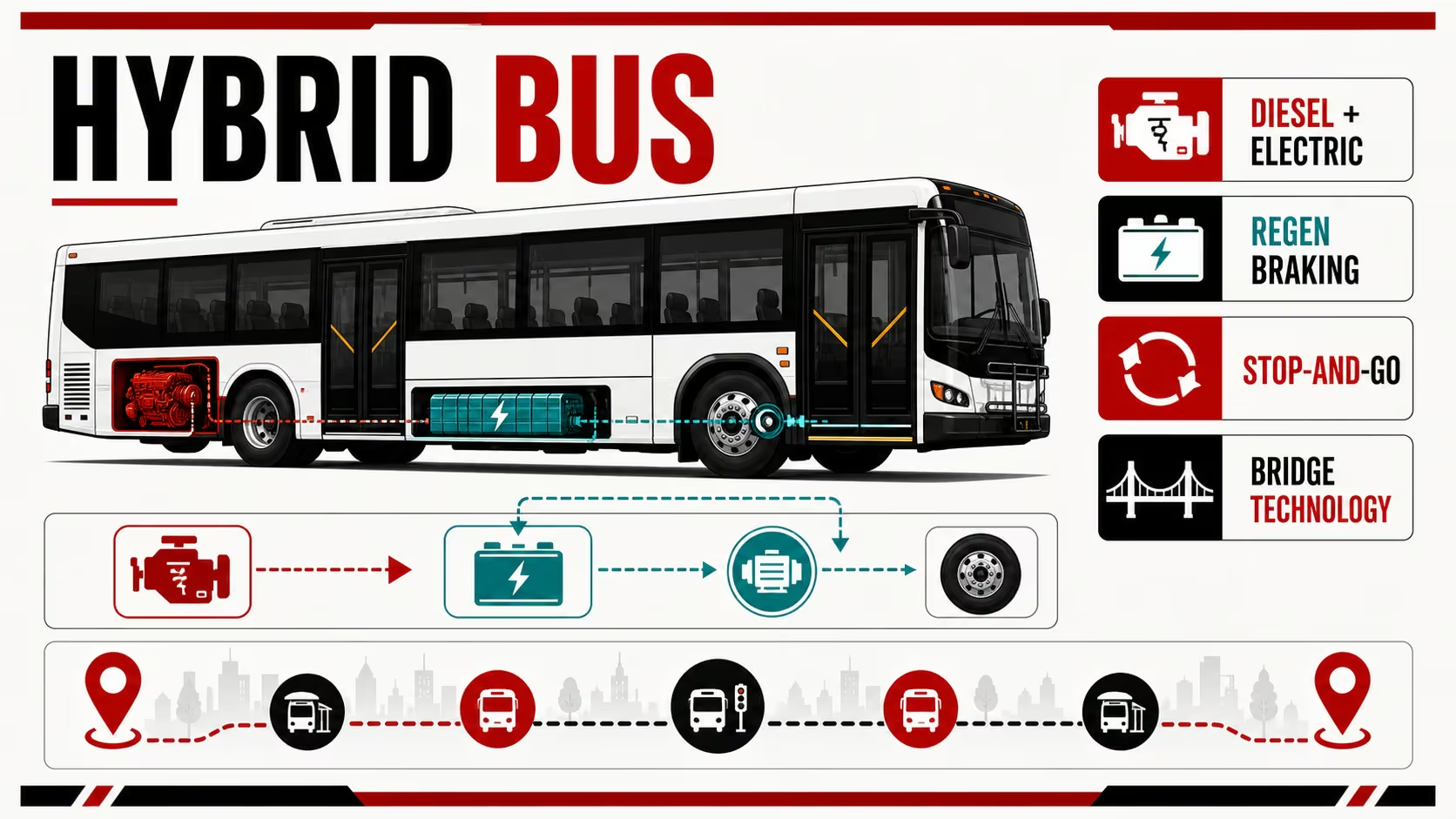
The diesel-electric combination—a diesel engine paired with an electric drive system and a small battery, similar in concept to a Prius. Hybrids regenerate energy under braking, store it in the battery, and use it to accelerate, dramatically improving fuel economy in stop-and-go transit service. Hybrids are the bridge technology between pure diesel and pure electric, and many transit agencies bought heavily into them in the 2010s.
Dominant manufacturers include New Flyer (the Xcelsior Hybrid) and Gillig (the HEV). Identifying features are subtle—hybrids look almost identical to their diesel siblings, but you'll hear the engine cut out at stops and the bus accelerate silently for the first few feet.
Trolleybus
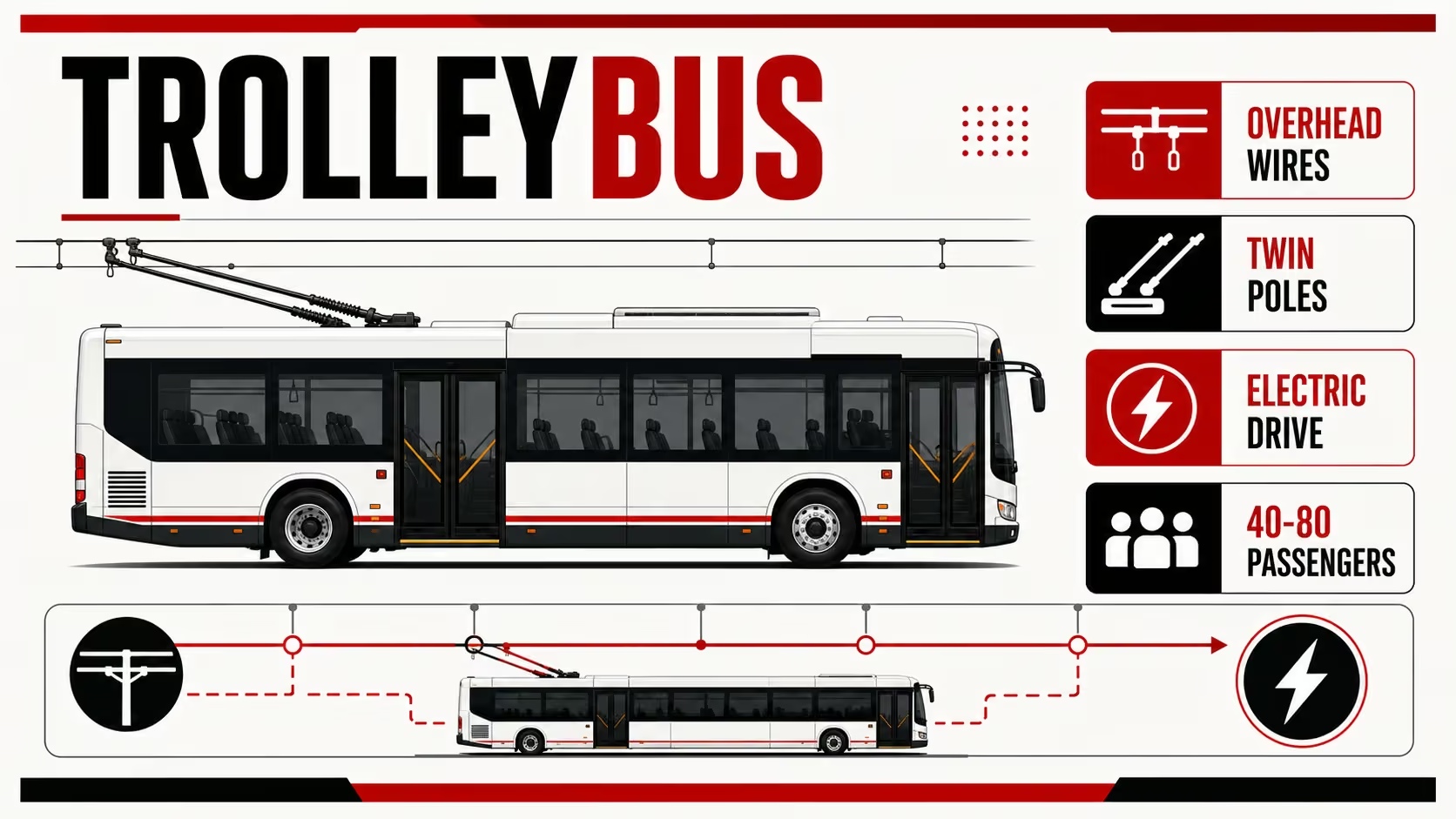
The forgotten electric bus. Trolleybuses are powered by overhead electrical cables (catenary wires) via twin trolley poles on the roof, with no onboard battery (or a small auxiliary one for off-wire maneuvers). They've operated continuously since the early 1900s and are still in regular service in San Francisco (Muni runs the largest trolleybus network in North America), Seattle (King County Metro), Vancouver (TransLink), and Boston (the MBTA Silver Line uses dual-mode trolleybuses, though the network has been shrinking).
Dominant manufacturers include New Flyer (the E40LFR and E60LFR are the modern North American trolleybus standards) and Solaris (the European leader). They're quiet, emissions-free at the point of use, and instantly recognizable by the twin poles arcing up to the wires.
Gyrobus
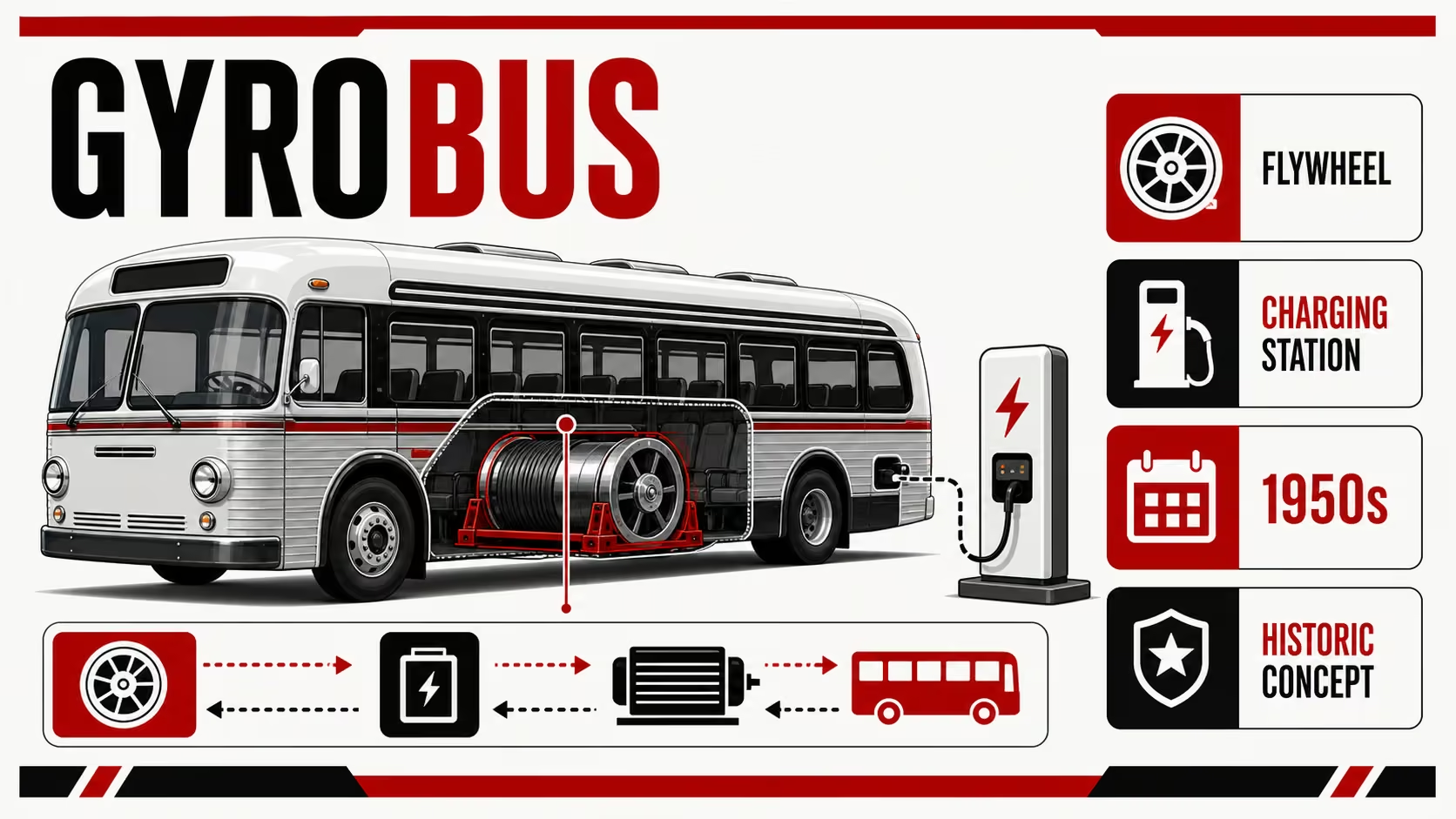
The historic curiosity. A gyrobus stores energy in a large flywheel that's spun up at charging stations using an electric motor, then uses the flywheel's kinetic energy to drive the bus between stops. The Swiss firm Oerlikon built operational gyrobus networks in Yverdon (Switzerland), Léopoldville (now Kinshasa), and Ghent (Belgium) in the 1950s, but the technology never scaled and was abandoned by the early 1960s.
No gyrobuses operate today, but they pop up in transit-history conversations as the "what could have been" power source.
Specialty and lesser-known bus types
ADA-Accessible / Wheelchair-Accessible Bus
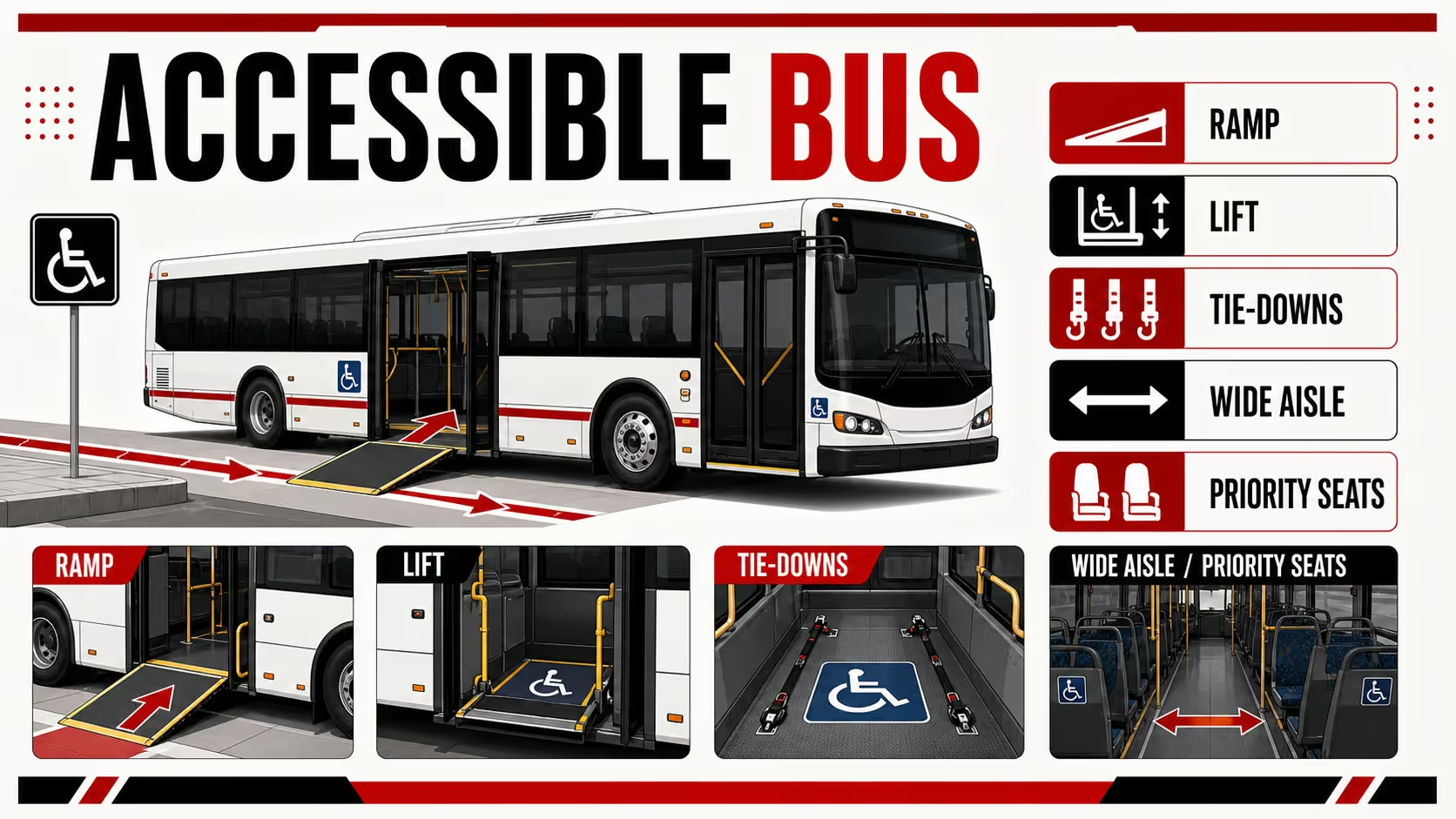
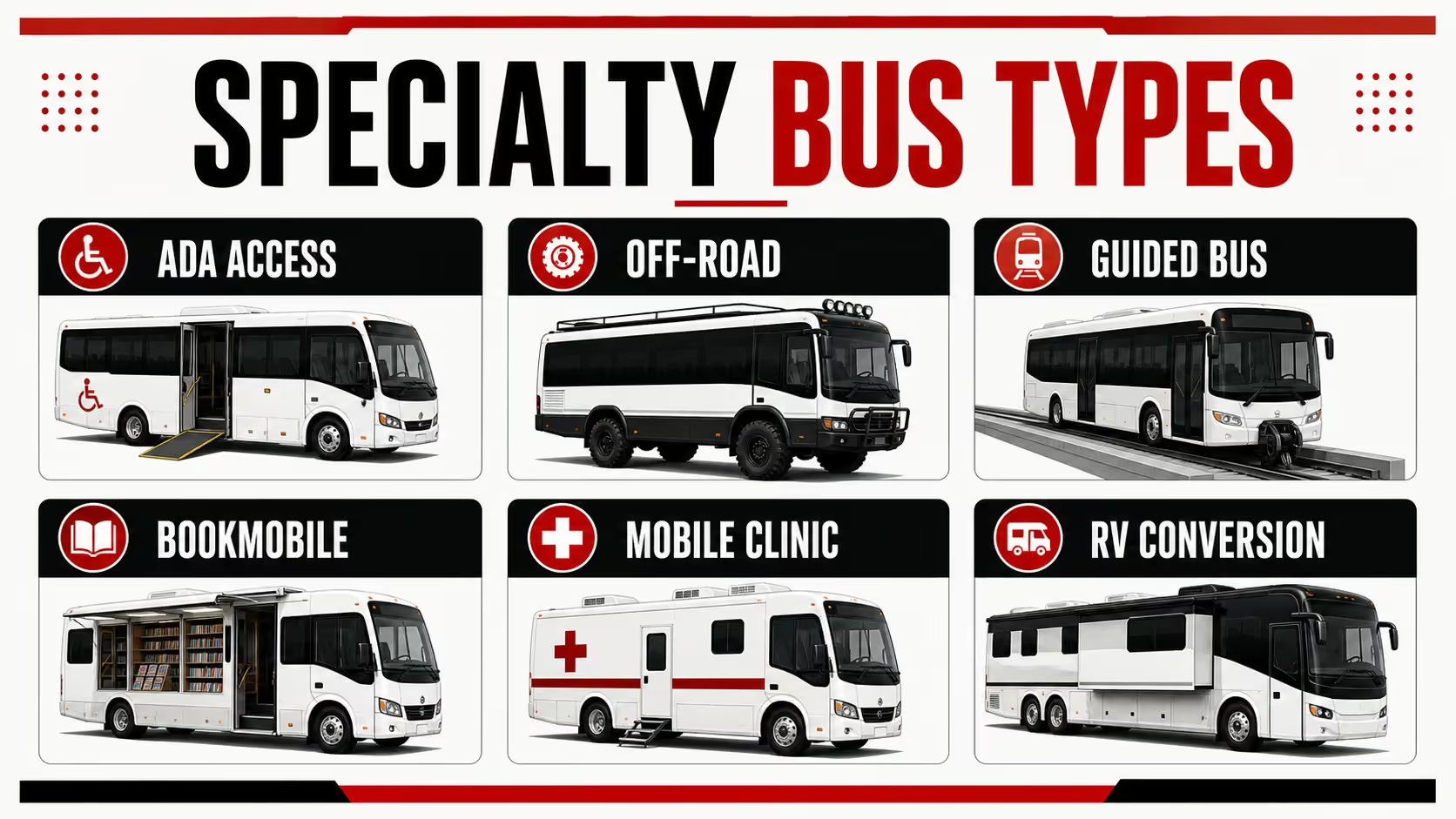
Not a separate vehicle so much as a configuration option available across most bus types. ADA-accessible buses feature wheelchair lifts or ramps, securement straps, wider aisles, priority seating, and audio/visual stop announcements. Low-floor transit buses are accessible by default; motorcoaches and minibuses can be equipped with hydraulic lifts at the entry door.
Party Bus Chesapeake provides ADA-accessible vehicles at no additional cost—just let your reservation specialist know during booking.
Off-Road Bus
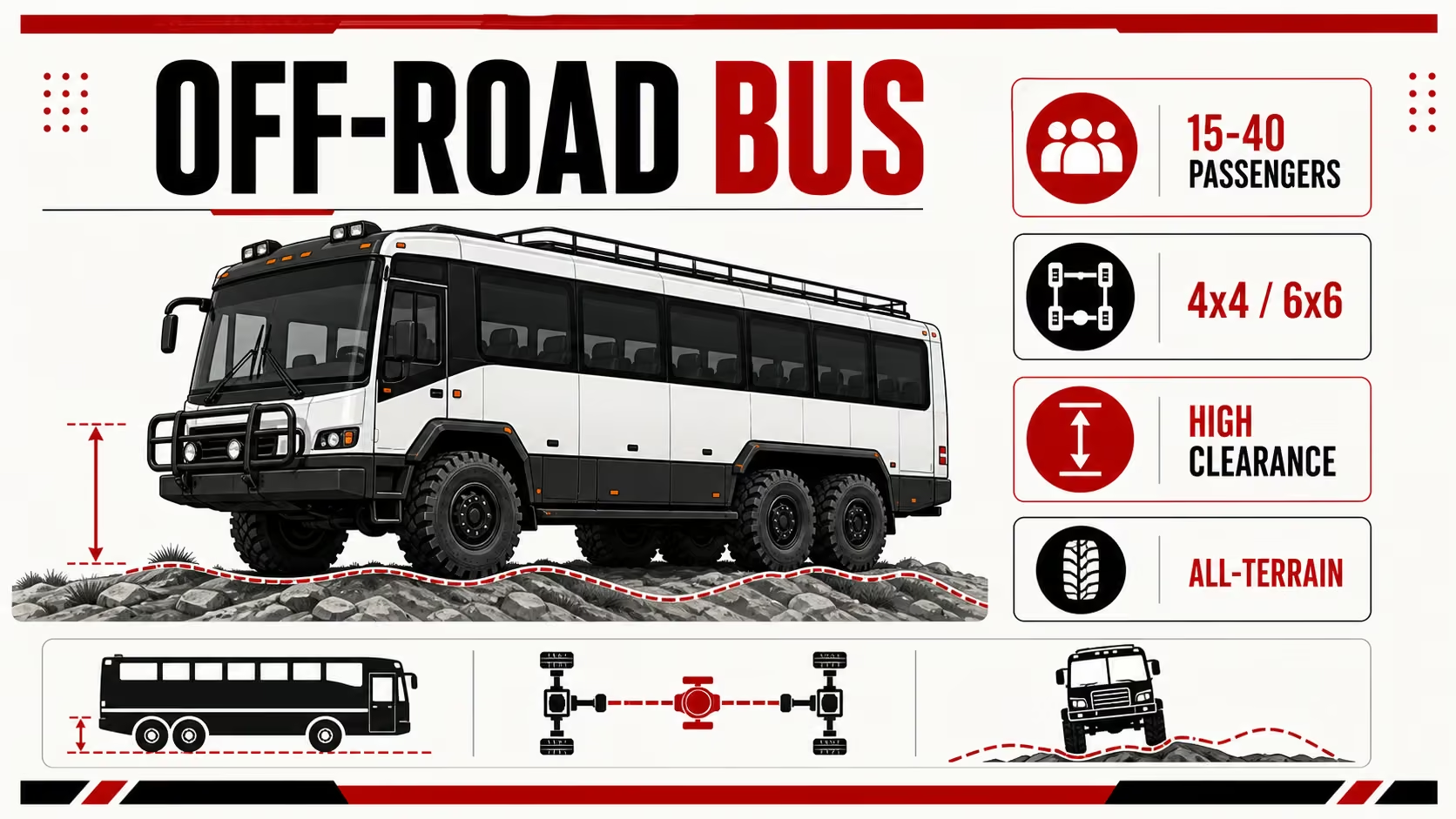
Reinforced vehicles built for military, mining, expedition, and rough-terrain work. Off-road buses sit on heavy-duty 4x4 or 6x6 chassis (often Mercedes Unimog, MAN HX, or Tatra), with raised suspensions, all-terrain tires, and reinforced bodies. You won't charter one for a wedding, but they're the standard transport in Australian outback tours, African safaris, and Antarctic research stations.
Guided Bus
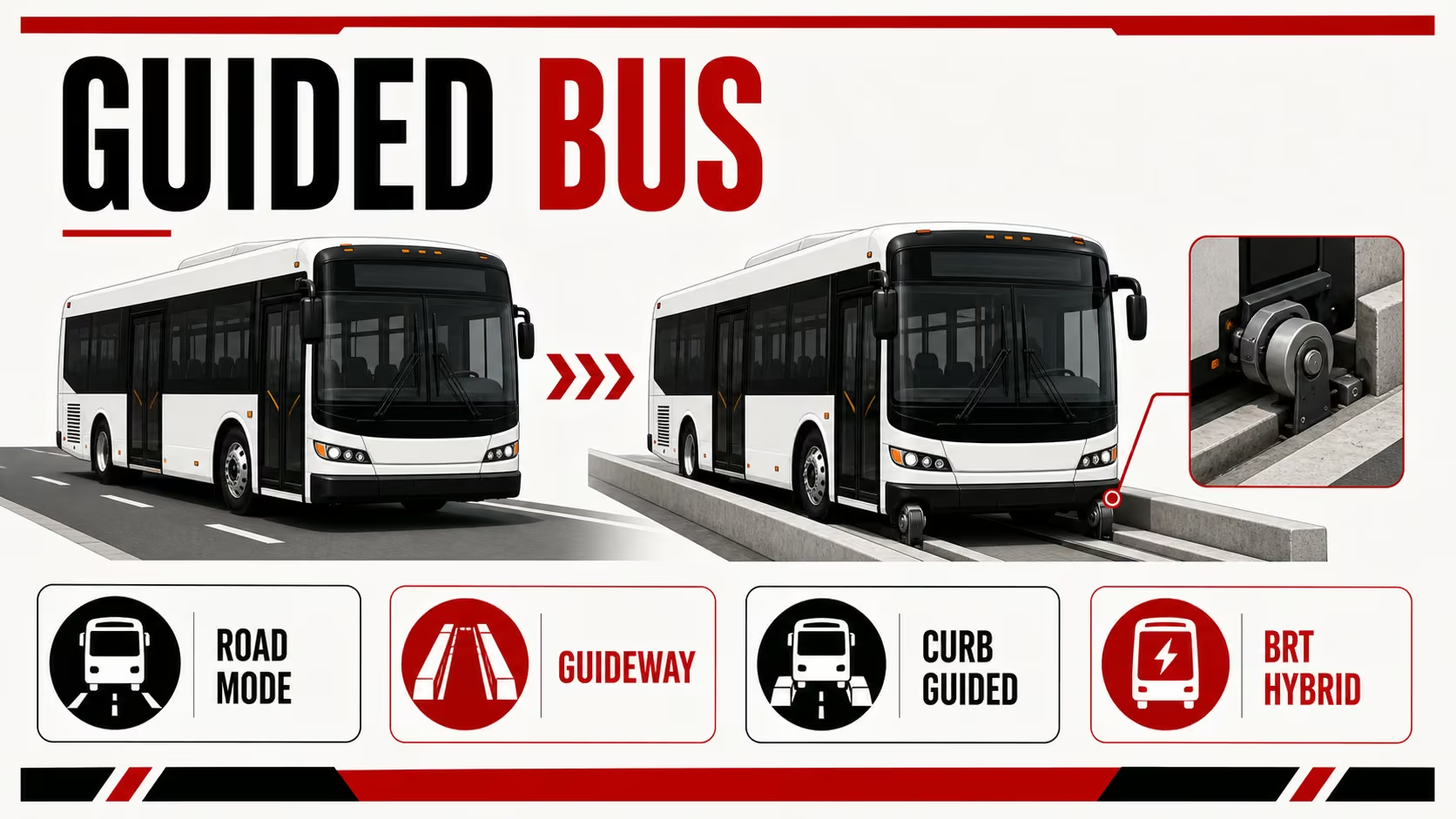
The rail-guided BRT hybrid. Guided buses run on regular roads in normal service, but at certain stretches they're physically guided by curbs, rails, or magnetic strips, allowing higher speeds and tighter clearances than a human can manage manually. The Adelaide O-Bahn in Australia and the Cambridgeshire Guided Busway in the UK are the two best-known examples.
Guided sections look like train tracks with no rails—just two parallel concrete channels with vertical guide curbs.
Specialty mentions
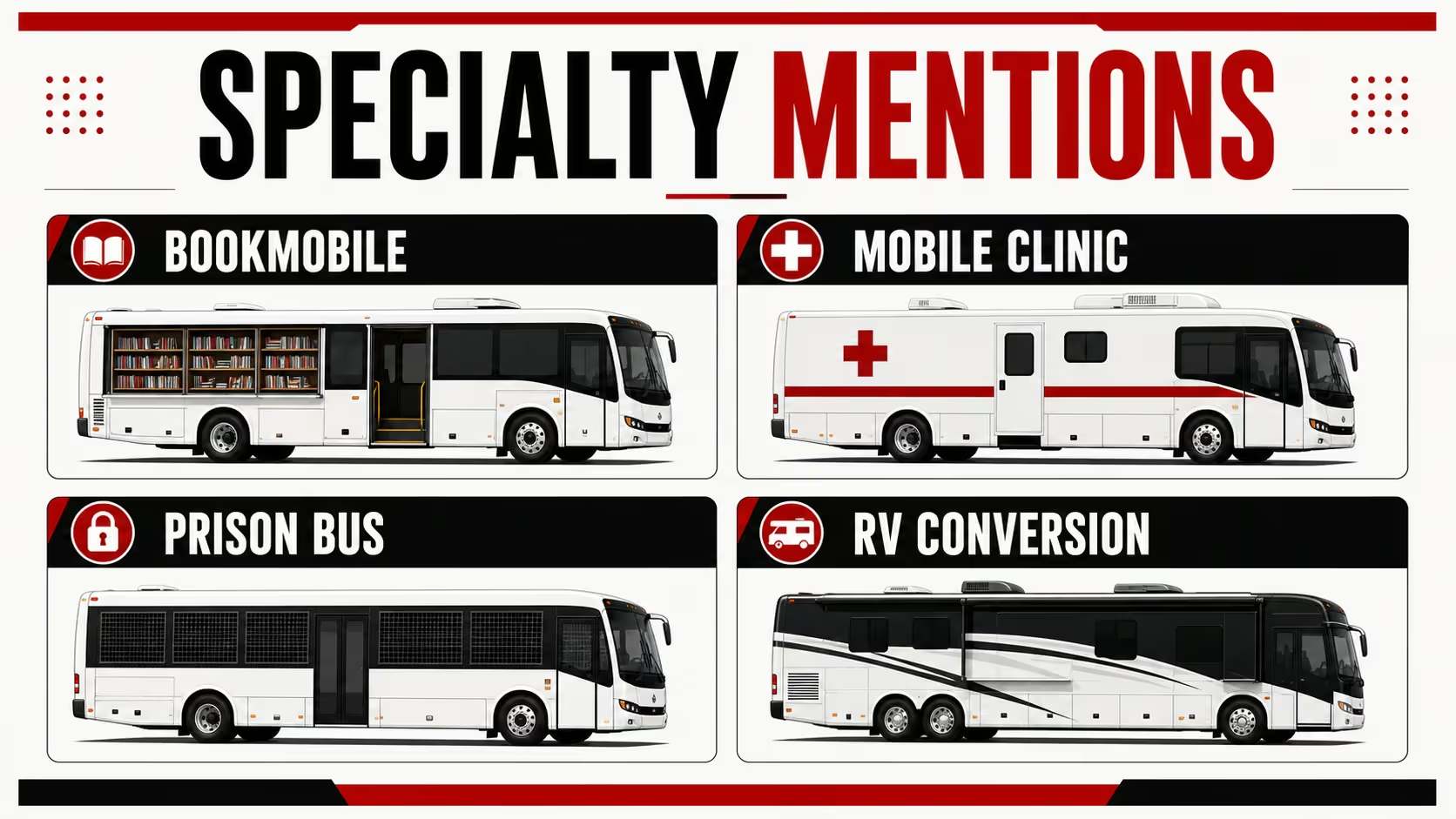
A few more worth flagging: the bookmobile (a converted bus running mobile library service—still operating in rural counties across the US), the mobile clinic (medical-services-on-wheels, common in underserved areas), the prison bus (reinforced, barred-window inmate transport), and the RV bus conversion (a former touring or transit coach converted into a private motorhome). Each is a bus by chassis but a specialty vehicle by purpose.
Bus capacity by type (master comparison table)
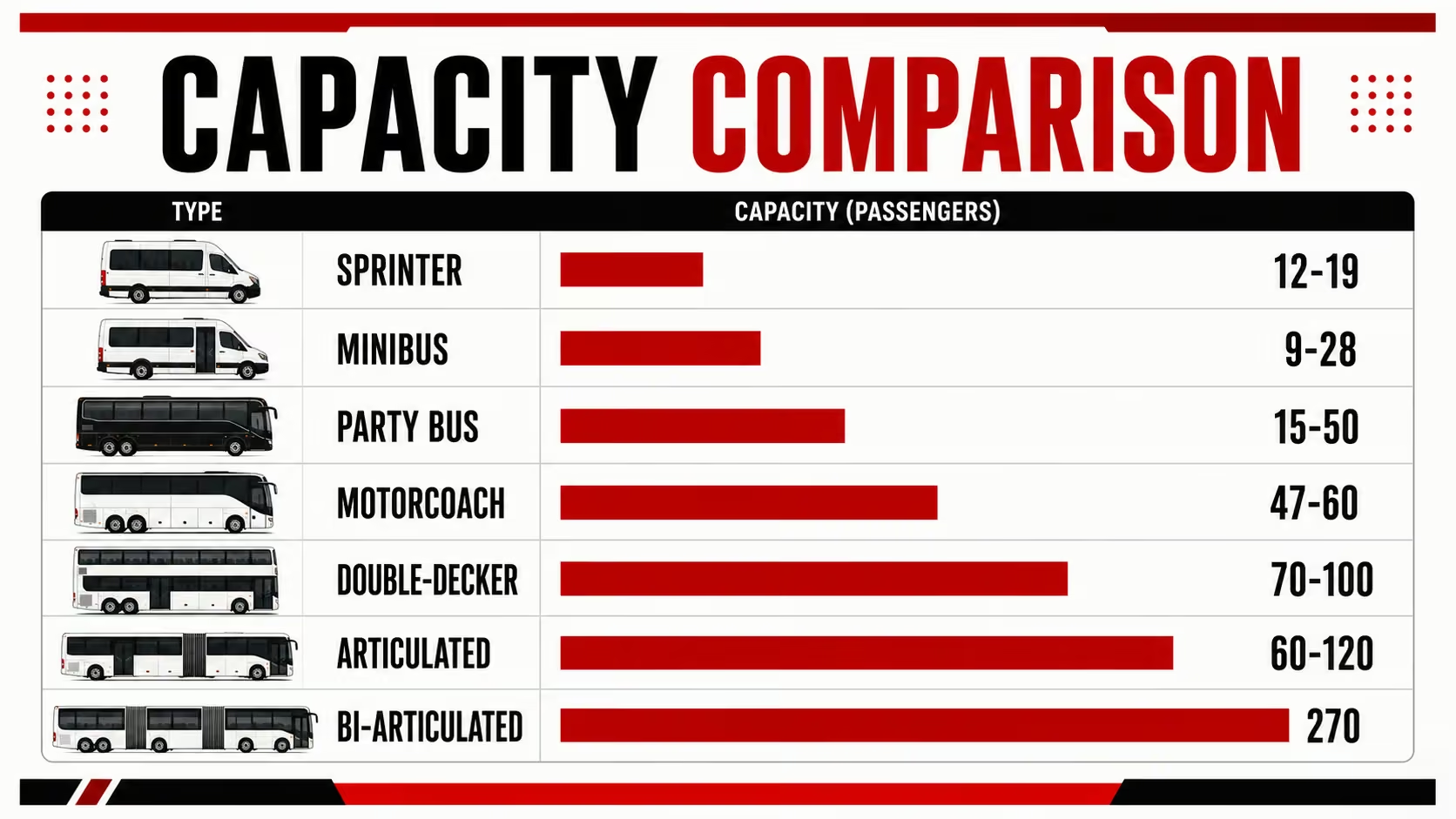
| Bus Type | Capacity Range | Typical Use | Dominant Manufacturers / Models | Where You'd Find It | Rentable From Party Bus Chesapeake? |
|---|---|---|---|---|---|
| Motorcoach / Charter Bus | 47–60 | Long-distance group travel | Prevost H3-45, MCI J4500, Van Hool T-Series | Charter trips, intercity routes | Yes |
| School Bus (Type C) | 36–78 | K–12 student transport | Blue Bird Vision, Thomas Saf-T-Liner C2, IC CE-Series | Daily school routes | No; use a motorcoach for field trips |
| School Bus (Type D) | 54–90 | Largest school routes | Blue Bird All American, Thomas Saf-T-Liner HDX | High-capacity school routes | No |
| School Bus (Type A) | 10–30 | Small school groups, special needs | Blue Bird Micro Bird, Thomas Minotour | Specialized school transport | No |
| City / Transit Bus | 30–45 seated | Urban public transit | New Flyer Xcelsior, Gillig Low Floor, Nova LFS | Hampton Roads Transit, DC Metrobus | No |
| Party Bus | 15–50 | Celebrations, nightlife | Custom Freightliner / International conversions | Weddings, bachelorettes, birthdays | Yes |
| Limo Bus | 14–30 | Upscale group transport | Sprinter-based; custom Freightliner builds | Wedding parties, executive events | Yes |
| Minibus | 9–28 | Mid-size groups | Glaval, Champion, Starcraft on Ford or Sprinter chassis | Shuttles, small charters | Yes |
| Minicoach | 24–40 | Luxury small-group trips | Temsa TS35, Grech Motors GM 35 / 40 | Executive shuttles, wine tours | Sometimes |
| Sprinter Van / Shuttle Bus | 12–19 | Small groups, airport transfers | Mercedes Sprinter, Ford Transit | Hotel shuttles, airport transfers | Yes |
| Tour Bus (Closed) | 40–60 | Sightseeing, guided tours | MCI, Prevost | Williamsburg, Mount Vernon tours | Yes |
| Tour Bus (Open-Top) | 50–80 | Sightseeing | Van Hool TD927 conversions | DC, NYC, London | No |
| Sleeper / Entertainer Coach | 8–12 bunks | Touring musicians, film crews | Prevost X3-45 VIP, Prevost H3-45 VIP | Behind concert venues | No |
| Neighbourhood / Community Bus | 12–25 | Local shuttles | Glaval / Starcraft on cutaway chassis | Senior centers, hospital shuttles | Sometimes |
| Single-Decker | Varies | Default configuration | All major manufacturers | Everywhere | Yes |
| Double-Decker | About 70; up to 100 | Intercity, tourism, dense transit | Alexander Dennis Enviro500, Van Hool TDX25 | Megabus, FlixBus, London | No |
| Articulated Bus | 60–120 | High-volume transit, BRT | New Flyer Xcelsior XN60, Mercedes Citaro G, Volvo 7900A | DC MetroExtra, major-city BRT | No |
| Bi-Articulated Bus | Up to 270 | BRT systems | Volvo Gran Artic 300, Scania | Curitiba, Mexico City | No |
| Low-Floor Bus | Varies | Accessible transit | New Flyer, Gillig, Nova Bus | Modern US transit fleets | No |
| High-Floor Bus | Varies | Intercity, older transit | All motorcoach manufacturers | Charter and intercity routes | Yes |
| Open-Top Bus | 60–80 | Tourist sightseeing | Van Hool TD927, Alexander Dennis | Major tourist cities | No |
| Diesel Bus | Varies | Default power source | All manufacturers | Everywhere | Yes |
| Electric Bus | Varies | Zero-emission transit | Proterra ZX5, BYD K9, New Flyer Xcelsior CHARGE, Yutong | Forward-leaning transit agencies | No |
| Hybrid Bus | Varies | Transit, fuel-economy focused | New Flyer Xcelsior Hybrid, Gillig HEV | US transit fleets | No |
| Trolleybus | 40–80 | Overhead-wire electric transit | New Flyer E40LFR / E60LFR, Solaris | San Francisco, Seattle, Vancouver, Boston | No |
| ADA-Accessible Bus | Varies | Wheelchair-accessible transport | Any type with lift / ramp equipment | Any service | Yes |
| Off-Road Bus | 15–40 | Military, mining, expedition | Mercedes Unimog, MAN HX | Outback, safari, research stations | No |
| Guided Bus | 40–100 | BRT with rail / curb guidance | Various | Adelaide, Cambridgeshire | No |
Capacity tier—which bus type carries N people?
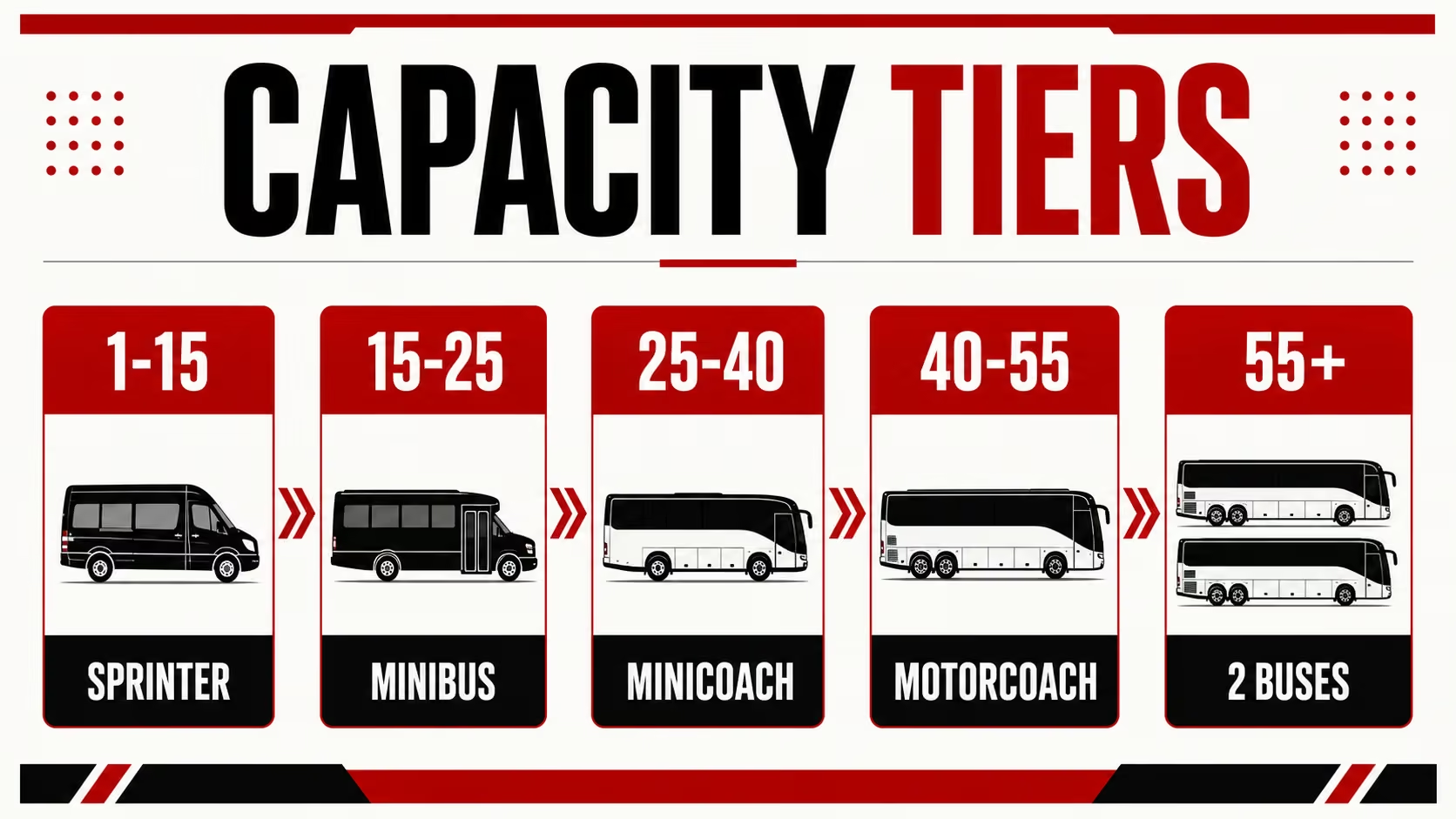
If you know your headcount but not your vehicle type, work backward from the group size:
| Group Size | Best Bus Types | Why |
|---|---|---|
| 1–15 passengers | Sprinter Van, 14-passenger Sprinter limousine, 15-passenger party bus | The Sprinter platform handles tight venues, airport curbsides, and short transfers. The 14-passenger Sprinter limousine adds bar and LED lighting for celebrations. See our Sprinter rental or 14-passenger Sprinter limo. |
| 15–25 passengers | Minibus, 18- to 25-passenger party bus, limo bus | The middle tier where minibuses and small party buses overlap. Minibuses work well for shuttles and field trips; party buses work well for celebrations. See our minibus or 20-passenger party bus. |
| 25–40 passengers | 28- to 40-passenger party bus, minicoach, larger minibus | The mid-large tier is too big for a small minibus but smaller than a full motorcoach. Minicoaches like the Temsa TS35 or Grech GM 35 / 40 are the luxury pick here. See our 30-passenger party bus. |
| 40–55 passengers | 40- to 50-passenger party bus, motorcoach, Type C school bus | This is motorcoach territory. For celebrations, use a 50-passenger party bus; for transportation, use a 56-passenger charter bus. See our 40-passenger party bus, 50-passenger party bus, or 40–56 passenger charter bus. |
| 55+ passengers | Multiple motorcoaches, articulated bus, double-decker | Once you cross the 56-passenger ceiling, you are booking a fleet. Two 56-passenger charter buses handle 112 passengers comfortably. Articulated and double-decker buses exist, but they are not usually rentable in the US charter market. |
Who makes these buses? (Manufacturer overview)
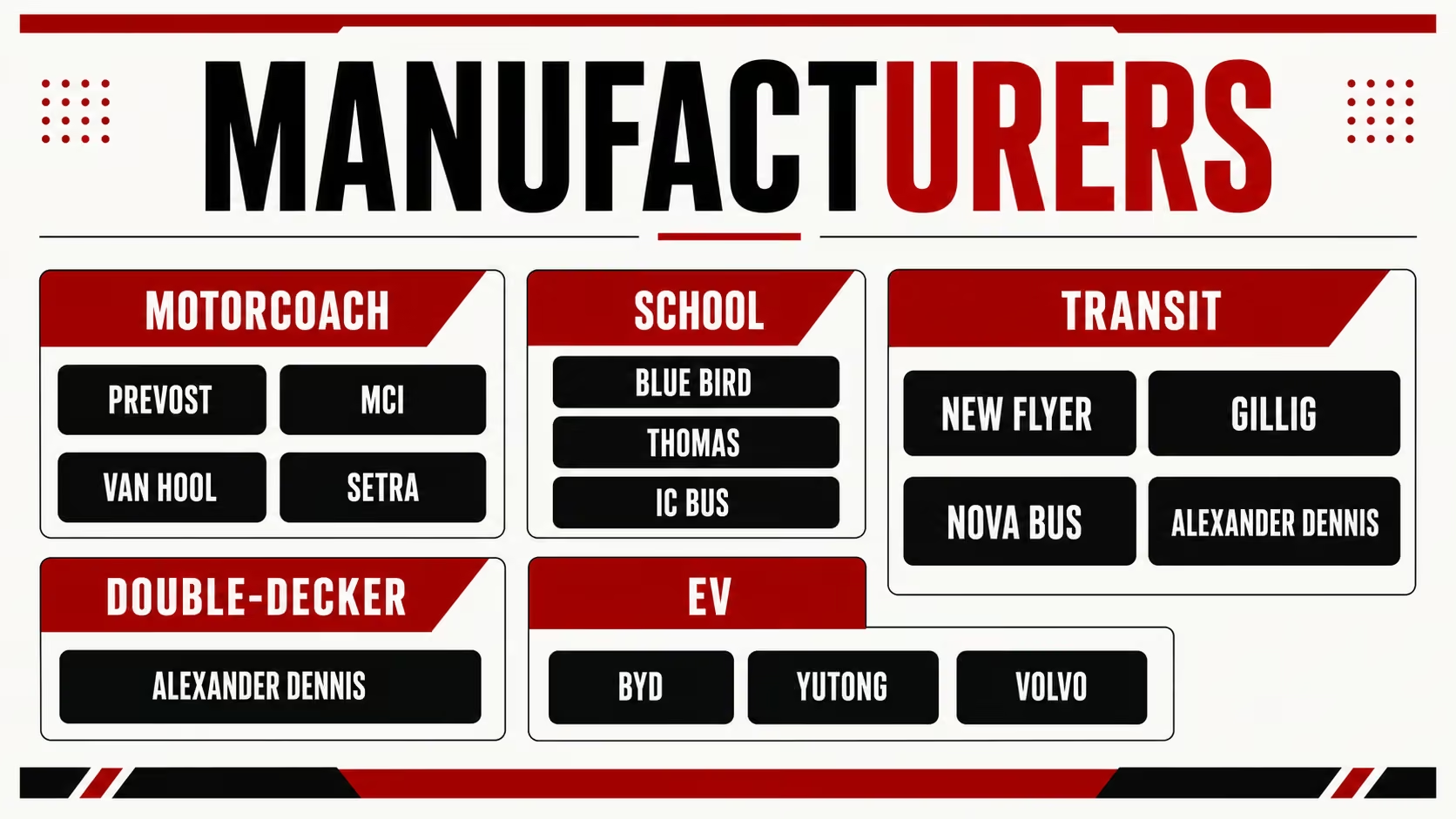
The bus-manufacturing world is consolidated—a handful of companies dominate each category. Grouped by purpose:
Motorcoach: Prevost (the H3-45 and X3-45 are the touring-band gold standard), MCI (the J4500 and D-Series are US charter workhorses), Van Hool (Belgian; T-Series and CX-Series), Setra (German luxury; rare in US). See the deep-dive at our manufacturer cluster, or jump straight to the MCI J4500 or Prevost H3-45 pages.
School Bus: Blue Bird (the Vision, All American, and Micro Bird lines), Thomas Built Buses (the Saf-T-Liner C2 and HDX), IC Bus (CE, RE, and BE-Series). These three companies build essentially every yellow school bus in North America.
Transit: New Flyer (the Xcelsior platform is the continent's bestseller in diesel, hybrid, and electric variants), Gillig (the Low Floor is the mid-market favorite), Nova Bus (LFS, popular in Canada), Proterra (electric-focused; ZX5 and Catalyst).
Double-Decker: Alexander Dennis (the Enviro500 dominates intercity, the Enviro400 dominates UK city), Van Hool (TDX25 for US intercity).
Specialty / EV: BYD (Chinese EV giant), Yutong (Chinese; growing global presence), Volvo (the 7900 platform across diesel, hybrid, and electric).
Bus terminology—clearing up the confusion
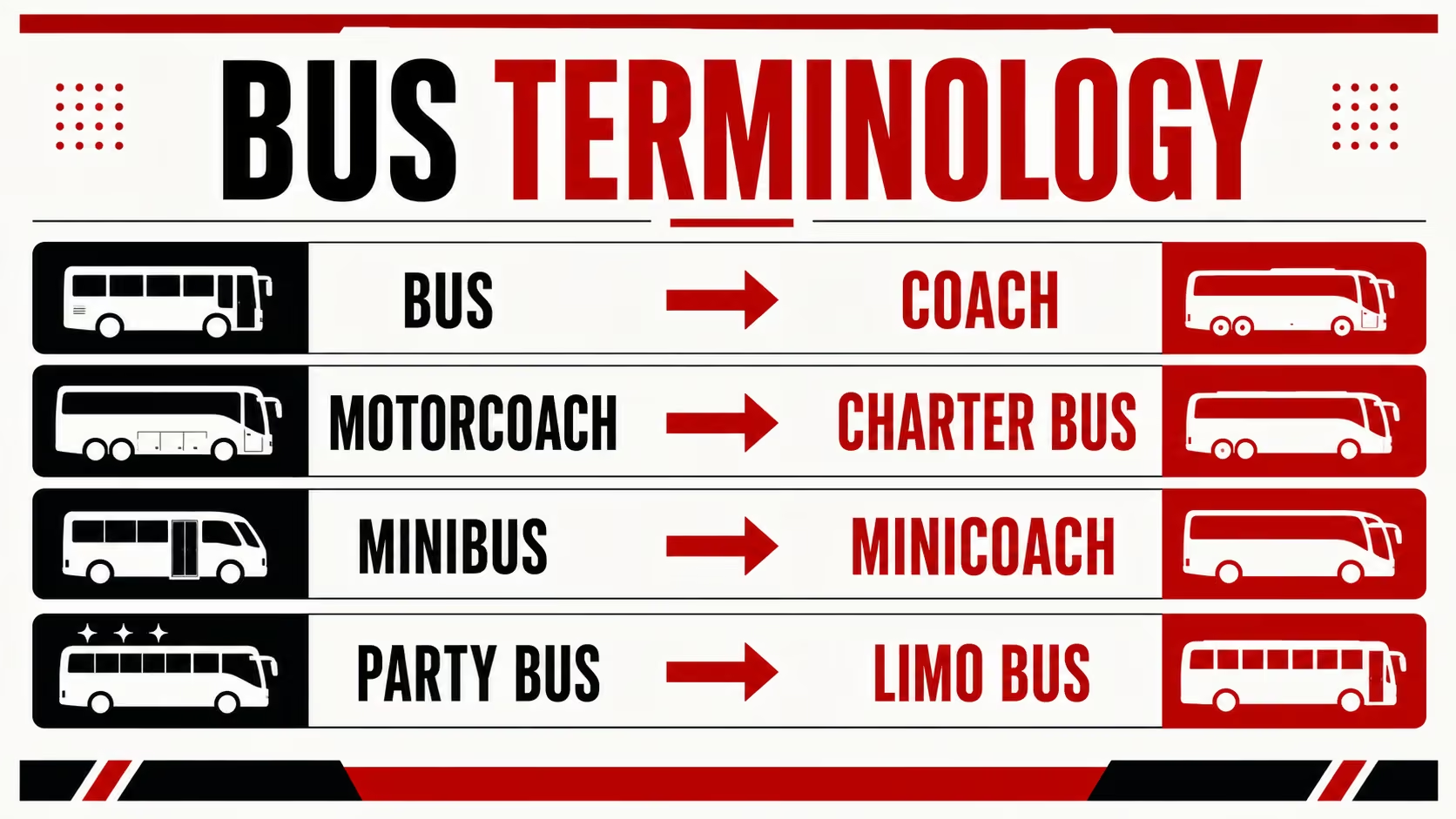
The same vehicle goes by different names depending on who's talking, which trips up first-time renters constantly. The cheat sheet:
Bus vs. coach: In American English, "bus" covers everything; "coach" usually means a long-distance motorcoach. In British English, "coach" is the standard term for any long-distance bus, and "bus" specifically means a local service bus.
So a "National Express coach" in the UK is the same kind of vehicle as a "Greyhound bus" in the US.
Motorcoach vs. charter bus: In the US, these are synonyms when used for chartered group transport. "Motorcoach" describes the vehicle; "charter bus" describes the rental arrangement.
The bus that runs the daily New York–DC Greyhound route and the bus your wedding rents for the day are usually the same model. For the full breakdown, see our charter bus vs. coach bus comparison.
Minibus vs. minicoach: A minibus is a cutaway-chassis build (a body dropped onto a Ford or Sprinter chassis); a minicoach is a purpose-built luxury small bus (Temsa TS35, Grech GM 35/40). Minicoaches cost two to three times what minibuses cost new—the interior and amenities reflect that.
Sprinter vs. shuttle bus vs. minibus: A Sprinter van is the smallest—12 to 15 seats, van-style.
A shuttle bus is usually a Sprinter or Transit with a raised roof and 14 to 19 seats. A minibus is bigger again—20 to 28 seats on a heavier chassis. These all blur together in casual conversation, but the chassis and capacity are the giveaways.
Party bus vs. limo bus: Same vehicle category, different vibe. Party buses lean nightclub (LED lighting, loud sound, lots of color); limo buses lean upscale (leather, subtle lighting, executive look).
Many vehicles can be configured either way.
By common use case—which bus type for which scenario?
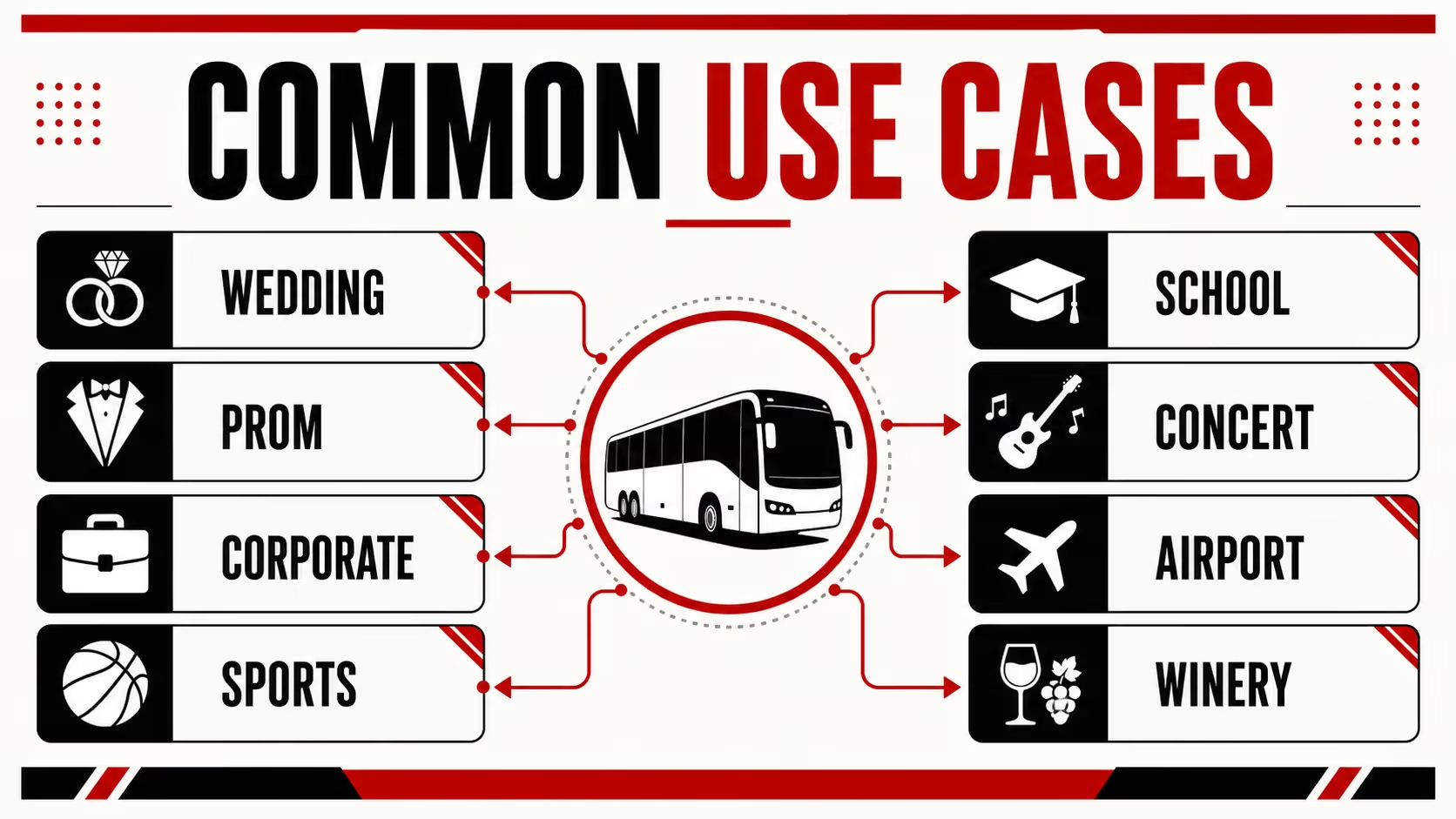
Wedding shuttle / wedding party transport
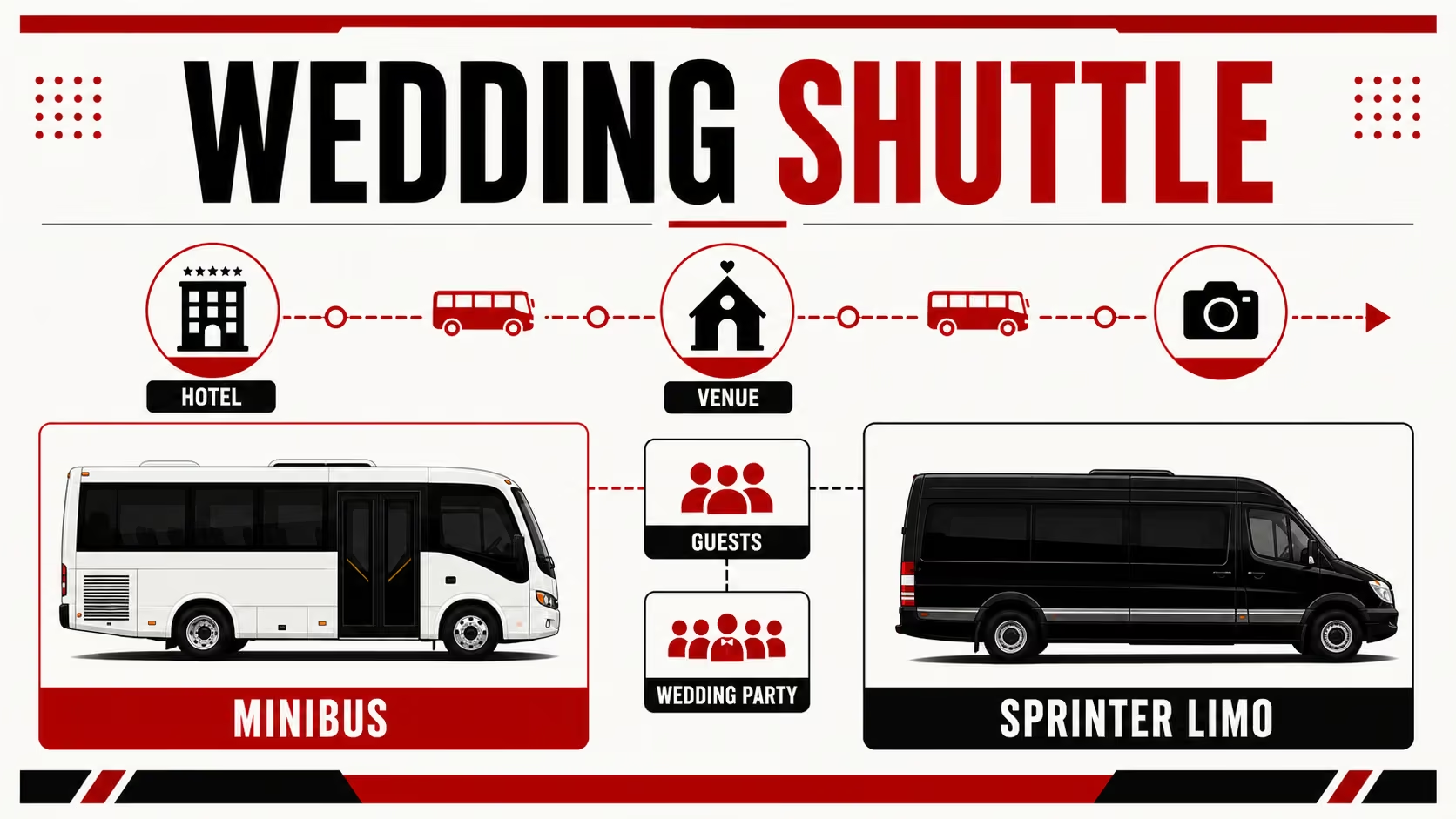
For guest shuttles between hotel blocks and the venue, a 25- to 35-passenger minibus or 50-passenger party bus handles the volume without overwhelming a tight venue driveway. For the bridal party itself, a 14-passenger Sprinter limousine is the photo-ready pick. Williamsburg, Virginia Beach oceanfront, and Norfolk waterfront weddings all run on the same model: one large vehicle for guests, one premium small vehicle for the wedding party.
See our wedding party bus rentals.
Prom transportation
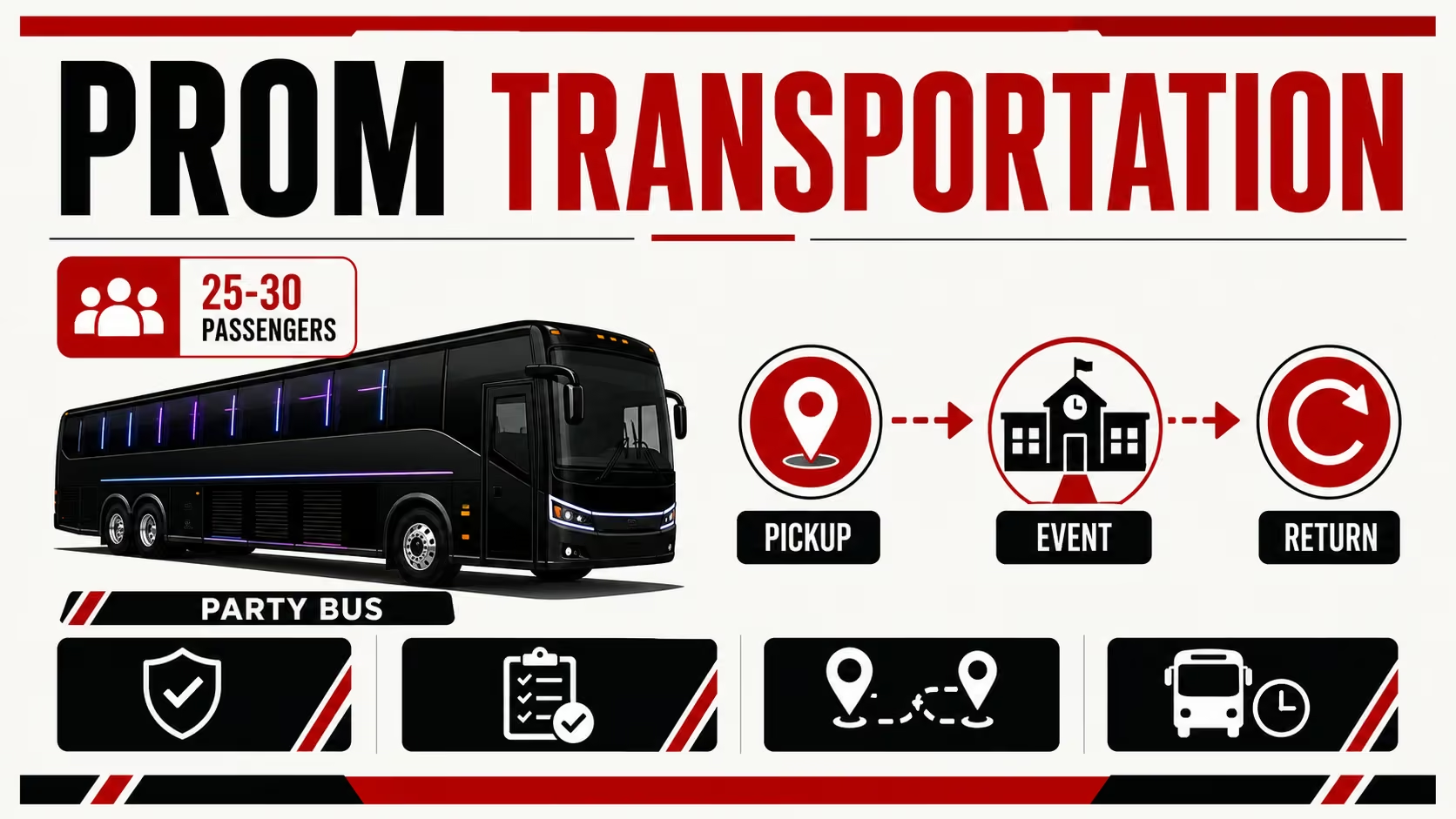
Party buses are the prom standard—a 25- or 30-passenger party bus fits the typical friend-group size, comes with the LED lighting and sound system kids actually want, and gives parents a single accountable pickup point. See our prom party bus rentals.
Bachelor / bachelorette / birthday celebration
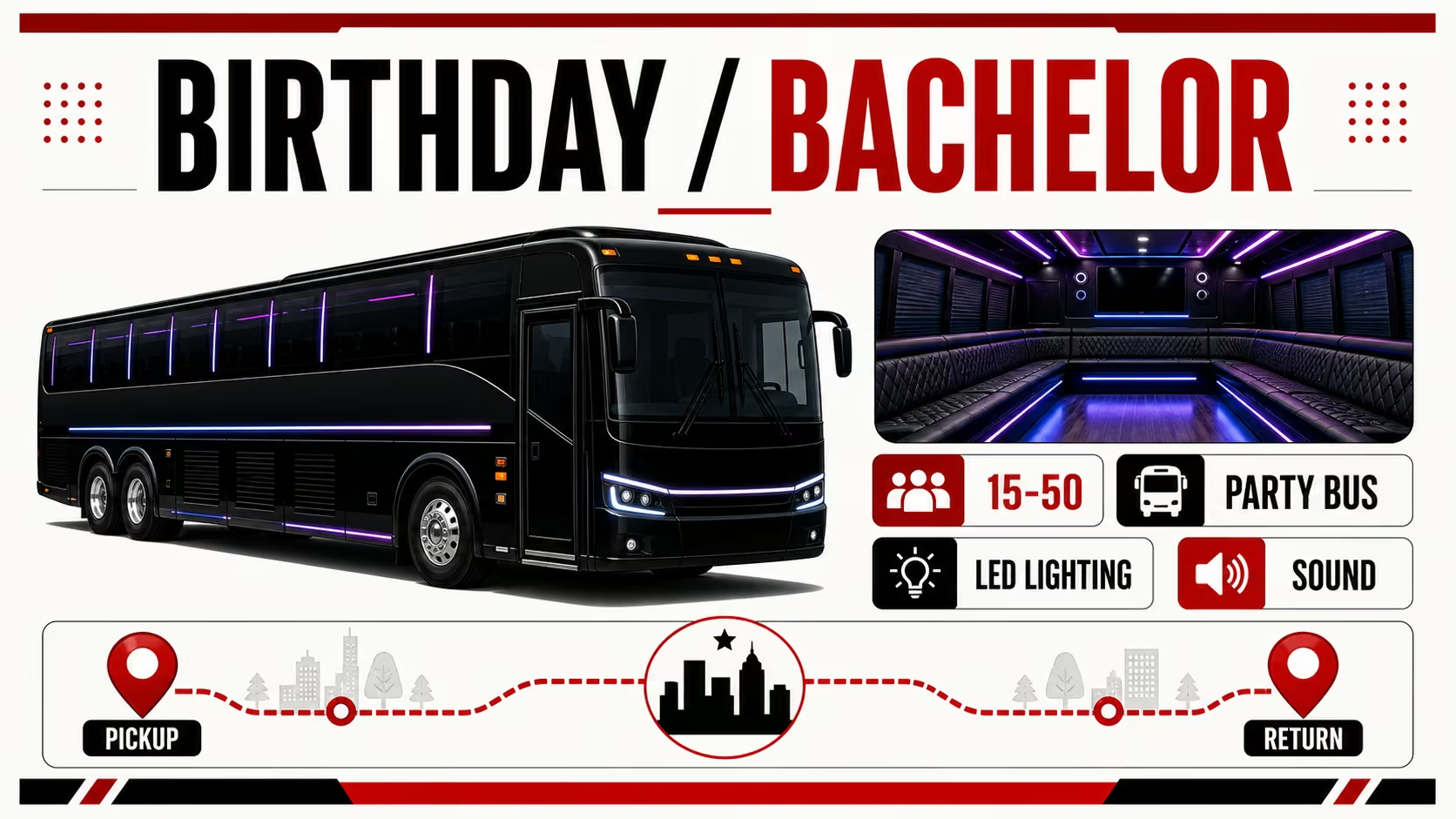
The classic party bus territory. 15- to 25-passenger party buses for tight friend groups; 40- to 50-passenger party buses for combined birthday-bachelor weekends. Built-in bar, LED lighting, and premium sound let the celebration start at the curb.
See our bachelor/bachelorette party bus or birthday party bus.
Corporate retreat / employee shuttle
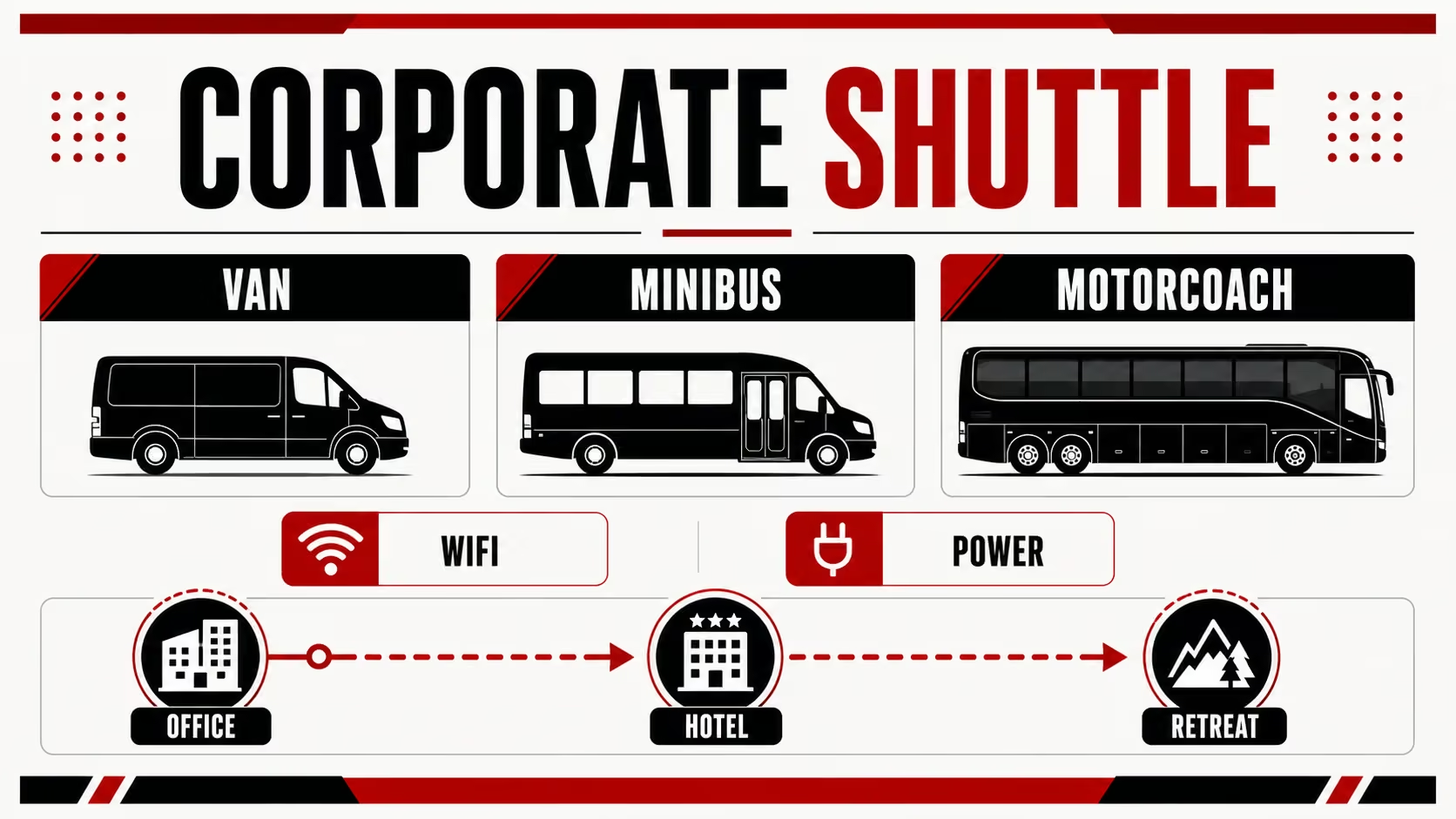
For executives and small client groups, a 14-passenger Sprinter limo or Sprinter Van delivers the corporate look with premium leather and tinted windows. For company-wide retreats or daily commuter shuttles, a 35-passenger minibus or 56-passenger motorcoach with WiFi and power outlets keeps the team productive between stops. See our corporate event transportation.
Sports team travel
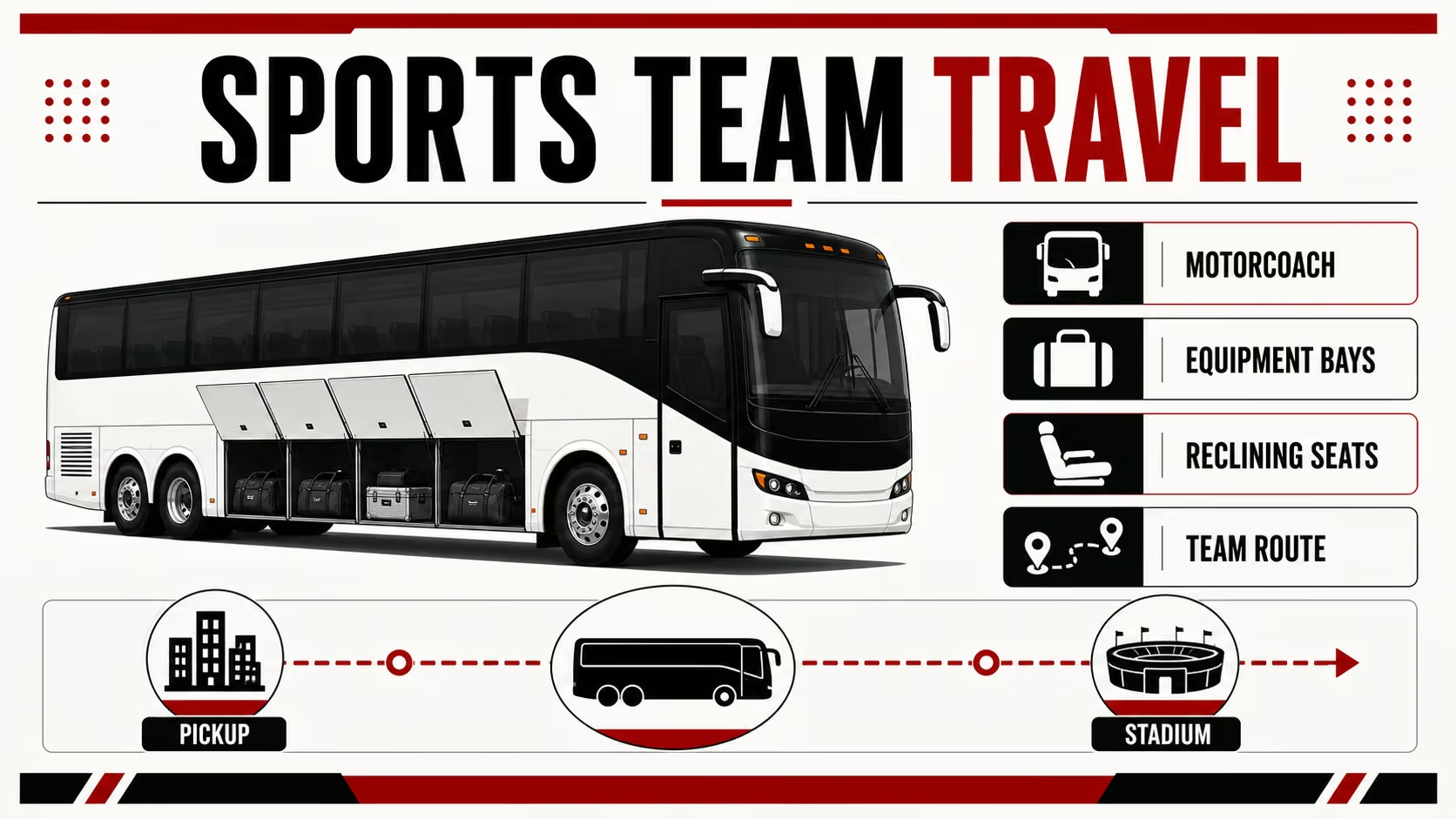
A 56-passenger motorcoach is the standard—undercarriage bays for equipment, reclining seats for rest between games, and onboard WiFi for film review en route. Smaller squads do well in a 25-passenger minibus. Fan groups wanting the tailgate-on-wheels vibe should look at our 15- to 50-passenger party buses instead.
See our sporting event party bus.
School field trip
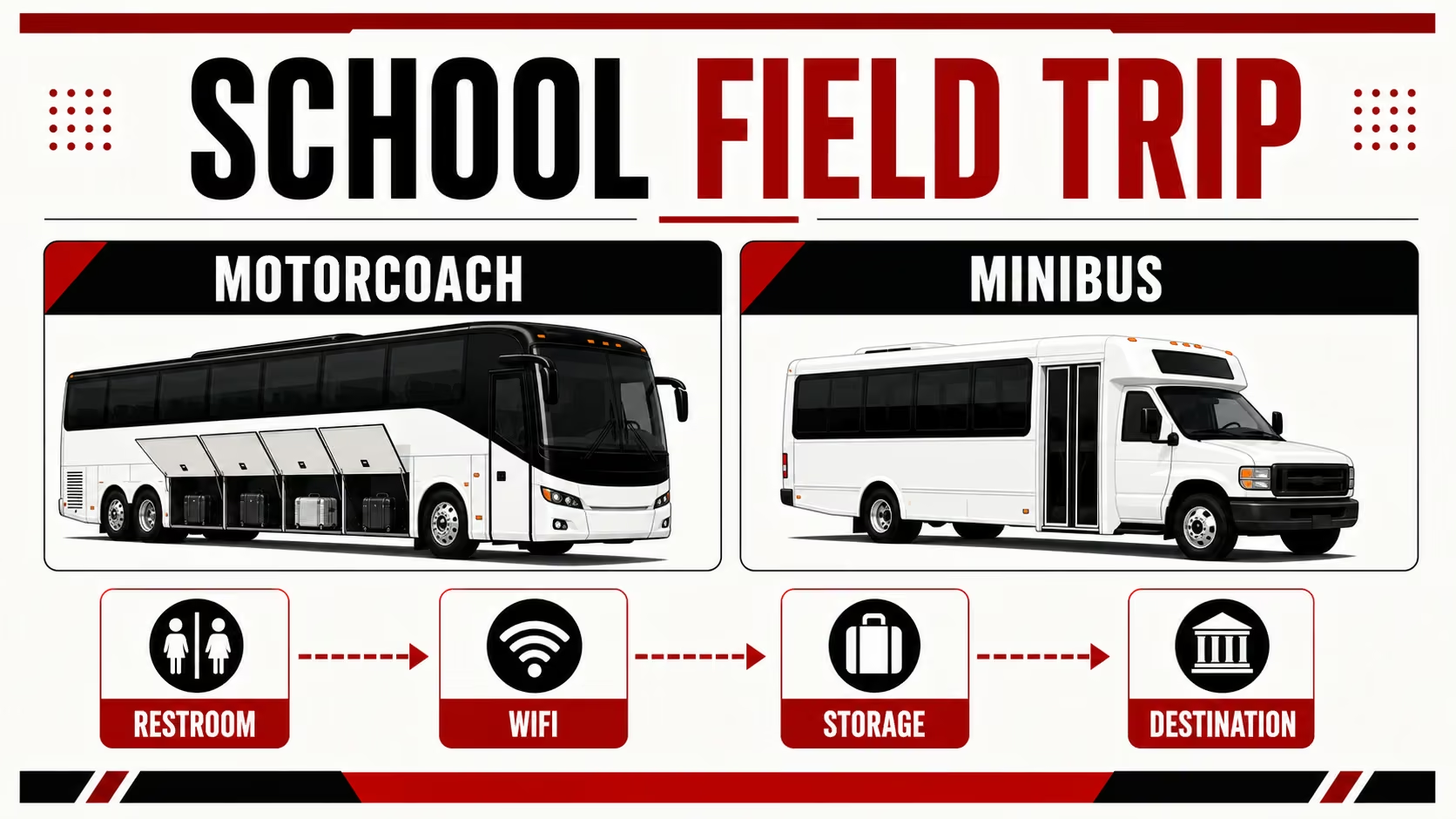
Charter motorcoaches and minibuses beat traditional yellow school buses on every long-haul comfort metric—climate control, reclining seats, onboard restrooms, undercarriage storage for coolers and supplies, and WiFi for older students. See our school event bus rental.
Concert transportation
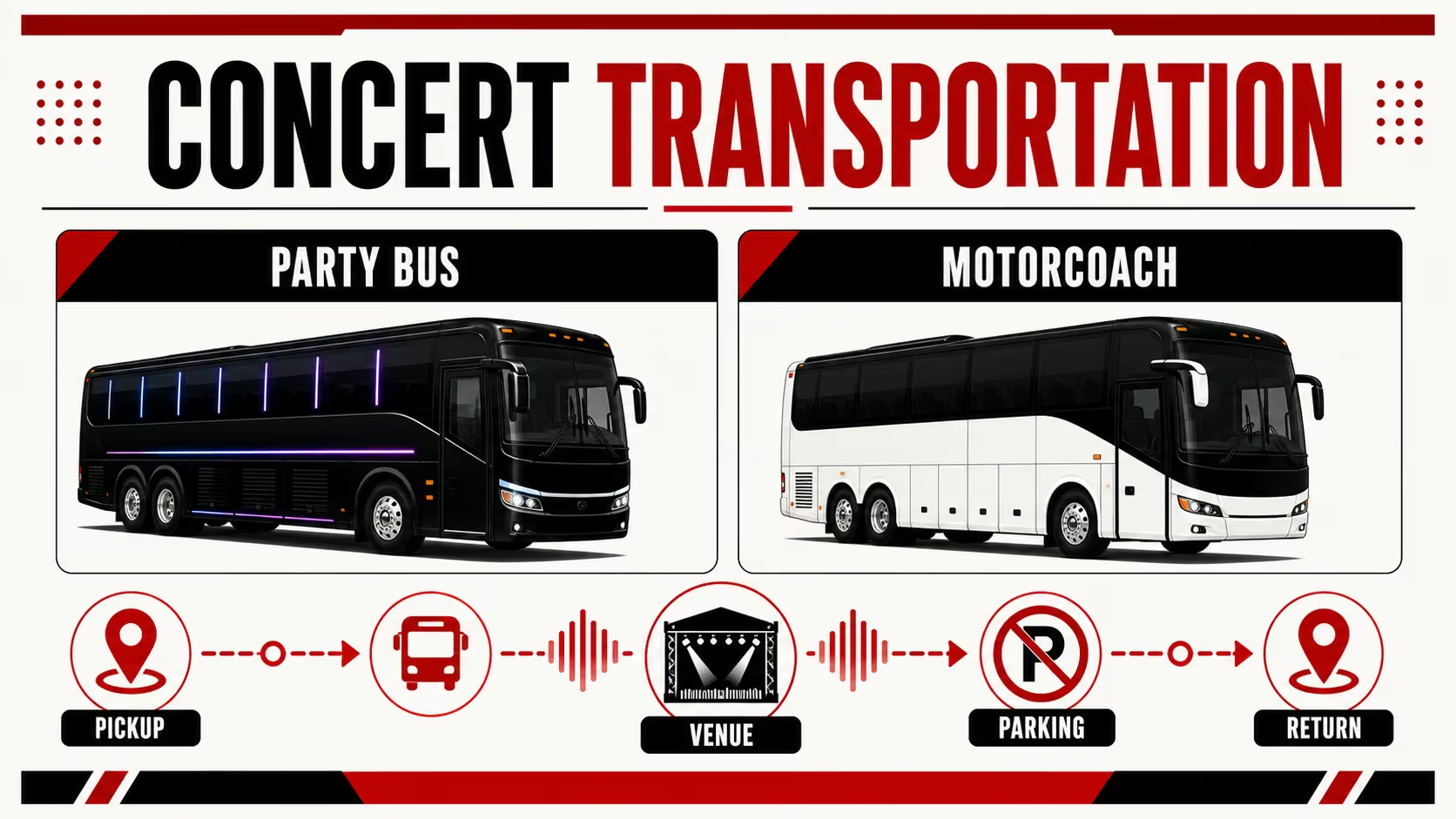
Party buses for the pre-show energy; motorcoaches for groups traveling more than an hour to the venue. Both eliminate parking hassles and rideshare surge pricing at major venues. See our concert party bus.
Airport shuttle / hotel transfer
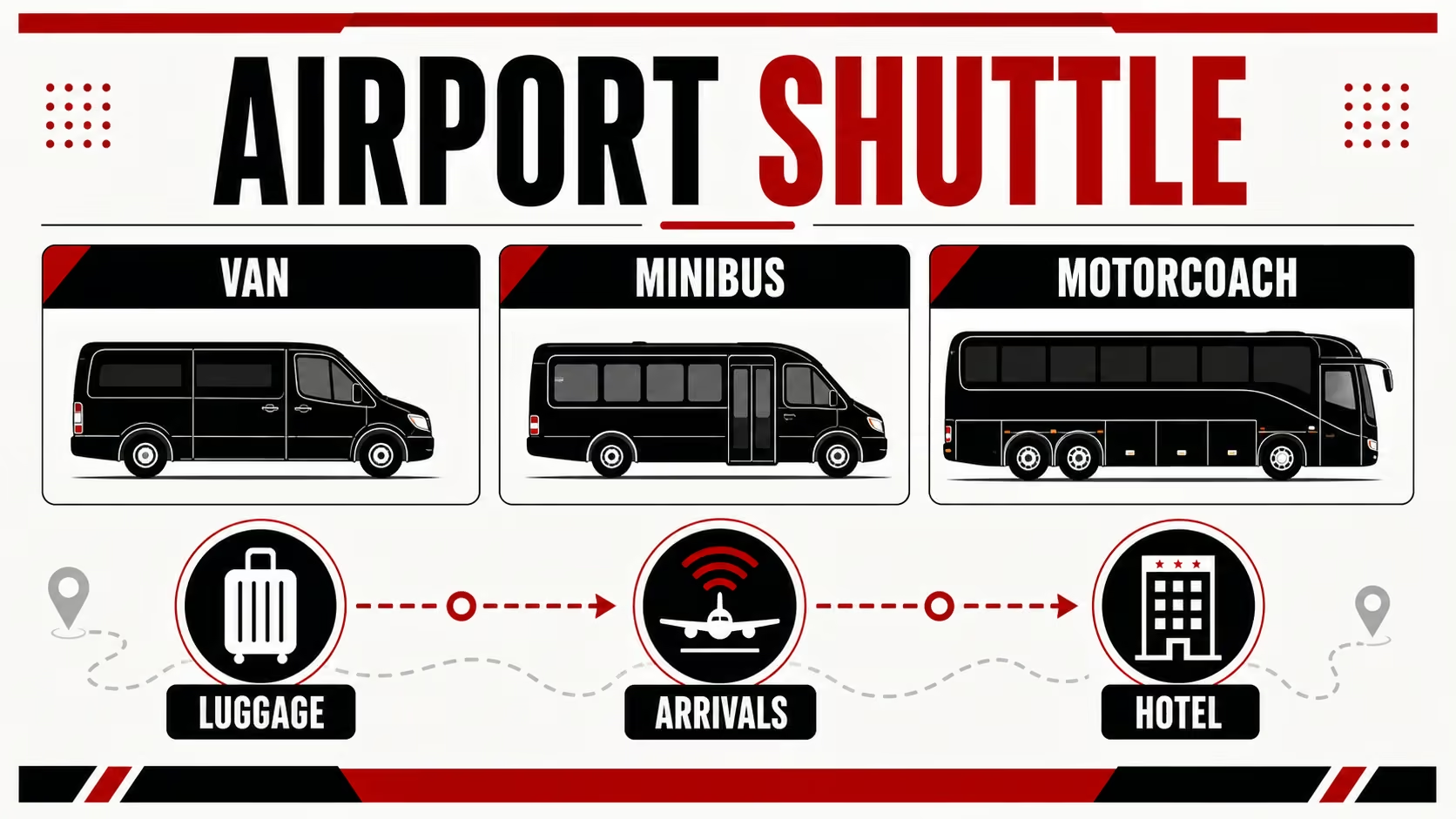
Sprinter Vans for small executive groups (14-passenger limousine version for the corporate look); minibuses for mid-size groups; full motorcoaches for arriving wedding blocks or conference delegations. See our airport transportation, or jump straight to BWI shuttle, Dulles (IAD) shuttle, or Reagan (DCA) shuttle. For hotel-to-venue runs, see our hotel shuttle service.
Winery tour / Outer Banks group travel
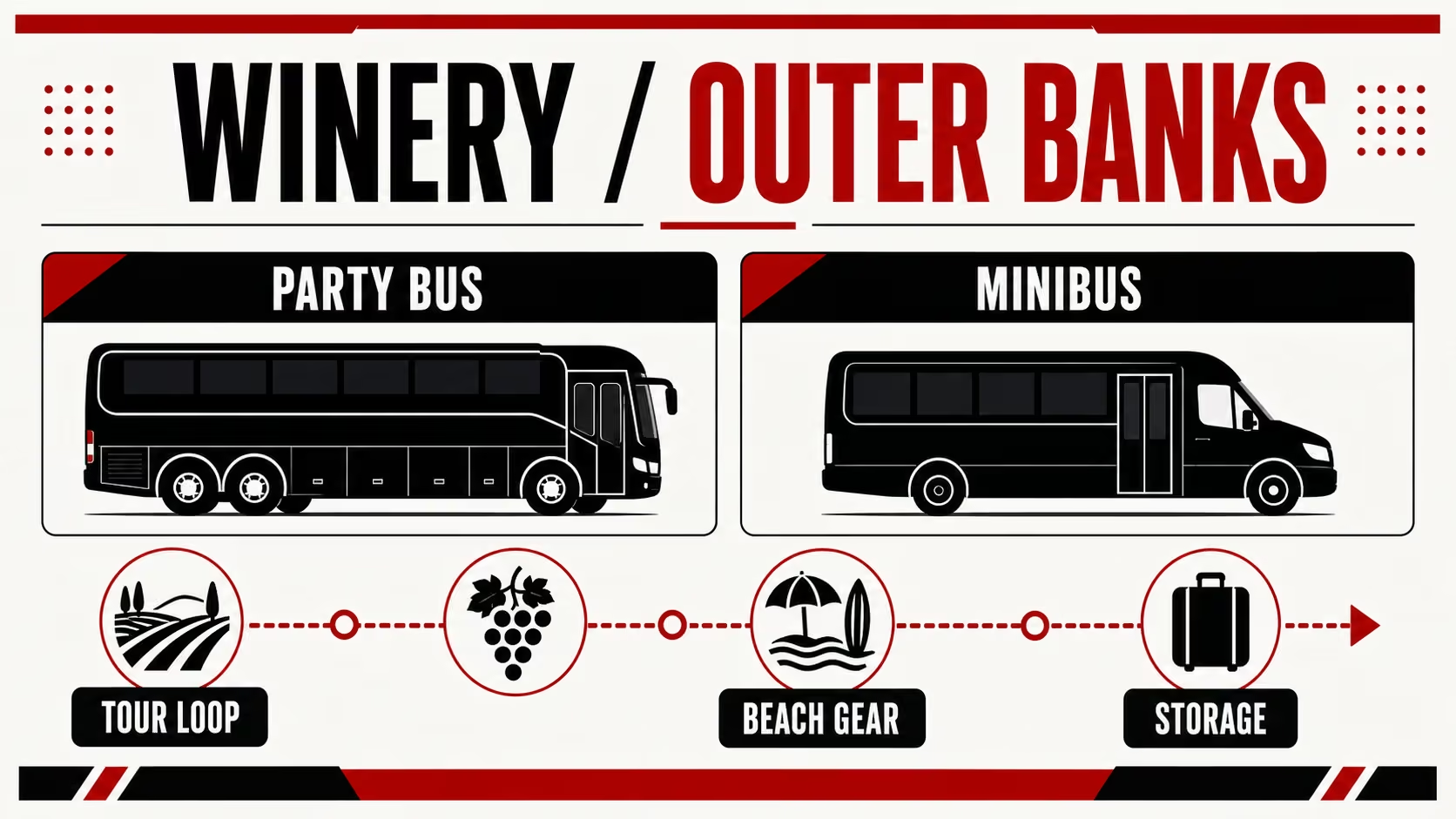
Party buses are the winery-tour favorite—built-in bar, LED lighting, and zero designated-driver guilt. For long Outer Banks group runs from Chesapeake or Hampton Roads, a 35-passenger minibus with undercarriage storage handles beach gear and a full day's worth of stops. See our winery tour party bus.
Music tour / film production crew (entertainer coach)
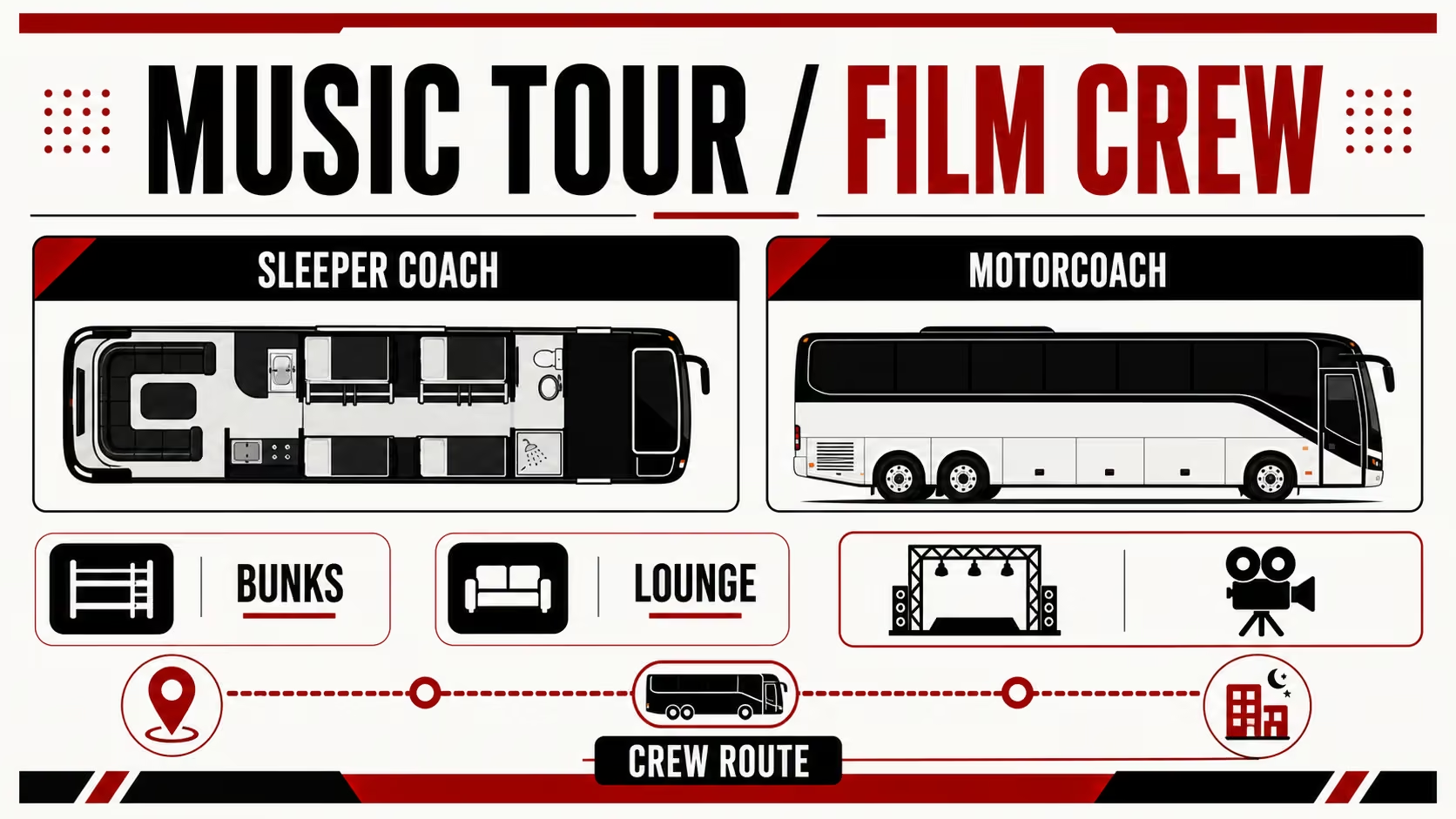
The Prevost X3-45 VIP and H3-45 VIP are the touring-musician standards—bunks, lounge, galley, full bathroom. Party Bus Chesapeake doesn't rent entertainer coaches directly (this is a different equipment category), but full-size motorcoaches can be configured for crew transport with reclining seats and overnight comfort.
FAQ
What are the different types of buses? The big categories are motorcoach/charter bus, school bus, city/transit bus, party bus, limo bus, minibus, minicoach, Sprinter van/shuttle bus, tour bus, sleeper/entertainer coach, and community bus. Add design variants (double-decker, articulated, low-floor) and power source variants (diesel, electric, hybrid, trolleybus) and you're at the 25+ distinct types covered in this guide.
What are luxury buses called? The luxury tiers are minicoaches (Temsa TS35, Grech GM 35/40), limo buses, and high-end motorcoaches (Prevost H3-45 VIP, Setra TopClass S 517). The exact label depends on the size and use case—"executive coach" and "VIP motorcoach" are also common in the industry.
What are small buses called. The smallest passenger buses are Sprinter vans (12–15 passengers) and shuttle buses (14–19 passengers). Slightly bigger are minibuses (15–35 passengers) and minicoaches (24–40 passengers, luxury tier).
Anything smaller than a Sprinter is typically called a passenger van rather than a bus.
What's the largest type of bus. Bi-articulated buses, used in BRT systems in Curitiba and Mexico City, reach 95 feet and carry up to 270 passengers. In the standard transit world, articulated buses (60 feet, up to 120 passengers) are the biggest.
In the charter world, the 60-passenger motorcoach is the ceiling.
What's the most common type of bus? Globally, the single-decker diesel city bus is the most common configuration. In the US, the Type C school bus (the classic yellow conventional with the protruding hood) is the most-produced single bus model in history—Blue Bird, Thomas, and IC build hundreds of thousands of them.
How many people fit in a charter bus? Standard US charter buses (motorcoaches) seat 47–60 passengers, with 55 and 56 being the most common configurations. Minibuses fit 15–35, and party buses fit 15–50 depending on the chassis length.
Who makes charter buses? The major motorcoach manufacturers are Prevost (Canadian, owned by Volvo), MCI (US/Canadian, also owned by Volvo via its parent NFI Group), Van Hool (Belgian), and Setra (German, owned by Daimler). See our manufacturer cluster for platform-by-platform deep-dives.
How are bus types regulated? In the US, the NHTSA sets federal motor vehicle safety standards for all buses; the FMCSA regulates commercial bus operators; school buses have additional state-by-state requirements; transit buses must meet ADA accessibility standards (low-floor or lift-equipped). Charter operators must hold a USDOT number and comply with hours-of-service rules.
Ready to book?
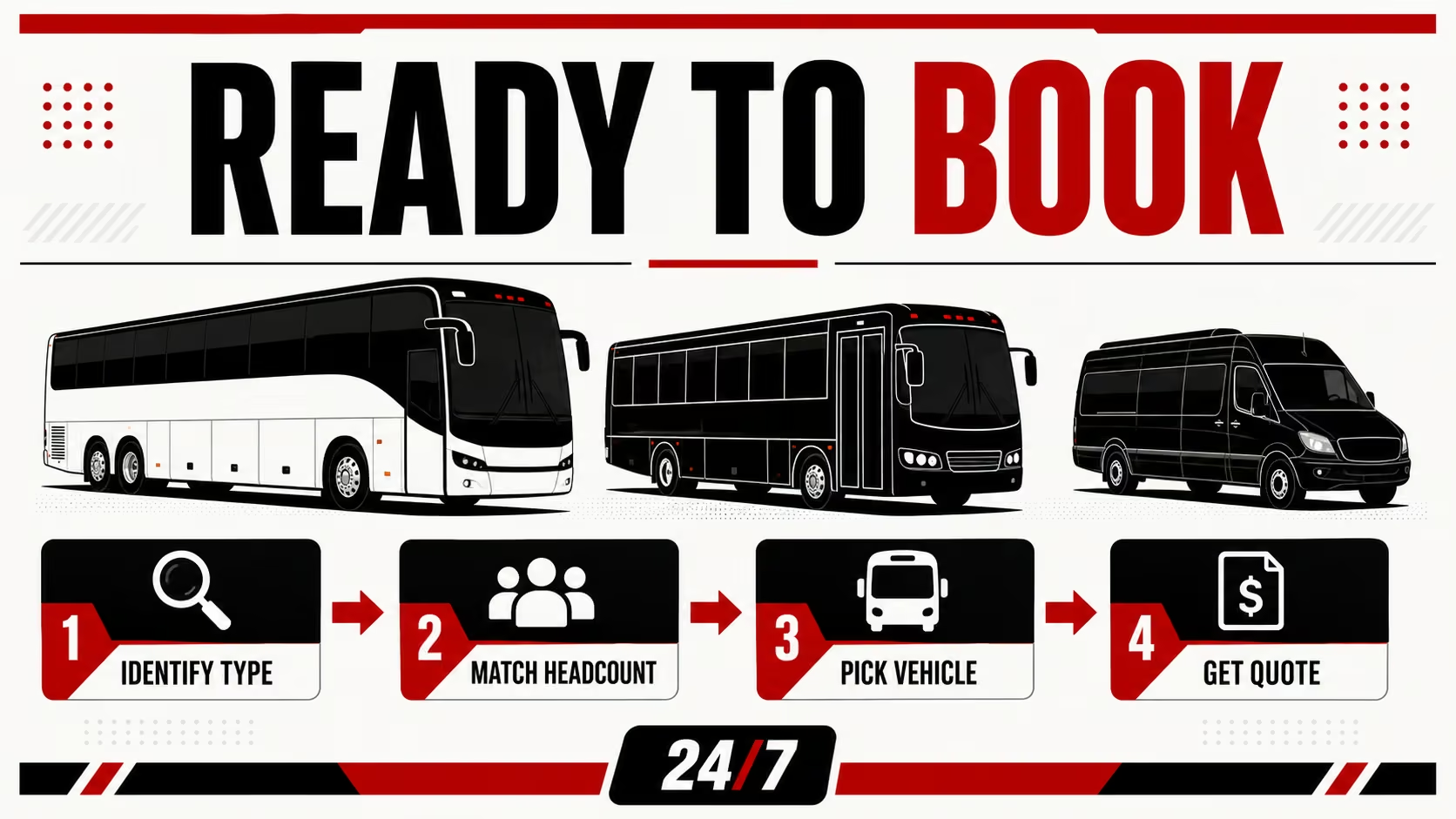
The three-lens taxonomy—purpose, design, power source—is the fastest way to identify any bus you see on the road or narrow down the right one for your event. Once you've landed on a type, the rental question becomes straightforward. If you've narrowed down to a bus type and you're in the Hampton Roads or DC area, Party Bus Chesapeake rents party buses, charter buses, Sprinter vans and limousines, and minibuses across Chesapeake and beyond.
Browse our fleet, check our service areas, or call 757-755-8162 for a free quote from our 24/7 reservation team.